TIRANA, June 23 /ATA/ – Perceptions of Albania’s digital infrastructure and public services have improved, although broader concerns over political stability, corruption and informal economy persist, according to the latest American Chamber of Commerce (AmCham) business index presented on Tuesday.
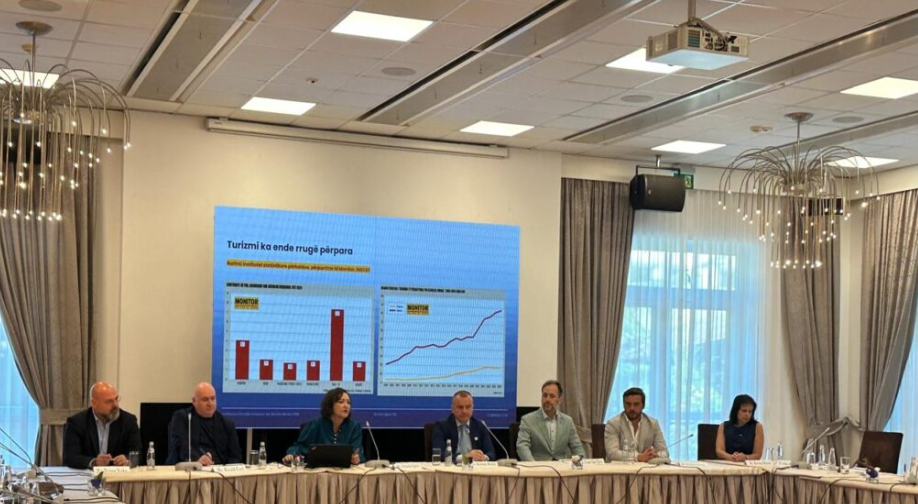
The findings were presented at a conference titled “How the Economy Is Evolving – Analysis of Indicators and Business Outlook,” organised by AmCham and business magazine Monitor.
AmCham executive director Neritan Mullaj said the 2025 Business Index stood at 40.34 points out of 100, down 6.13 points from 46.47 in 2024, reflecting what he described as deterioration in the overall business environment.
He said the main factors behind the decline included the domestic political climate, infrastructure performance, economic conditions, government bureaucracy and corruption.
According to Mullaj, several key indicators have reached their lowest levels in 14 years of the index’s publication, signaling what he called a “systemic weakening” of market integrity in the country.
He said the most problematic areas included political stability, infrastructure and perceptions of corruption, adding that the downward trend was not isolated but affected multiple dimensions of the business environment.
Mullaj also highlighted the informal economy as a major concern, noting that 73% of respondents in the survey considered it high or very high. He said the indicator had declined further this year, suggesting that anti-informality measures had not produced sustained results.
Despite the overall decline, he said the strongest-performing areas included energy supply, export demand for goods and services, and relations with customs authorities.
For the first time, the 2025-2026 survey included a dedicated section on Albania’s digital environment. In that section, 39.2% of respondents rated digital infrastructure positively, compared with 23.9% who rated it negatively, while 36.9% were neutral.
For e-government and public digital services, 30.1% of respondents gave positive assessments, 35.8% were negative and 34.1% neutral, according to the findings.
Speaking at the same event, Monitor editor-in-chief Ornela Liperi said Albania’s economic structure remained overly dependent on construction, which she argued did not generate long-term added value and had in part become a channel for money laundering, citing recent anti-corruption investigations.
She said industry’s share of gross value added remained significantly below EU and regional averages, while agriculture still accounted for a comparatively high share of output.
Liperi also noted that accommodation and food services had increased its contribution to GDP, reflecting growth in tourism, but warned that the broader economic model remained fragile and overly reliant on low-value-added sectors such as construction and natural resource-based activities.
/k.s/r.e/a.f/u.sh/