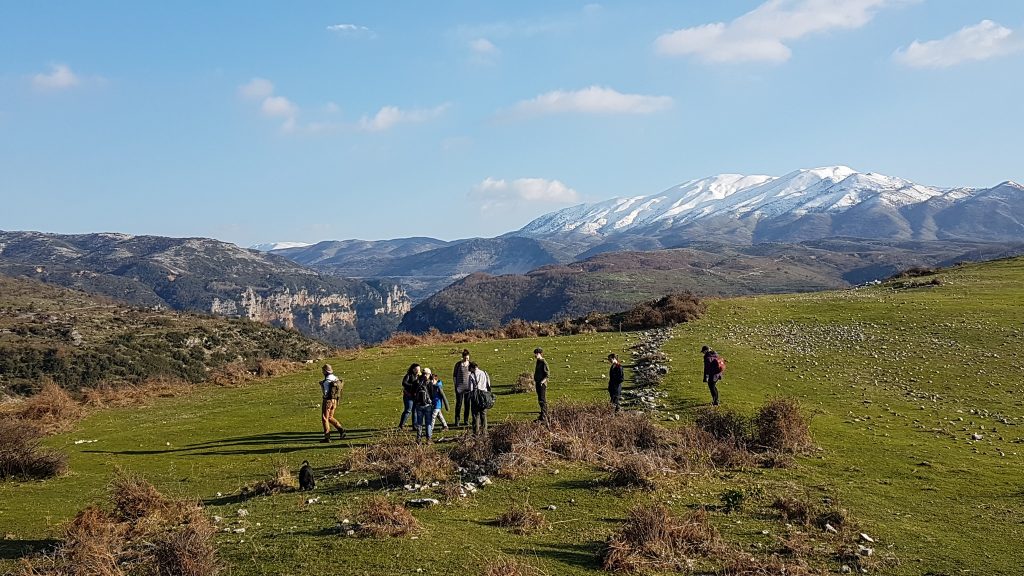
TIRANA, March 31 /ATA/ – An archaeological excavation project has been launched for the first time ever in the village of Nivica and the region of Kurvelesh in southern Albania in a bid to shed light on the area’s ancient history.
The five-year excavation project will be carried out by the Albanian Archaeology Institute and the Bristol University in collaboration with the Municipality of Tepelena and it will open up a completely new perspective for a little discovered region boasting rich history, the head of the National Coastal Agency, Auron Tare, said on Saturday.
“University of Bristol, a world-renowned institution for the British archaeology, will carry out two expeditions a year, with excavation works focusing on discovery of new settlements. The excavations will also take place in the Castle of Nivica to better understand the lives of these mountainous populations,” Tare said.
According to him, local residents have sailed to the Mediterranean ports via the ancient ports of Butrint and Avlona for centuries, enabling not only the exchange of goods, but also of different cultures and ideas.
Nivica borders 9 villages in the district of Tepelena and it covers an area of about 105 km2 and it is the biggest village in the region.
Local residents boast ancient historic origin. The French historian and diplomat François Pouqueville says in his book “Travels in Greece” that Nivica was home to the Illyrian tribe of Amant. These tribes built a castle in Nivica in IV-II centuries BC.
The strategic position and fortress that was built at that time made this place the second most important settlement of the Illyrian tribe of Amant. This fortress was rebuilt for the first time by the Romans around the year 167 BC.
m./k.s/u.sh/