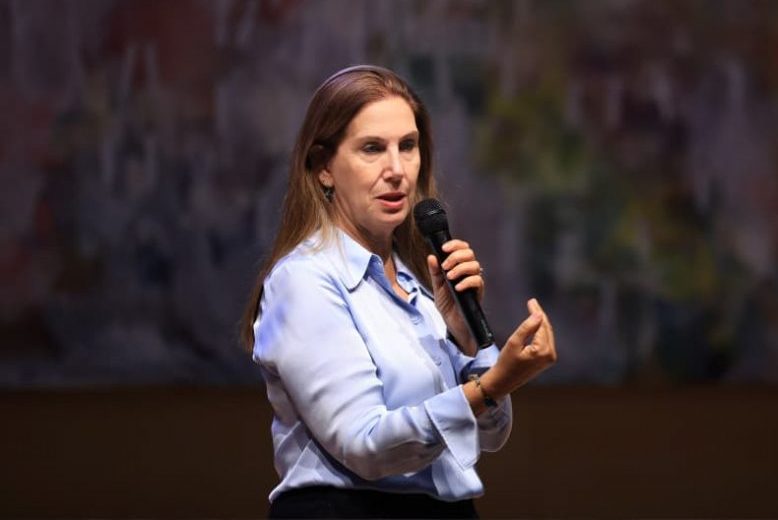
TIRANA, September 7 /ATA/ Following meetings with heads of pre-university education structures, Minister of Education Mirela Kumbaro extended some important guidelines before the start of the new school year to the principals of more than 200 schools of the Regional Directorate of Pre-University Education of Tirana.
She focused on the newly issued instruction for the 2026-2027 school year, focusing on the ban on cell phones during classes, the code of ethics for teachers and educational staff, as well as on creating a friendlier and welcoming environment for all students on the first day of school.
“We are restoring the ban cell phones, starting with teachers. Last year, we also approved the Code of Ethics for teachers, security officers, and psychosocial service employees. When I talk about the Code of Ethics, I am not just talking about appearance, but especially about communication,” explained the minister.
Further on, Minister Kumbaro focused on school safety, clarifying public opinion and the community of parents, whose children attend the schools selected for the “Smart City” project, on the data of the intelligent cameras of this project, which will be monitored by the Monitoring Center at the State Police.
“It was initially advanced as a pilot project in 20 schools in Tirana and Kamza with smart cameras. These are smart cameras that detect dangers from cigarette smoke, objects defined in the catalog as dangerous and the faces of people reported as dangerous persons”, emphasizing further that the cameras are an auxiliary tool that does not replace the attention and communication of the education system chain.
During the upcoming school year, there begins for the first time implementation of the “After School” program in 408 educational institutions throughout the country, which aims to offer students of lower and higher secondary education quality time, creative, socializing activities and to keep them away from the harmful use of technology.
Meanwhile, textbook distribution has begun. Books are free for lower secondary education, with grades 1–5 receiving new copies annually. /k.s/p.s./