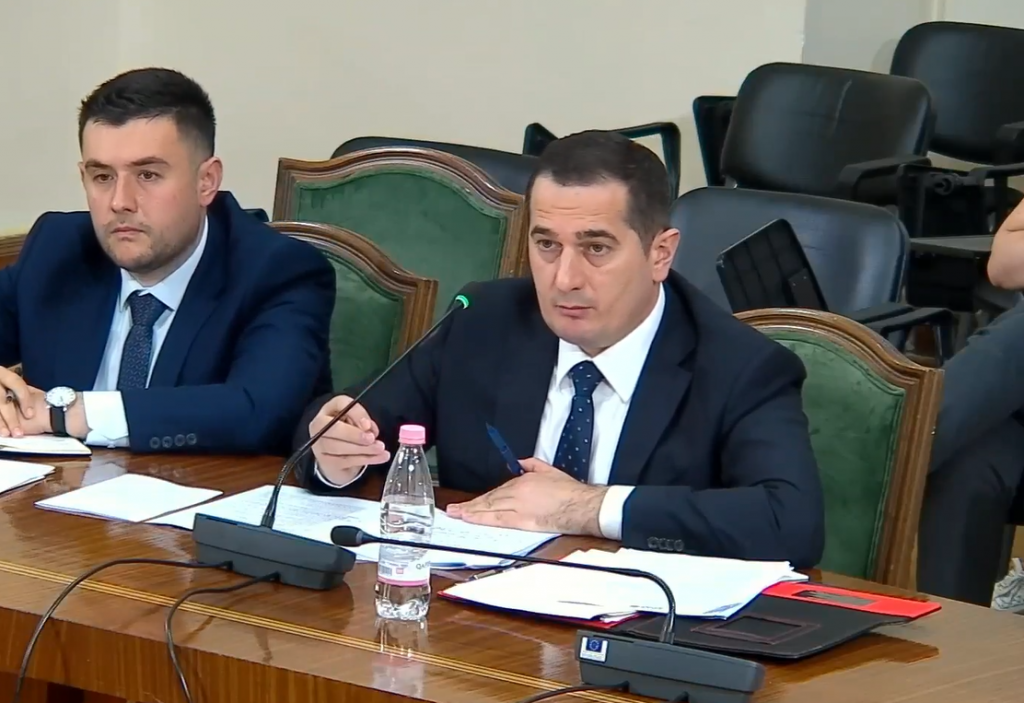
TIRANA, July 1 /ATA/The chief prosecutor of Special Anti-Corruption and Organized Crime Prosecution Office (SPAK), Klodjan Braho, told the parliamentary special committee on electoral reform on Thursday that the experience of the 2025 parliamentary elections showed that cooperation between SPAK, the General Prosecution Office, and the Central Election Commission was one of the key elements in preventing and investigating electoral crimes.
Drawing on the experience of the 2025 elections, Braho put forward three concrete proposals for electoral reform.
“First, consideration could be given to drafting a National Strategy for the Prevention, Identification, and Investigation of Electoral Crime. Experience shows that electoral crime is not solely the responsibility of a single institution and cannot be addressed only through criminal prosecution after a complaint is filed. It requires an integrated approach, where prevention, administrative monitoring, citizen reporting, police verification, criminal investigation, and financial oversight function as parts of the same institutional mechanism,” Braho said.
Braho proposed strengthening electoral reform framework through two main measures: turning inter-institutional cooperation on electoral crime into a permanent, legally regulated mechanism involving SPAK, prosecutors, the Central Election Commission, police, financial intelligence, and other enforcement bodies, with earlier and longer activation periods; and reviewing criminal policy for serious electoral offences to ensure sentencing is proportionate, particularly in cases involving organised or repeated wrongdoing, rather than simply increasing penalties across the board.
He said sentencing should be individualized, distinguishing between vulnerable voters, representatives of political parties, candidates and their campaign teams, campaign financiers, senior officials, and public employees.
In conclusion, Klodjan Braho reiterated that SPAK will continue to pursue a proactive approach to investigating electoral crimes, based on evidence and risk analysis, and will not limit its work to election periods alone.
/m.q/j.p/r.e/sm/