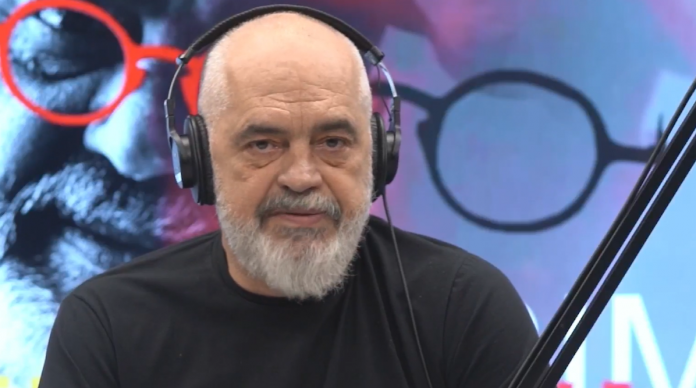
TIRANA, Dec 14 /ATA/ – Prime Minister Edi Rama on Sunday welcomed a recent decision by the Constitutional Court to lift the suspension of Deputy Prime Minister Belinda Balluku, who also serves as Minister of Infrastructure and Energy, saying it eliminated what he described as a “unique precedent in the world”.
The country’s top court overturned a first instance court decision that had removed her from office and ruled that the case will be examined on its merits at the end of January 2026.
Speaking at the opening of his podcast “Flasim” (Let’s Talk), Rama said the ruling marked a legal correction of what he called an extreme and erroneous interpretation of the law that had harmed the country’s democratic order.
“From a legal standpoint, this decision removed a precedent unique in the world and rolled back, by the highest court in the country, a form of brutality in the interpretation of the law that struck at the democratic organism of the state,” Rama said.
From an institutional perspective, Rama said the case raised broader concerns about constitutional boundaries, arguing that the original suspension represented an overreach of authority.
“This unconstitutional and anti-democratic surprise, in which a prosecutor and a judge assumed the powers of the prime minister, the president and parliament, disrupted the state and turned a legal process into a partisan trial outside the framework of the law,” he said, calling for serious inter-institutional reflection.
Rama said the issue went beyond Balluku’s case, pointing to what he described as troubling symptoms of irresponsible use of judicial independence.
“In more than one instance, the cure risks becoming more harmful than the disease we are collectively trying to fight,” he said.
The Prime Minister also criticised recent moves by judicial associations seeking salary increases through court action, calling them another example of institutional overreach.
“Judges want to increase their own salaries,” Rama said, adding that they were once again attempting to take on the powers of the government and parliament, sending a message that they stand above the will of voters and constitutional limits.
He stressed, however, that he would not adopt what he described as a flawed logic of condemning individuals based on indications rather than evidence.
“I will not follow the wrong logic of conviction by indications, even in this case,” Rama said, while acknowledging that the developments warranted serious concern.
The government head concluded by calling for a professional, institutional and measured reflection to safeguard judicial reform while preventing abuses of power.
“We must guarantee the success of judicial reform and the independence of the judiciary,” Rama said, “but we cannot allow the cure to become a bigger problem than the disease, putting at risk freedoms, rights and the functioning of the administration and the economy.”
/m.m/a.f/u.sh/