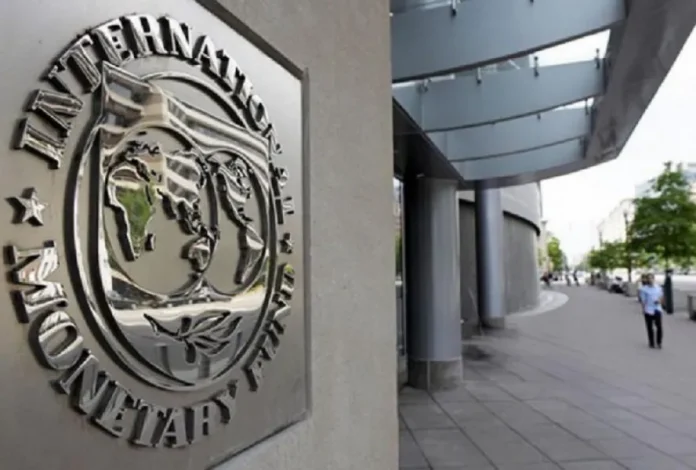
TIRANA, Nov 20 /ATA/ An International Monetary Fund (IMF) mission, led by Anke Weber and comprising David Bartolini, Stefan Kavan, Olti Mitre, Nora Neuteboom, Eyno Rots, Sebastian Sosa, and Eugena Topi visited Tirana during November 4-14 to conduct discussions on the 2025 Article IV consultation with the Albanian authorities. At the end of the visit, the mission issued the following statement:
Albania enjoys one of the highest growth rates in Europe, low inflation, declining public debt, and strong foreign reserves. Building on this foundation, Albania is now at a pivotal juncture, with the government advancing bold reforms to secure EU membership by 2030. While the near-term outlook remains favorable, the road to accession is marked by structural challenges. Significant reform gaps with the EU persist amid stagnant productivity, while a more volatile global environment—coupled with domestic pressures on wages and asset prices—pose risks to the sustainability of the tourism-led growth. Timely domestic reforms are essential to safeguard macroeconomic stability and enhance productivity. Key to this will be preserving fiscal buffers through sustained revenue mobilization with non-distortionary tax policy reforms alongside improvements to spending quality; maintaining price and financial stability through agile monetary policy and further refinement of prudential tools; and advancing comprehensive reforms in human capital, labor markets, and governance.
Albania’s tourism-led growth and macroeconomic prospects are expected to remain robust. After averaging 4¼ percent in the post-pandemic period, real GDP is projected to grow by 3.5 percent in 2025, primarily driven by private consumption, and 3.6 percent in 2026 reflecting a modest acceleration in growth in key euro area trading partners. Direct effects from U.S. tariffs are minimal, while indirect effects from global trade measures and uncertainty also appear limited so far. Despite some moderation, tourism continues to provide steady support to economic output. Headline inflation is projected to gradually increase from 2.2 percent in 2025 to the 3 percent target in the second half of 2026, amid a tight labor market and rising wages. The current account deficit is projected at 2.8 percent of GDP in 2025 and to gradually widen to about 3.5 percent of GDP over the medium term as rising disposable income and public capital expenditure boost imports.
Risks to the outlook have shifted to the downside amid a more unsettled external environment. Geopolitical tensions, escalating trade measures, commodity price volatility, and prolonged uncertainty could affect Albania’s key trading partners and weaken external demand. Global financial market volatility and asset price corrections could reduce demand for Albanian sovereign debt and may lead to rollover risks. Domestically, a sharper-than-anticipated decline in the working age population could exacerbate labor shortages, fuel inflation, necessitate a tighter monetary policy stance, and dampen growth prospects. On the upside, the sustained implementation of the EU reform agenda could boost productivity and growth.
Under current policies, IMF staff project a small primary surplus in 2025 and 2026 and a zero primary balance thereafter. The planned increases in average pensions through monthly bonuses (e.g., from €270 to €400 for urban pensions) starting in 2026 will be partly financed by expected gains from the authorities’ Medium-Term Revenue Strategy (MTRS), current spending savings, and under-execution of capital spending. Public debt is projected to decline from 54 percent of GDP at end-2025 to around 50 percent of GDP by 2030. While debt dynamics have improved considerably over the last years, still relatively sizable gross financing needs—averaging 13 percent of GDP in 2025-30—underscore the importance of continued debt management reforms.
Like many other European countries, Albania faces fiscal spending pressures, which—if not addressed now—could jeopardize fiscal sustainability over the medium term. Demographic trends are expected to drive up pension and health spending, especially after 2030, while the NATO commitment to allocate 5 percent to defense and security spending by 2035 will further strain public finances. To bolster resilience and productivity, greater investment will also be needed in education, training, and climate adaptation. To address these challenges and safeguard fiscal buffers, staff recommend a package of growth-friendly measures centered on sustained revenue mobilization, tax policy reforms, and improvements in the quality of public spending.
Accordingly, revenue reforms should focus on streamlining tax expenditures, modernizing property taxes, and strengthening tax administration. Costly and regressive tax expenditures, such as high VAT exemption thresholds, sector-specific incentives, and preferential regimes for the self-employed, should be gradually phased out as their effectiveness is uncertain. Introducing a recurrent, value-based property tax and accelerating its implementation would support local finances. Stronger enforcement supported by risk-based audits and digitalization remains essential to realize the full MTRS gains. These measures together have the potential to raise up to 2 percent of GDP in revenues by 2030. The proposed Fiscal Peace Agreement—with its features of voluntary arrangement to pre-determine taxable profits and suspend tax audits for the agreement period, cancellation of tax and customs debts, and revaluation of past financial statements at a uniform low rate—risks undermining tax compliance, weakening audit credibility, and reversing hard-won gains in tax administration modernization.