TIRANA, Dec 13 /ATA/ – German Chancellor Olaf Scholz called on Wednesday for stronger support for the Western Balkan countries and stated that the European Union member states should not use their veto power to block certain stages of the EU enlargement process.
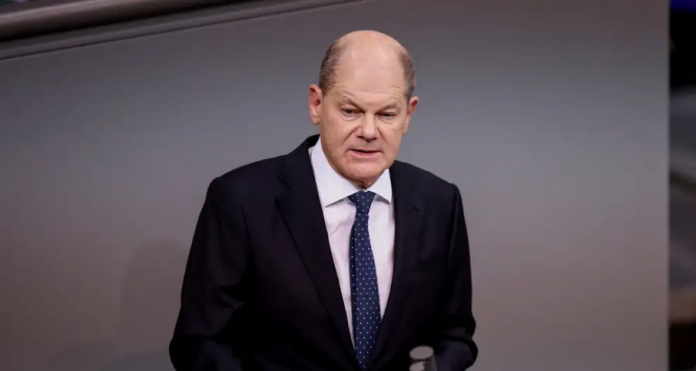
In a speech at the German Bundestag ahead of the EU-Western Balkans summit, due to be held on Wednesday afternoon in Brussels, Chancellor Scholz called for more support for Western Balkans, saying “the countries that that make progress must be rewarded.”
“For 20 years now, countries like Albania, Bosnia and Herzegovina, Kosovo, North Macedonia, Montenegro and Serbia wait to become EU members and it is now time for both the candidate countries and the EU member states to see the overall panorama.”
According to German Chancellor, “the current overall panorama is a historic chance to ultimately connect the region with Europe.”
He demanded that the EU members do not resort to their veto power during certain stages of the enlargement process.
“There is no need for every decision to open or close the negotiation chapters to depend on each member state. If countries like Albania have delivered crucial reforms, this should be rewarded. Otherwise, there is a risk of hurting the entire membership process and we should not allow this,” the Chancellor asserted amidst applause from MPs.
The German Chancellor’s messages are also directed at Greece, a country which has threatened not to allow the opening of the first chapter of accession negotiations with Albania without addressing the Beleri case.
Germany considers it a bilateral issue, which must be resolved by the two sides.
Fredi Beleri, the elected ethnic Greek mayor of Himare, has been detained since May for alleged vote buying, after being elected mayor of the predominantly ethnic-Greek city of Himare in Albania.
/DW/