TIRANA, May 31 /ATSH/ – Communities are increasingly recognized as key partners for outbreak preparedness and response.
”Communities” include not only at-risk groups, but also other stakeholders who are linked to these affected populations and who may be able to support the preparedness and response process.
And, in many communities, civil society organizations (CSOs) and community-based trusted influencers are the only people available and able to engage and inform people and address their concerns.
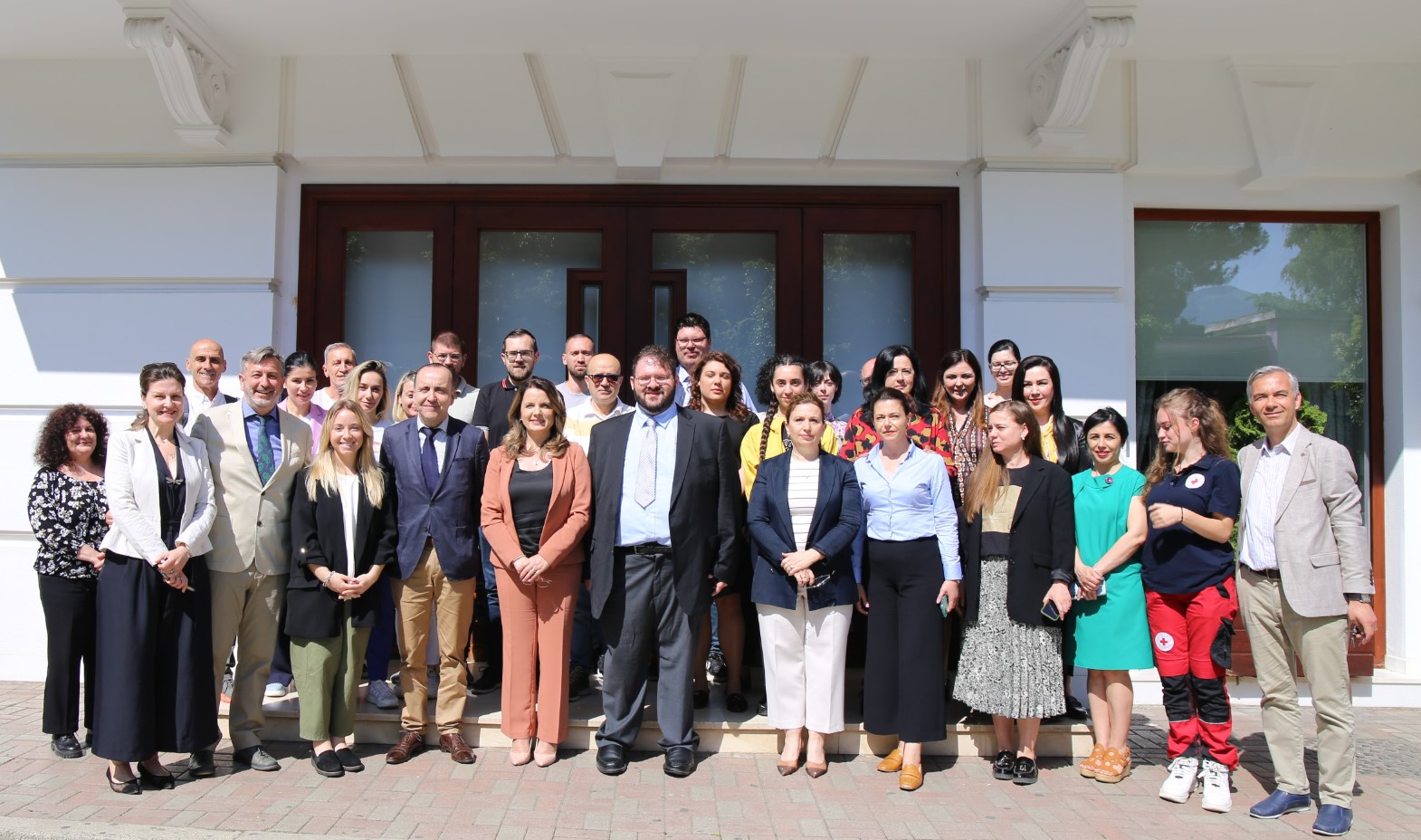
At a two-day workshop in Tirana organized by the WHO Country Office in Albania, with technical support from WHO Regional Office for Europe’s risk communication, community engagement and infodemic management (RCI) and WHO Health Emergencies (WHE) Balkan Hub teams, as well as and financial support from the European Union, representatives of CSOs, health authorities, partners and other stakeholders discussed the importance of community engagement and how to go about identifying relevant communities and establish mechanisms to dialogue with communities.
In her address to the workshop, Dr. Eugena Tomini, General Director of Institute of Public Health, stated that, “Effective communication about risks during an emergency through community engagement is a vital public health intervention. It saves lives during the emergencies, and every investment in crisis communication and community engagement is an investment in health and health security and a safe society.”
We have seen during the COVID-19 pandemic that socially vulnerable populations may be disproportionally affected by a public health crisis, and they also are often under-represented in active stakeholder groups responding to the crisis, she added.
The principles of community engagement therefore need to be kept at the core, including and in particular for socially vulnerable populations.
This requires the involvement of community-based partners in the exchange of risk information, and the development of a trusting foundation for shared decision-making that, in addition to health concerns, necessarily also addresses a range of social, economic, political, and environmental issues.
The ultimate aim of community engagement activities is to facilitate the development of an informed community that – in collaboration with the health and relevant non-health sectors – is empowered to ensure the security and protection of all its members.
For Leonardo Palumbo, Community Engagement Officer with WHO Regional Office for Europe, community-led responses have never been higher in the agenda of World Health Organization (WHO) and health authorities as during the COVID19 pandemic.
“Engaging critical community audiences as both recipients and advocates of COVID-19 vaccines is of crucial importance for reaching out and communicating with at-risk and vulnerable target populations,” he said.
Participants in the workshop were trained by the WHO Regional Office for Europe’s experts on how to map community structures, establish dialogue with communities and build partnerships with relevant community stakeholders, including CSOs. Additionally, they discussed on lessons learned during the COVID-19 response, which helped identifying current challenges, capitalizing on experiences on communicating about COVID-19 preventive measures with marginalized groups and defining the role of communities in health emergencies.
Bernard Segarra, Programme Officer at Operations Section for Sustainable Economic and Social Development, Delegation of the European Union to Albania, stated that, “Countries need support to build capacities on RCCE, and make sure that it is at the heart of all public health interventions, especially in emergencies. We have all seen how these community-based empowerment initiatives successfully assisted in the pandemic response.”
In her address to the event as a keynote speaker, Dr Najada Çomo, Head of the Infectious Diseases Service at University Hospital “Mother Tereza” in Tirana, stressed that “Health officials can help to build more resilient communities that are better prepared for future health emergencies by valuing the community-level methods used in overcoming COVID-19 and further strengthening the skills of community group members.”
“With the overall goal of strengthening the country’s capacities for community engagement before, during and after public health emergencies, the workshop helped also at establishing structures, systems and skills for a tripartite collaboration between health authorities, WHO and CSOs to enhance acceptance and uptake of preventive measures, including vaccination and community resilience to health emergencies,” said Dr Gazmend Bejtja, Public Health Officer with WHO Country Office in Albania.
The priority actions and lessons learned identified in the workshop will be used to calibrate future RCI activities in the country, and more specifically the vaccination intervention related to the promotion of COVID-19 vaccination.