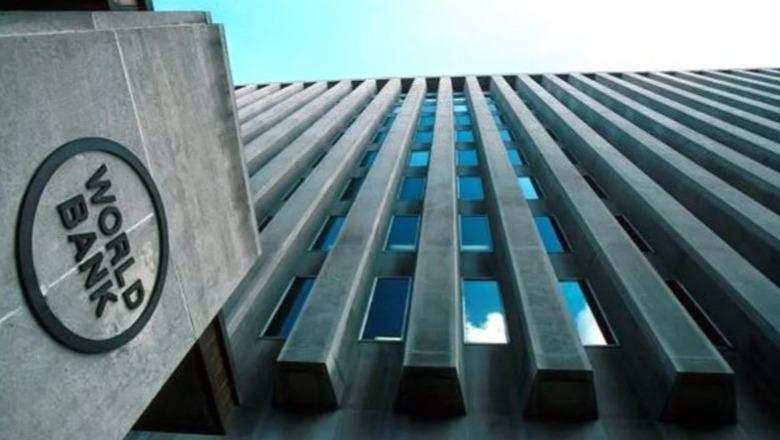
TIRANA, Oct 27 /ATA/ – Albania’s economy is expected to grow by 3.4% in 2026 and 3.6% in 2027, supported by domestic demand, services and construction, the World Bank said on Tuesday.
In its latest Western Balkans Regular Economic Report, the World Bank said economies across the region had proved resilient to external shocks and continued to converge towards the European Union.
Albania’s economic resilience has been bolstered by improvements in public finances and external balances, with public debt falling below 50% of gross domestic product (GDP), the report said.
Economic activity remained steady in the early months of 2026, supported by domestic demand, services and construction. A tight labour market helped push unemployment to a record low, while wages continued to rise and poverty declined further.
Credit growth remained strong and the financial sector resilient, underpinned in part by low levels of non-performing loans.
Inflation rose gradually through August, driven by higher food and fuel prices, rising rents amid strong tourism demand and continued wage growth.
A budget surplus and the appreciation of the lek also helped reduce public debt, while higher foreign direct investment, increased foreign exchange reserves and a narrower current account deficit strengthened the country’s external position.
The World Bank said these developments pointed to improving macroeconomic stability, although structural challenges continued to pose risks to growth over the medium term.
Economic growth across the six Western Balkan economies – Albania, Bosnia and Herzegovina, Kosovo, Montenegro, North Macedonia and Serbia – is forecast to accelerate to 3.1% in 2026 from 2.6% in 2025, before rising to 3.4% in 2027 and remaining at that level in 2028.
“At a time of heightened geopolitical uncertainty and sluggish growth among our main trading partners, the Western Balkans has once again demonstrated economic resilience,” said Xiaoqing Yu, the World Bank’s director for the Western Balkans.
But resilience alone would not be enough to bring regional incomes closer to EU levels or generate the quality jobs needed, she said.
The next phase of growth would require a more dynamic private sector, more predictable regulations and the removal of trade barriers, including those arising from domestic rules and administrative procedures, Yu added.
Successive rounds of tariff liberalisation have made the Western Balkans highly integrated into global trade. Trade in goods and services reached 107% of regional GDP in 2025, above the EU average of 90%, while services exports quadrupled between 2010 and 2025.
Further reforms are needed to help businesses benefit more fully from access to international markets by reducing unnecessary regulatory and administrative costs, the report said.
Average tariffs on imported goods in the region are about 6%, while non-tariff measures add costs equivalent to around 10% of imports. In some agri-food sectors, those costs exceed 20%.
Restrictions on cross-border trade in services are even more burdensome, with their cost estimated at 29%, the report said.
Simulations cited by the World Bank suggest that removing half of existing import barriers — including licensing and authorisation requirements, repeated inspections, certification procedures and rules requiring businesses to maintain a physical presence in domestic markets — could increase GDP by up to 12.5% over the medium term.
High import costs also make it harder for regional firms to export and maintain a foothold in foreign markets.
Only about one-third of new export relationships established by Western Balkan companies survive beyond their first year, while just 1% to 4% remain active after five years, according to the report.
The figures have implications for employment, as exporting firms account for the vast majority of manufacturing jobs in the region. Exporters also tend to be larger and pay higher wages than comparable businesses serving only domestic markets.
The World Bank said reforms should focus on improving the quality of regulation rather than simply reducing the number of rules.
/m.m/u.sh/