TIRANA, Oct 25 /ATA/ Breast cancer remains one of the most common malignancies among women, while early detection, regular check-ups and personalised treatment are among the key factors influencing treatment success.
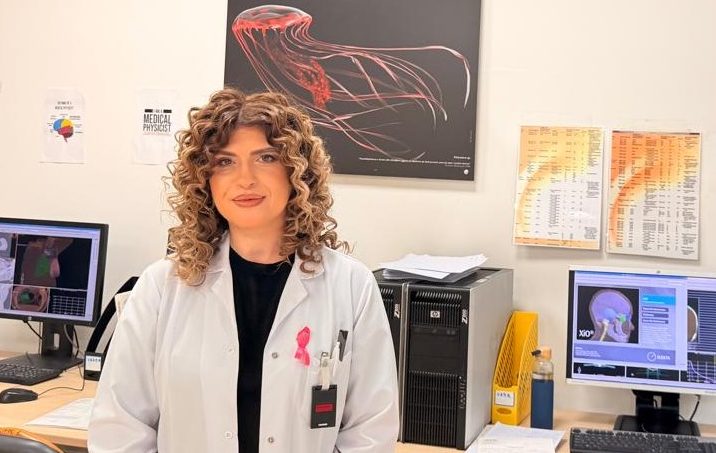
Borjana Jahaj, an oncologist and radiotherapist at the “Mother Teresa” University Hospital Centre, stressed the importance of raising awareness of the disease in an interview with the Albanian Telegraphic Agency (ATSH), highlighting that it can also affect younger women, including those under the age of 40.
“Breast cancer is one of the most common malignant diseases among women and remains one of the most significant public health challenges in Albania,” Jahaj said.
Speaking about risk factors, Jahaj cited age, family history, genetic mutations and a previous history of breast disease. Other factors include lifetime hormonal exposure, high breast density, being overweight, physical inactivity and alcohol consumption.
“In recent years, awareness has increased and diagnostic methods have improved significantly. However, to determine whether the number of cases has genuinely risen, data from national cancer registries must be analysed to establish whether the upward trend in diagnoses is accompanied by a real increase in cases.
“We are seeing a slight year-on-year increase in new cases, including among younger women. Younger women can develop the disease, and in some cases, it may have more aggressive biological characteristics. Diagnosis is also more challenging in this age group because breast tissue tends to be denser,” she said.
Dr Jahaj said that “early detection is one of the most important factors influencing the success of breast cancer treatment”.
In this regard, she said, mammography remains an essential examination, as it can detect very small changes before symptoms appear or a palpable lump develops.
“Mammography is an essential examination for breast cancer screening, as it can detect very small changes before symptoms appear or a lump becomes palpable. Its importance lies precisely in its ability to detect the disease as early as possible.
“Assessing individual risk is crucial in determining how frequently screening should be carried out. For women at average risk, regular mammography is particularly important between the ages of 40 and 50. For women at high risk, screening may begin earlier and be supplemented with breast ultrasound or magnetic resonance imaging (MRI), depending on individual circumstances, but without replacing mammography,” she added.
Breast awareness also plays an important role in helping women identify new changes, such as the appearance of a lump, skin changes, redness or nipple discharge. However, Jahaj emphasised that self-examination does not replace mammography or other diagnostic methods.
“Self-examination, or what we more accurately call ‘breast self-awareness’, is a simple way of understanding what is normal for your breasts and recognising any changes that may occur. Particular attention should be paid to the appearance of a new lump, skin changes, redness or nipple discharge. However, it is important to stress that not every breast lump is cancerous and that self-examination does not replace mammography or other diagnostic methods,” she added.
Jahaj said that breast cancer treatment relies on the collaboration of a multidisciplinary team comprising a surgical oncologist, a clinical oncologist, a radiation oncologist, a radiologist and a pathologist.
According to the doctor, surgery remains one of the main pillars of treatment. Depending on the tumour’s biological characteristics, its size, the patient’s age and the extent of the disease, breast-conserving surgery or a mastectomy may be chosen, with breast reconstruction also an option where appropriate.
“In recent years, breast oncology has advanced rapidly in Albania. Anti-HER2 targeted therapies have been introduced, along with combinations of hormone therapy and CDK4/6 inhibitors, as well as immunotherapy for triple-negative tumours, significantly improving survival rates. Our challenge is not only to have the necessary expertise, but also to ensure that patients have access to these treatments at the right time,” Jahaj emphasised.
In conclusion, Jahaj urges women not to postpone medical check-ups out of fear of a diagnosis.
“Prioritise your health. Fear should not be a reason to avoid a check-up. Timely screening saves lives,” the oncologist and radiotherapist appeals.
/e.i/a.f/sm/