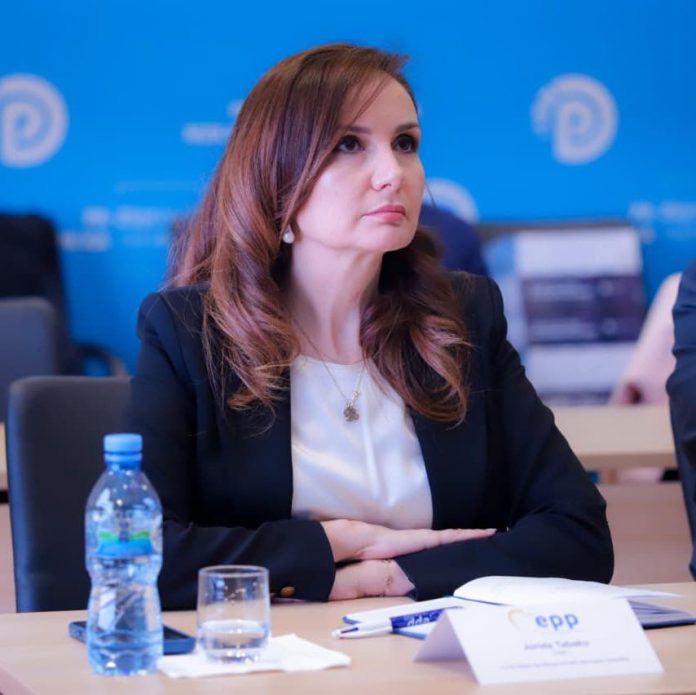
TIRANA, August 19 /ATA/ Democratic Party MP Jorida Tabaku stated that July’s 10.6% export increase does not signal a stronger manufacturing economy. According to her, gains came entirely from construction materials, metals, and fuels, while manufacturing output dropped. Long-term trends confirm that while export values rose 36% between 2014 and 2025, the actual physical volume of goods fell 14%.
Speaking about the exchange rate, Takabu said that while the numbers might look good, a falling euro hurts exporters. They get less lek from their sales, leaving them short on cash for wages and bills.
“The façon sector, representing roughly 30% of goods exports and tens of thousands of jobs, faces severe strain. A weak euro triggers factory closures, canceled contracts and layoffs, while opaque foreign exchange inflows continue to artificially inflate the lek without clear justification,” she said.
Commenting on economic growth, Tabaku noted that in 2025, industry contracted by 3.72% while agriculture declined by 2.5%. She highlighted that public administration, education, healthcare, and net taxes collectively drove roughly 77% of the overall 3.66% growth rate. According to Tabaku, this proves the economy is currently being sustained by government spending rather than private enterprise. She argued that beneath the official narrative, the core sectors meant to produce, export, and generate employment are in retreat. While short-term metrics can easily be used as propaganda, they cannot mask the reality of closing factories, lost jobs, and families struggling to make ends meet. /m.q/j.p/p.s./