TIRANA, Aug 8 /ATA/ Following the fall of the dictatorship, many Albanians, inspired by their newfound freedom, set out for the wider world in search of the prosperity they had long been denied. The scale of the departure was so vast that it came to be compared with a biblical exodus.
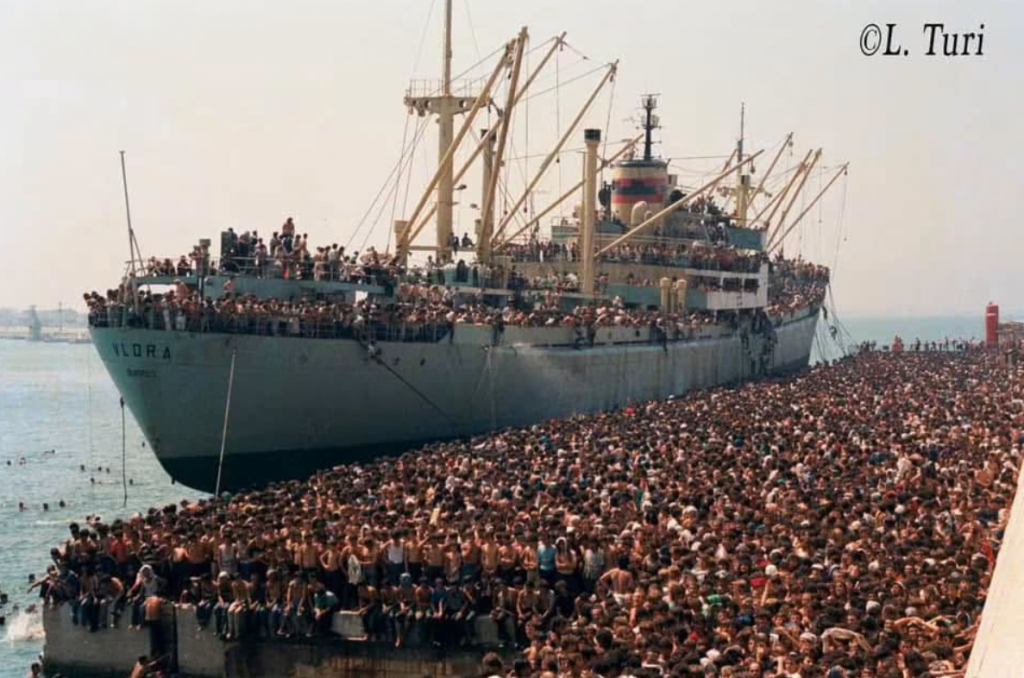
On August 8, 1991, thousands of Albanians set sail from the port of Durrës for Bari aboard the cargo ship “Vlora”, which had just returned from Cuba carrying a load of sugar cane. The ship was packed with men, women and children waiting to discover their fate between the two shores of the Adriatic Sea. People clung to whatever they could, even the pole bearing the red-and-black Albanian flag.
Their first destination was the city of Brindisi, before they continued on to Bari. For most of them, the stay was short-term. Within two weeks, 17,400 Albanian citizens were repatriated, while around 1,500 remained in Italy after seeking political asylum.
Durrës Mayor Emirjana Sako recalled the historic event, describing those who left as symbols of courage, sacrifice and hope for a better future.
She expressed gratitude to the Italian people and institutions, as well as to the countless families who opened their homes and hearts to the arrivals, demonstrating solidarity and humanity.
Sako noted that 35 years later, much has changed.
“The Albanian community in Italy is a valuable asset and an integral part of the economic, social and cultural life of our friendly country,” she wrote.
She added that many Albanians have since returned to contribute to Albania’s development, while an increasing number of Italian citizens are choosing to live and invest in the country.
“This is perhaps the clearest testament to a friendship that has grown stronger over the decades. Today, Albania is a modern country on the path to European Union membership, while its partnership with Italy continues to deepen through investment, projects and cooperation that benefit both countries’ citizens. The story of the ‘Vlora’ remains a powerful reminder that hope, solidarity and cooperation can build bridges that endure through time,” she said.
/m.q/j.p/sm/