TIRANA, July 14 /ATA/ – Two of the Gjirokastër region’s best-preserved historic stone bridges, the Haskova Bridge and the Glina Bridge, continue to attract visitors with their architectural significance, historical value and picturesque natural setting.
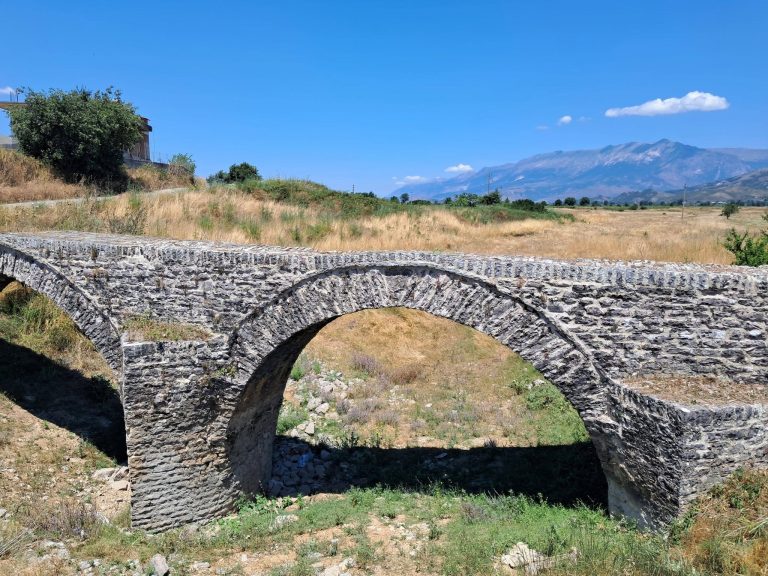
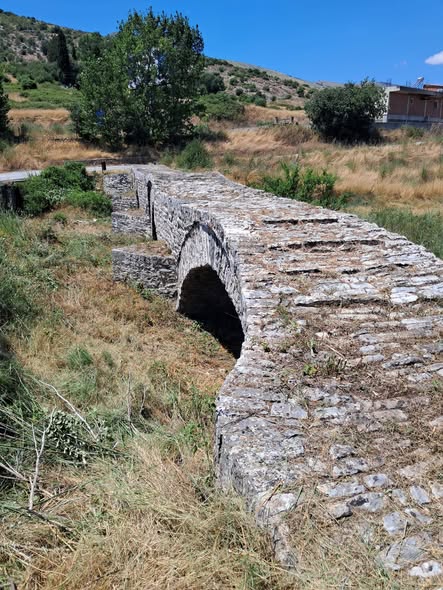
The Haskova Bridge, located at the entrance to the village of the same name along the Gjirokastër -Jorgucat road, spans the Dry River (Alb. Lumi i Thatë) and is a notable example of traditional Albanian bridge-building.
The humpback stone bridge features two arches with spans of 6.4 metres and 7.8 metres. Built entirely of limestone slabs, its arches are slightly pointed and framed by finely dressed stonework. The bridge’s cobbled deck is paved with limestone blocks and interrupted at regular intervals by transverse stone steps, a distinctive construction feature. The structure reaches a maximum height of 4.6 metres.
Another important example of traditional engineering is the Glina Bridge, located near the village of Grapsh alongside the national highway. Built over a branch of the Drino River, locally known as the Dry River, the bridge provides access to the nearby village of Glina, from which it takes its name.
The bridge consists of four boat-shaped stone arches spanning between 5 and 7.2 metres, a hallmark of traditional Albanian bridge architecture. Historical records show it was already documented in 1897 as an important crossing linking the villages of Peshkëpi and Grapsh.
Both bridges are considered valuable monuments of Albania’s cultural heritage and remain popular attractions for visitors exploring the history, traditional architecture and natural landscapes of the country’s southern region.
Their preservation and promotion continue to enrich the cultural tourism offer in the southern Albania district of Gjirokastër.



/r.e/u.sh/