TIRANA, July 5 /ATA/ – In a city where tourism has become an integral part of daily life, Berat continues to reveal new layers of its rich history. While visitors flock to the UNESCO World Heritage city’s iconic neighbourhoods of Mangalem, Gorica and the Castle, a lesser-known but increasingly popular site is drawing attention for the story it tells about Berat’s Ottoman past.
The Medieval Centre of Berat, located at the entrance to the road leading up to the castle in the historic Mangalem quarter, has emerged as one of the city’s most significant cultural attractions following an extensive restoration programme. With its stone-paved pathways, restored buildings and carefully preserved monuments, the complex offers visitors an opportunity to step back several centuries to a period when Berat was one of the Ottoman Empire’s most important administrative centres in the Balkans.
At the centre of the complex stands the King Mosque (Xhamia Mbret), one of Albania’s oldest surviving Ottoman mosques and a landmark that continues to serve both worshippers and visitors. Historical records indicate that the mosque was built between 1492 and 1495 on the orders of Sultan Bayezid II as part of a wider campaign to establish imperial mosques across strategically important cities in the region.
Known in Ottoman documents as either Hünkâr Camii (Imperial Mosque) or Sultan Bayezid Mosque, the structure symbolised the authority of the Ottoman state at a time when Berat had become a key administrative and military centre. Local accounts suggest that official decrees and orders from the Sultan were once announced from the mosque, underlining its central role in civic life.
Today, visitors entering the mosque are greeted by guides and caretakers who explain not only its architectural features but also the customs associated with visiting an active place of worship. The site attracts a steady flow of international tourists eager to learn about its history and its place within the broader story of Ottoman-era Albania.
Beyond the mosque, the Medieval Centre encompasses a collection of monuments that together illustrate the religious, educational and social life of the period. Among the most remarkable is the Helveti Tekke, a dervish lodge associated with the Helveti Sufi order. Unlike Albania’s better-known Bektashi heritage sites, the tekke reflects the traditions of a different Islamic mystical order that once had a strong presence in the region.
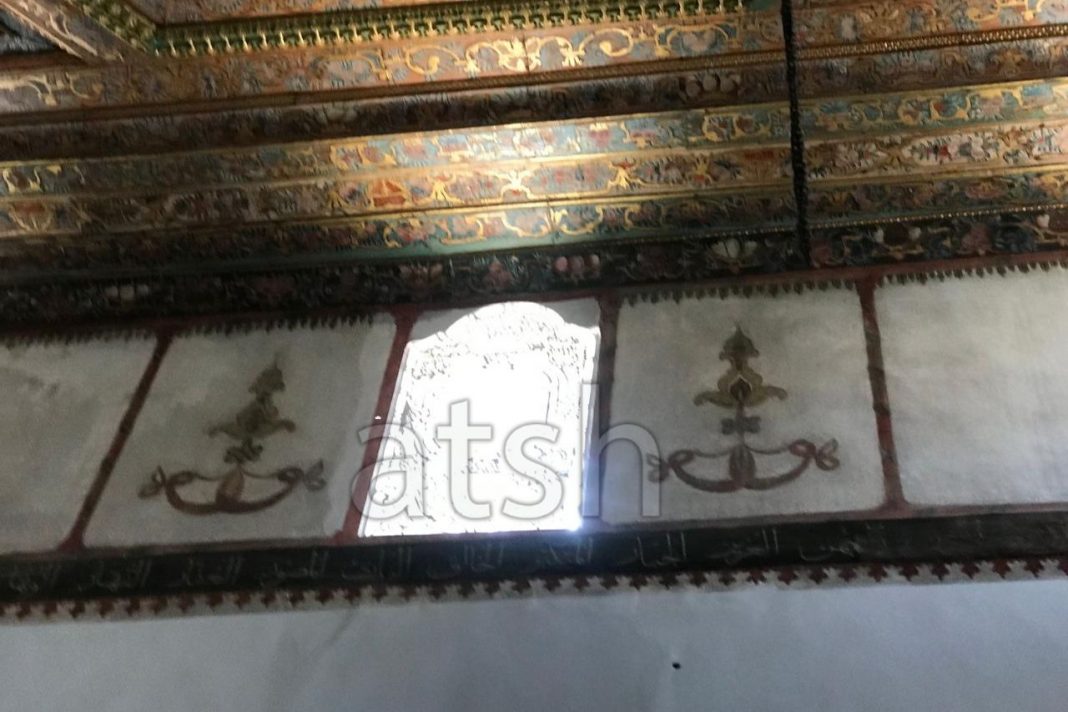
The interior of the tekke is particularly striking. Its wooden ceiling is decorated with elaborate baroque-style paintings and gold leaf, while its walls feature rare landscape frescoes, an unusual element in Islamic religious architecture. Architectural studies have also identified small openings in the walls designed to improve acoustics, reflecting the sophisticated craftsmanship employed in its construction.
A carved wooden gallery inside the building once accommodated musicians during religious ceremonies, highlighting the importance of music and spiritual performance within Sufi traditions. The entrance is framed by a portico supported by columns that local historians believe may have originated from the ancient city of Apollonia, illustrating the layers of history embedded within the site.
The complex also includes a restored Ottoman inn, or han, which historically provided accommodation for travelling merchants, pilgrims, students and dervishes. Today, the building has been repurposed while preserving many of its original wooden architectural features. Nearby stands a historic stone well, once used both for ritual ablutions and by those staying within the complex.
Facing the King Mosque are two Ottoman-era tombs adorned with columns and Arabic inscriptions. According to historical accounts, the area once served as the mosque’s cemetery, where individuals of high social standing and religious figures were buried. Most of the graves disappeared during the communist era when parts of the site were redeveloped, but these two tombs survived due to their cultural and historical significance.
Researchers believe one of the tombs may belong to a young member of the family of Kurt Pasha, the influential Ottoman ruler who commissioned major additions to the complex in 1782. Other graves in the area are thought to have belonged to dervishes who served in the adjacent tekke.
Like many religious monuments across Albania, parts of the Medieval Centre experienced significant changes during the communist period. While the Helveti Tekke survived after being designated a cultural monument, the King Mosque was converted into a warehouse and its minaret partially demolished. The upper section of the minaret visible today was reconstructed after the fall of communism, while the original lower structure remains intact.
The transformation of the entire complex came through a major restoration project carried out between 2018 and 2021 under the “Routes of Faith” programme. The initiative aimed to preserve and revitalise some of Albania’s most important religious and cultural heritage sites, ensuring their accessibility for both residents and visitors.
Tourism professionals in Berat say the restoration has significantly enriched the city’s cultural offering. While the castle, historic houses and panoramic views remain the main attractions, the Medieval Centre provides visitors with a deeper understanding of the city’s role as a crossroads of cultures, religions and empires.
Today, the shaded courtyard at the heart of the complex offers a quiet space for reflection. Visitors often pause beneath the large trees overlooking the cobbled streets and the castle above, taking in a setting where centuries of history converge.
As Berat continues to attract growing numbers of international tourists, the Medieval Centre stands as a reminder that the city’s appeal extends beyond its famous vistas. It offers a rare and tangible connection to a chapter of Albania’s past that shaped not only the city itself but also the wider cultural landscape of the region.
/r.e/u.sh/