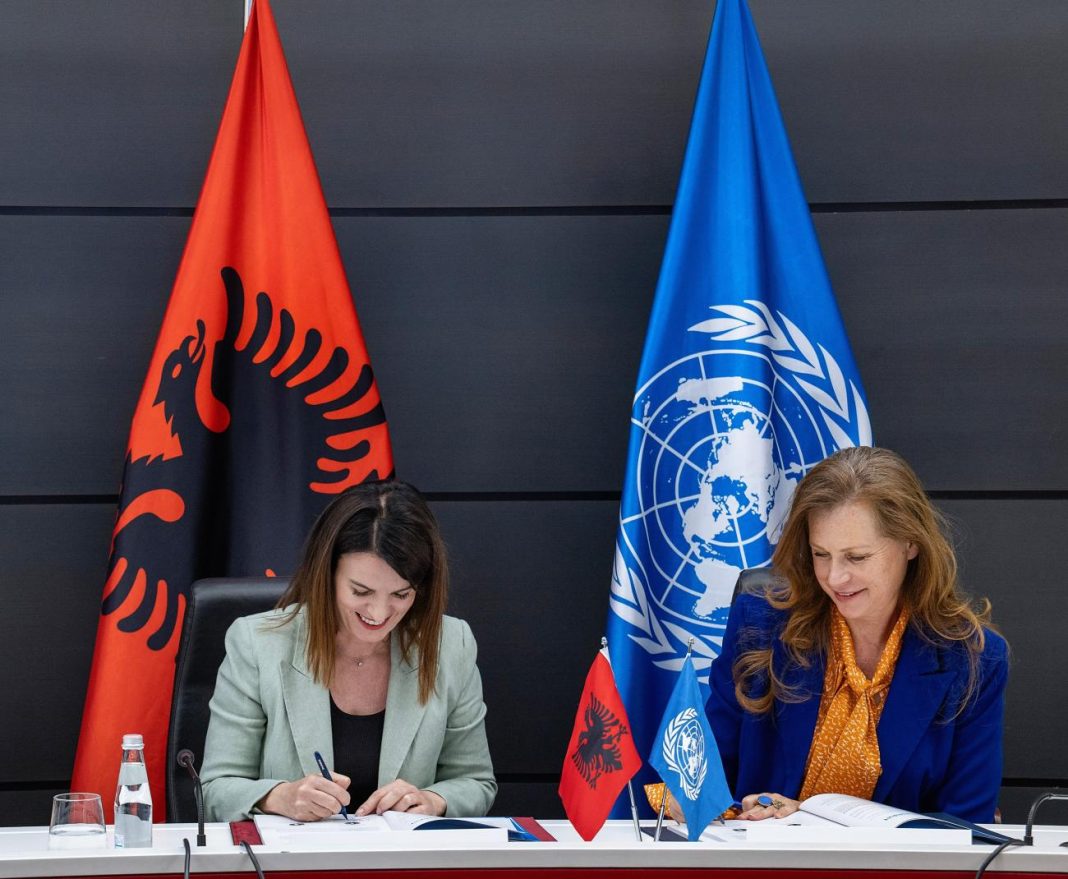
TIRANA, June 29 /ATA/ – Albania and the United Nations signed a new Cooperation Framework for 2027-2031 on Monday, reaffirming their joint commitment to advancing sustainable development, strengthening institutions and improving the well-being of people across the country.
The agreement was signed by Deputy Prime Minister Albana Koçiu on behalf of the Albanian government and U.N. Resident Coordinator in Albania Ingrid Macdonald, in the presence of senior government officials and representatives of the U.N. country team.
The framework aligns with Albania’s national development priorities and international commitments, including the U.N. 2030 Agenda for Sustainable Development, the country’s National Roadmap for the Sustainable Development Goals (SDGs), its European Union accession process and broader economic reform agenda.
According to the United Nations, the framework was developed following extensive consultations involving more than 600 stakeholders, including government institutions, municipalities, civil society organizations, youth groups, women’s organizations, academia, the private sector and representatives of vulnerable communities.
The partnership will focus on three strategic pillars: inclusive human capital development, sustainable economic transformation and green growth, and strengthened governance, justice and human rights.
Under the first pillar, the two sides will work to improve access to quality healthcare, education, social protection and child protection services, while expanding opportunities for skills development and decent employment.
The economic component aims to boost productivity and competitiveness through green and digital business models, support small and medium-sized enterprises, modernize the agri-food sector and promote climate-resilient development in line with EU standards.
The governance pillar will focus on strengthening transparent and accountable institutions, expanding access to justice, promoting gender equality and human rights, and enhancing efforts to combat corruption, organized crime and cybercrime.
The framework adopts the principle of “leaving no one behind,” with targeted support for vulnerable groups, including Roma and Egyptian communities, people with disabilities, rural populations, migrants and young people.
The total estimated budget for the 2027–2031 period is approximately $227 million, with around $84 million already secured as of June 1, 2026. The initiative brings together 20 U.N. entities and is supported by the Albanian government, the European Union, international financial institutions, bilateral partners, civil society and the private sector.
“The signing of the Albania-United Nations Cooperation Framework 2027-2031 reaffirms our strong partnership with the United Nations at a crucial stage of the country’s development and European integration journey,” Deputy Prime Minister Koçiu said.
Macdonald described the agreement as a shared commitment to building “an inclusive, prosperous and people-centred Albania,” adding that the United Nations would continue supporting the country’s development efforts while ensuring that no one is left behind.
The Cooperation Framework serves as the primary planning instrument through which the U.N. system coordinates and delivers development assistance at the national level and will guide U.N. engagement in Albania through the end of the decade.
/u.sh/