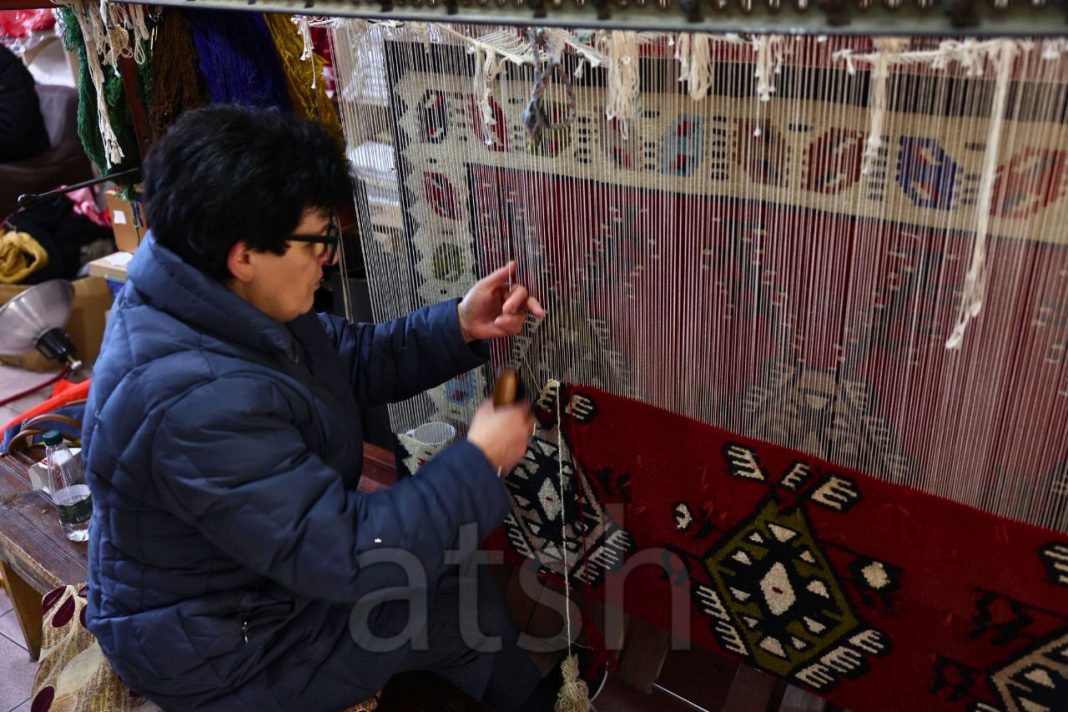
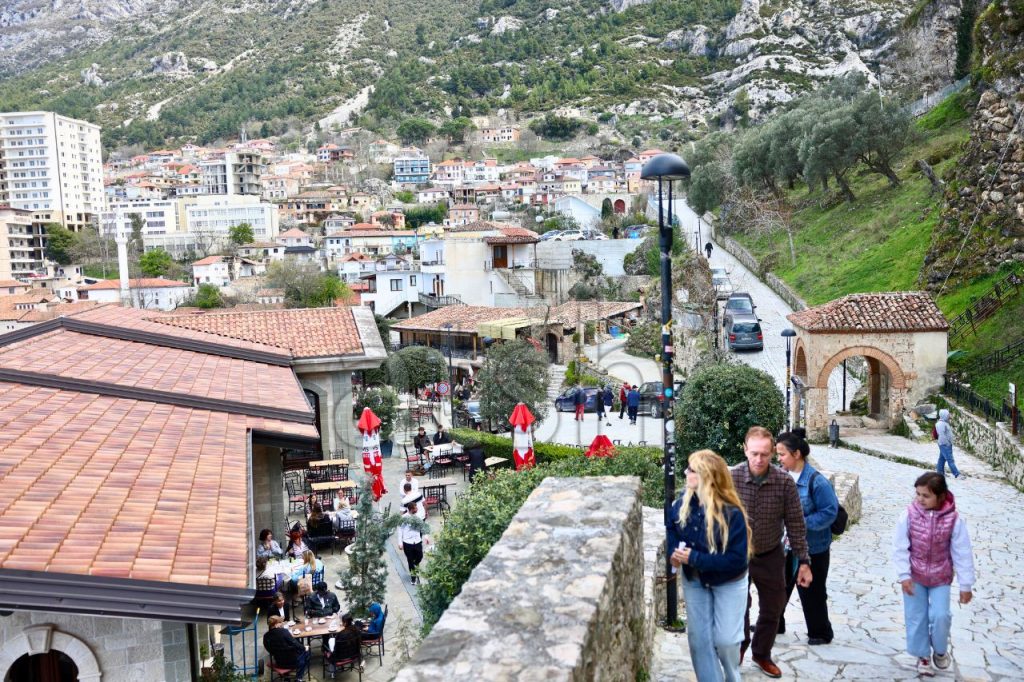
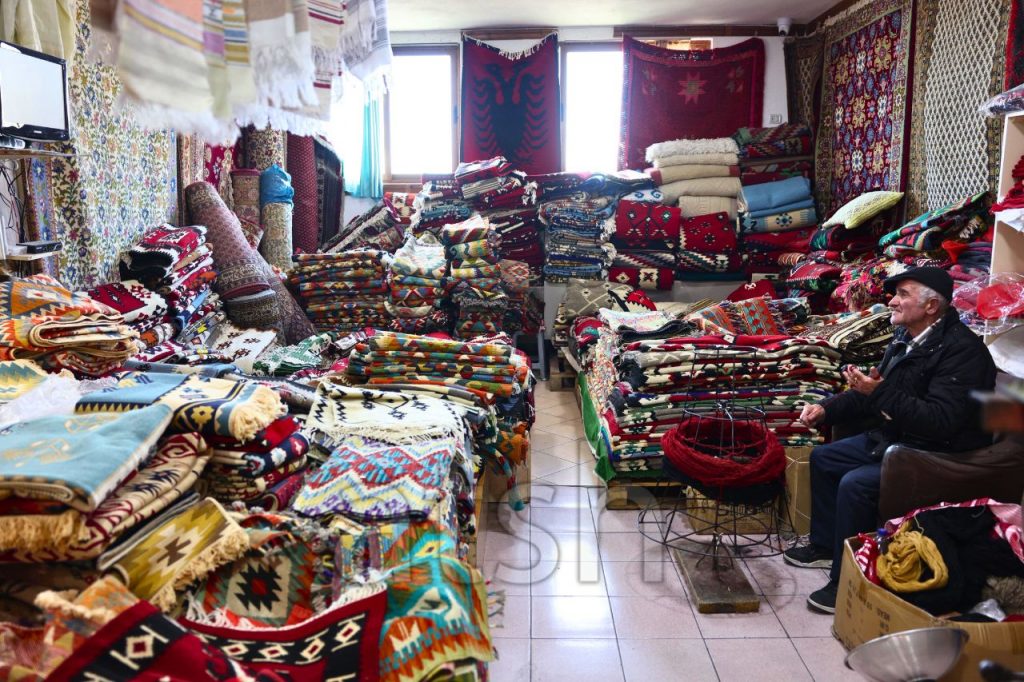
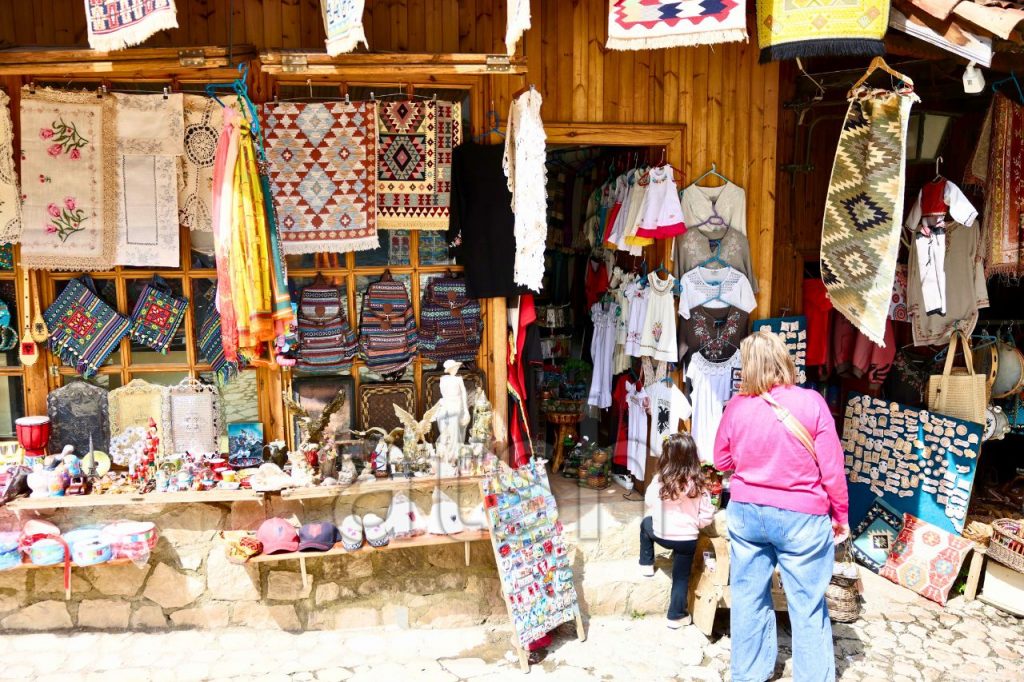
TIRANA, April 13 /ATA/ – In the heart of Kruja’s historic bazaar, amid the scent of aged wood and the flow of tourists, artisan Dëshira Maja has spent nearly five decades weaving traditional Albanian textiles, preserving a craft passed down through generations.
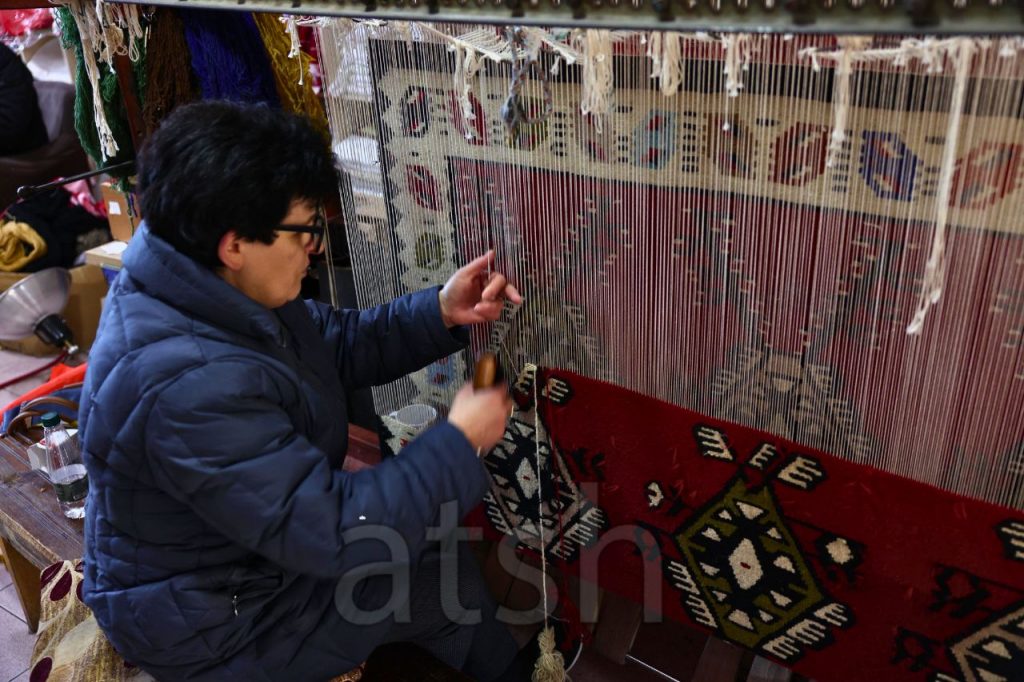
For 48 years, Maja has produced carpets, rugs and bags adorned with distinctive Albanian motifs and vivid colours, working continuously even as she speaks about her craft. Her movements at the loom reflect techniques inherited within her family, underscoring a tradition she views not only as a profession but as a cultural legacy.
“I started at a young age. It is a craft I inherited from my mother, who taught me every step of the process, which requires extraordinary patience,” Maja told Albanian Telegraphic Agency’s team while continuing to focus on her task. From selecting wool and dyeing it using traditional methods to weaving each thread by hand, completing a single piece can take weeks or even months, she added.
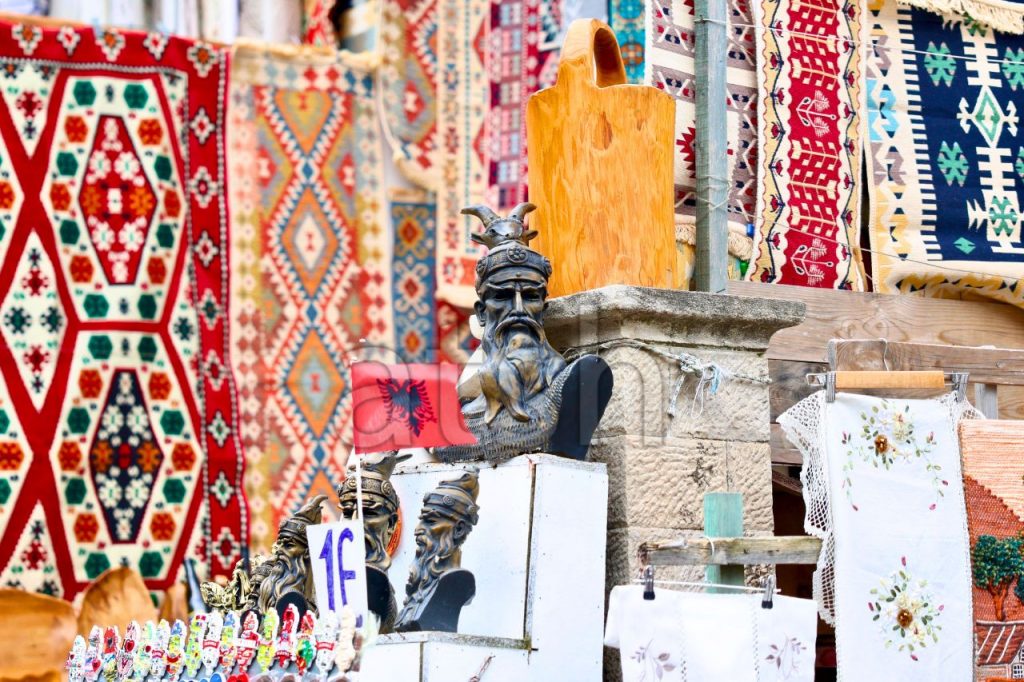
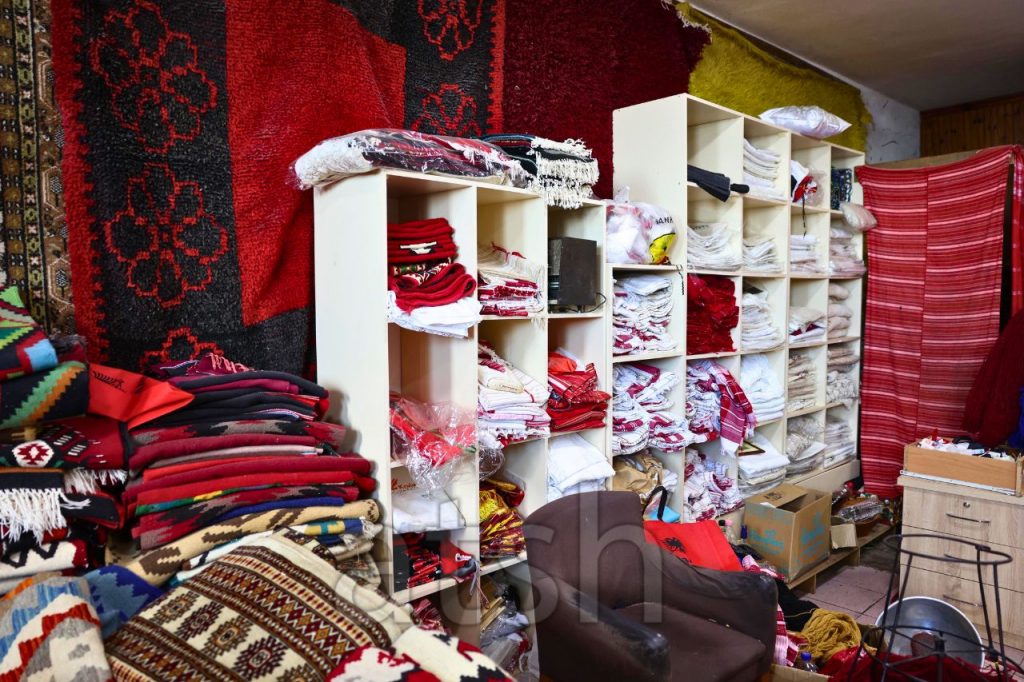
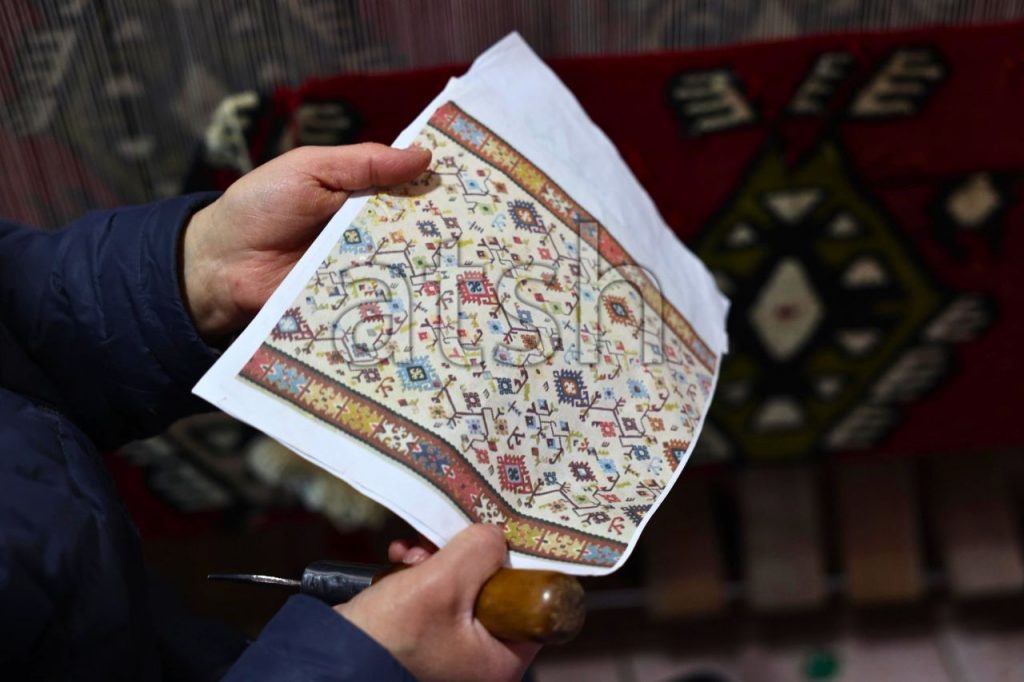
Her designs are largely inspired by the Kruja region, incorporating symbols linked to nature and local tradition. Operating from her small shop at the entrance of the Old Bazaar, Maja continues to create handwoven carpets that each carry a unique story.
She explained that producing a carpet typically requires a team of three, with one person managing the loom from behind while two others work from the front. On average, completing one square metre requires around eight hours of full-day work.
Despite her lifelong dedication, Maja expressed concern about the future of the craft, noting a lack of interest among younger generations.
“Young women today pursue higher education. My daughters-in-law are university graduates and are not involved in this work,” she said.
Prices for her products vary depending on complexity, ranging from 8,000 to 12,000 leks.
Maja said she has created carpets for several museums, including the Kruja Museum, the Ethnographic Museum and institutions in Tirana.
“I will never tire of this craft,” she said.
Her husband, Sali Maja, 70, supports the family business following his retirement, assisting with wool preparation and pattern work. “I spend about 10 hours a day here. This is our family business, and I help as much as I can,” he said.
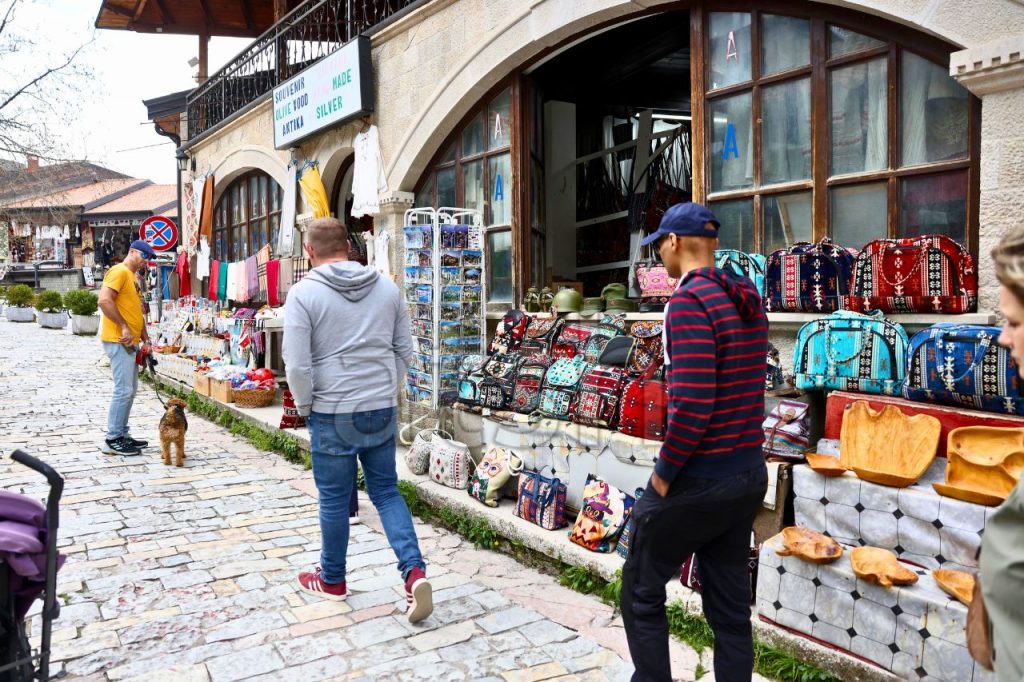
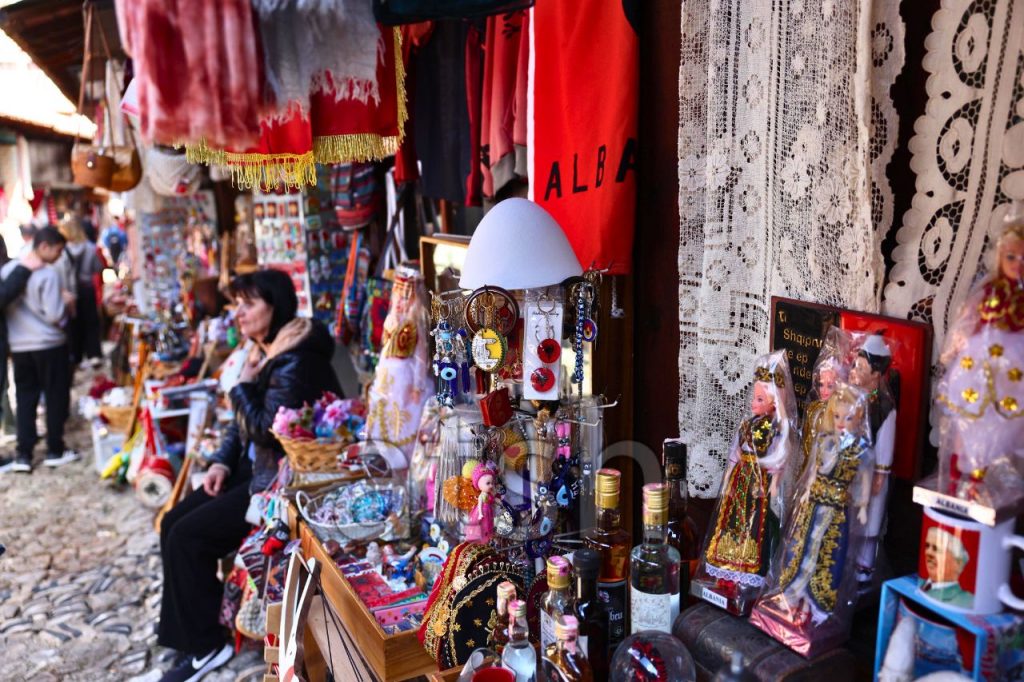
Tourists frequently stop by the shop to observe the weaving process—some to make purchases, others to take photographs. For Maja, however, the most important outcome is that the tradition is recognised and appreciated.
At a time when industrial products dominate the market, artisans like Maja offer a living testament to Albania’s cultural heritage, with each handwoven piece reflecting decades of skill and dedication.
/e.i/j.p/u.sh/