GJIROKASTËR, Feb 15 /ATA/ Zagoria is more than a spot on the map. Nestled between Gjirokastër and Përmet, it is a sleeping valley embraced by towering mountains—a small region, roughly 15 kilometers long and 4–5 kilometers wide, yet rich in spirit, history, and memory.
Framed by Mount Dhëmbel and Mount Çajup, Zagoria’s landscape alternates between gentle green hills and rugged, bare ridges and karst formations rising above 2,000 meters. In summer, alpine pastures stretch like a green carpet, while winter cloaks the valley in deep, silent snow.
Flowing through the heart of the valley is the Zagoria River, which joins the Vjosë. Although commonly called a “stream,” for the people of Zagoria it is the lifeline of the region. Karst springs along its banks nourish the land, while at elevations of 400–800 meters, ten villages stretch across the valley, dividing it into Upper and Lower Zagoria: Doshnica, Hoshteva, Vithuqi, Koncka, Nivani, Sheperi, Ndërani, Topova, Lliari, and Zheji—each with its own history and pride.
The climate here is mountainous, with heavy rainfall and cold winds that sweep through the valley. Yet the region also boasts surprising microclimates: olive trees grow in Zheji and Doshnica, while Vërria is considered the warmest spot in Zagoria. Such contrasts are part of its identity.
Zagoria has been inhabited since ancient times. The ruins of early settlements, the Illyrian fortress, and traces from late antiquity and the Middle Ages testify to a continuity of life that has never been broken. Over the centuries, the region came under various administrations, but its essence endured. Efforts to alter its religious identity did not succeed: the Orthodox faith, customs, and traditions were preserved, regarded as an invaluable heritage that could not be compromised.
The region once practiced a form of self-governance under a customary law called “Venom”, which guided daily life, property rights, neighborly relations, and community solidarity. It was a way of living with order, dignity, and responsibility toward one another.
The rugged terrain and scarce fertile land led many Zagoria residents to emigrate early. Istanbul, Greece, Egypt, and later the United States and Canada became homes for generations. For a long period, it is said that 80% of the men were away. Yet their departure was not to break ties—they left to return enriched with experience, culture, and new education.
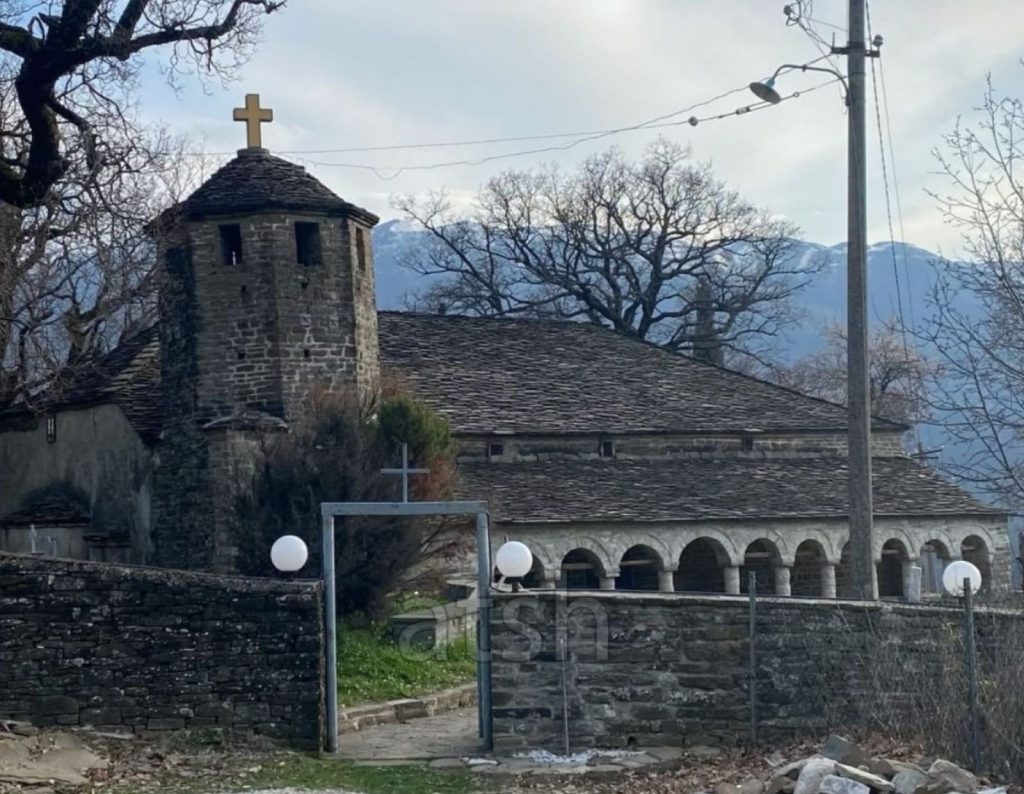
Yet Zagoria is more than a place—it is an experience. The stones of its old houses quietly bear witness to history, while church frescoes preserve prayers amid the fragrant beauty of the surrounding nature. The pastures of Dhëmbel, the trails of Çajup, and the bridges linking villages all combine to create a landscape that is not only visually stunning but also a living narrative of the past.
In these stories, isopoliphony rises over valleys and mountains as a tale of life, longing, sorrow, and joy. The isopoliphony of Zagoria is one of the most refined traditions of southern Albania’s spiritual heritage. The iso serves as the backbone of the song, extending like a single breath that unites voices into one harmonious body of sound. It is a vocal architecture that demands discipline and harmony among the performers.
In this southern landscape, the voice holds as much value as stone. That is why Zagoria’s isopolipony, recognized by UNESCO as part of Albania’s cultural heritage, remains one of the strongest markers of the region’s cultural identity.
In Zagoria, singing is not just performance—it is a spiritual insistence on telling history without writing it down.
Above all, the Zagoria region remains an experience. Among its mountains, springs, and stone houses, it preserves a rare balance between nature and humanity.
Today, the region is becoming a truly sought-after destination for nature and cultural tourism, thanks to its stunning landscapes, tranquility, and traditions preserved over the years. Visitors can wander its wild trails, breathe in the fresh mountain air, and taste some of southern Albania’s most remarkable dishes prepared by local hands.
/e.r/ a.g/sm/