TIRANA, Feb 6 /ATA/ – Main opposition Democratic Party (DP) lawmaker Jorida Tabaku said on Friday that European Union integration process should be seen as an economic transformation rather than a formal, box-ticking exercise.
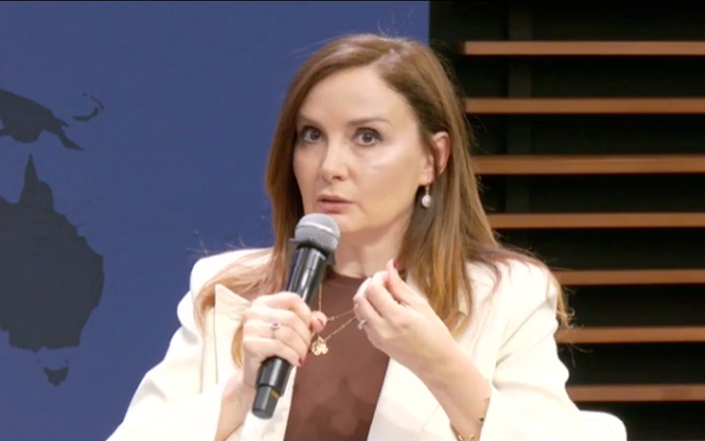
Tabaku took part in a panel on the Western Balkans at an Atlantic Council event in Washington alongside North Macedonia’s Parliament Speaker Afrim Gashi and U.S. Ambassador Justin Siberell.
The discussion, moderated by Charles Lichfield, focused on EU integration and the region’s geo-economic dimension amid new challenges and opportunities.
Despite more than 15 years of debate on integration, the Western Balkans still lacks a genuinely integrated economic and infrastructure space, Tabaku said.
“We have talked about integration for years, but we still do not have a region that is truly economically connected,” she said. “This disorder has produced deep divisions and pushed our citizens to leave.”
Tabaku said EU integration should not be viewed as a bureaucratic checklist but as a transformative economic and state-building process.
“EU integration is an economic opportunity. Reforms are not an end in themselves, but a tool to genuinely change people’s lives,” she said, adding that Albania needs real investment and transformation now, not at an undefined point in the future.
Addressing the investment climate, Tabaku said “Albania’s main challenge remains weak institutions, which she said fuel corruption, legal uncertainty over property rights and poor enforcement of laws.”
She said the integration process should also be assessed from a business perspective, based on the real implementation of reforms.
In that context, Tabaku referred to her legislative proposal on screening foreign investments, saying Albania needs strategic clarity about the types of investors it seeks to attract.
She said the initiative had received support during her meetings in the United States, including discussions with members of the U.S. Congress.
“I am not against the free market or competition,” Tabaku said. “But we must know who is investing in critical infrastructure, energy and strategic sectors. As a NATO member and an EU candidate country, this is not an ideological choice but a strategic necessity.”
Asked about Albania’s allies within the European Union, Tabaku highlighted Italy as an important supporter but said Germany remains the key driving force behind the integration process.
In closing, Tabaku said the Western Balkans has no alternative to European integration.
/m.m/r.e/a.f/u.sh/