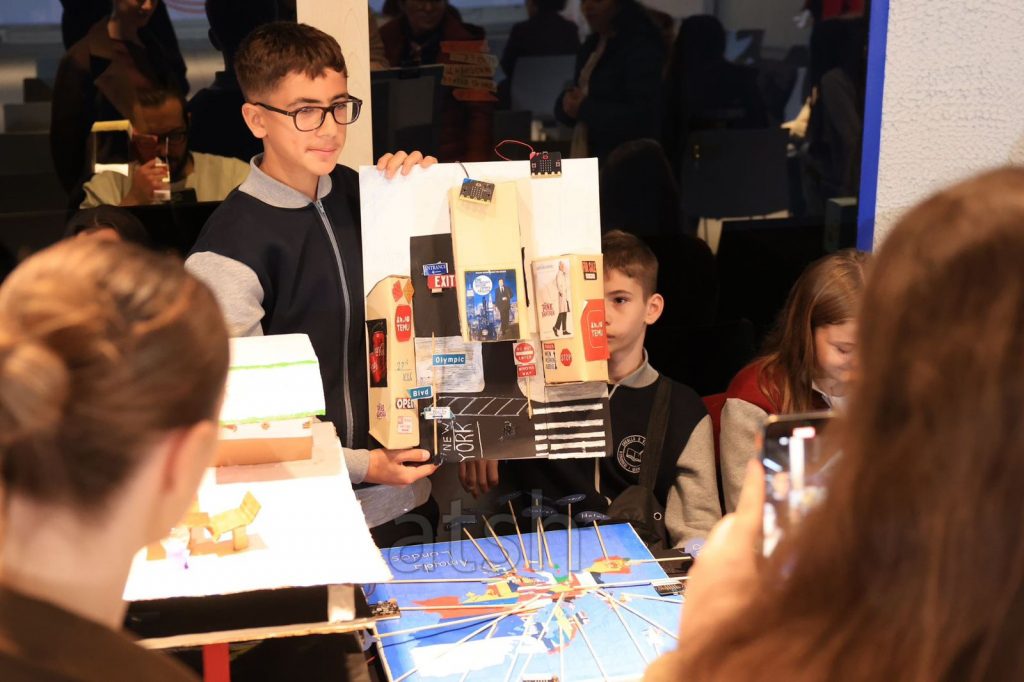
TIRANA, Nov 11 /ATA/ The “Tech4Edu” program was launched today in Tirana, at the Pyramid venue, as part of British Cultural Week.
The program focuses on promoting digital education by strengthening capacities and introducing advanced British practices in digital teaching.
The event was also attended by the two Deputy Ministers of Education, Orjana Osmani and Herida Duro, as well as representatives from the British Embassy in Tirana, British Council Albania, the “Vodafone Albania” Foundation, and teachers and students from various schools in Tirana.
At the opening of the event, Vodafone Albania CEO Balázs Révész commended the initiative, emphasizing that it will facilitate the development of a digital platform providing all students with access to learning opportunities, while enabling teachers to utilize innovative teaching methods, including those supported by Artificial Intelligence.
The British Deputy Ambassador to Albania, Julia Sutherland, described the collaboration as highly valuable for both students and teachers, particularly as the digital era continues to present increasing challenges.
“This week marks British Cultural Week in Tirana, and we are honored to support the city’s ongoing progress, not only through this event but more broadly. We have important projects ahead, and through collaborative efforts, we aim to equip young people with digital skills to foster advancement across all sectors,” stated Sutherland.
The representative of the British Council in Albania also described this memorandum of understanding as a milestone achievement in advancing digital education and teaching, at a time when digitalization and Artificial Intelligence are being integrated across all sectors.
Deputy Minister of Education, Orjana Osmani, emphasized that the initiative integrates innovation, creativity, and the transformative potential of education in the digital era.
“This initiative exemplifies what we can achieve through collaboration between schools and teachers in advancing pedagogy. We are observing how technology is reshaping the learning process. The inclusion of coding in school curricula supports the development of students’ digital competencies. Beyond this accomplishment, we take pride in leveraging technology as a means to stimulate curiosity for knowledge and to unlock new opportunities for every child. Contemporary education extends beyond screens, encompassing programs that cultivate critical thinking and deeper intellectual engagement,” stated Osmani.
Meanwhile, Dorina Rapti, Director of Curriculum and Teacher Qualification at ASCAP, stated that we are all companions and contemporaries of an era that is both exciting, full of new opportunities, and at the same time, highly challenging.
Dorina Rapti emphasized that the current era presents challenges not only for educators but also for students, who are navigating the present while preparing to engage with an unpredictable future.
“We are committed to developing curricula and an educational system that provides support for students while fostering the acquisition of digital competencies and critical thinking skills essential for the years to come. Our goal is to implement digital platforms that enhance learning and, more broadly, to promote innovative pedagogical approaches that cultivate creativity and the generation of new knowledge, serving the needs of future generations,” Rapti concluded.
/sm/