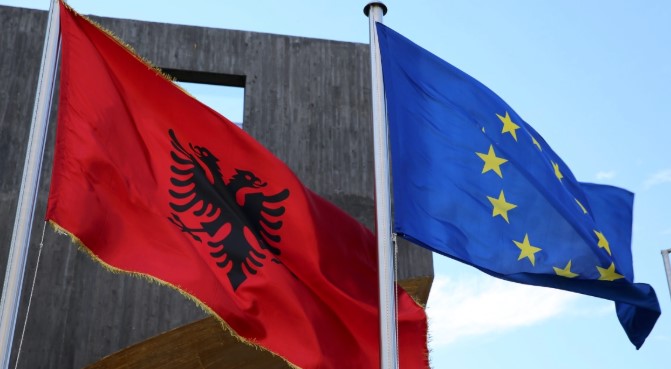
TIRANA, Nov 11 /ATA/-By Gjergji Mima/ – Albania has made visible progress in its European Union accession negotiations and recorded significant advances in justice reform, but still faces major challenges in political dialogue, administration and the environment, a leading policy analyst said on Tuesday.
Gledis Gjipali, executive director of the European Movement in Albania (EMA), told the Albanian Telegraphic Agency (ATA) that the country opened negotiations in five of six negotiating clusters this year, making up for earlier delays in the process.
“Albania is catching up with Montenegro and Serbia, which have been negotiating for more than a decade,” Gjipali said. “But reforms must accelerate if we want to close talks by the end of 2027. The main obstacles remain deep political polarization, limited parliamentary dialogue and weak administrative capacity.”
Gjipali said justice reform had delivered “concrete results,” particularly with the completion of the vetting process for judges and prosecutors and the strengthening of SPAK, the special anti-corruption and organized crime unit.
However, he warned that political interference, delays in appointments and inefficient judicial institutions continued to hamper progress.
Gjipali noted that Albania’s economy maintained macroeconomic stability and about 4% GDP growth in 2024, driven by strong domestic demand, tourism and construction, but added that weak planning and execution of public investments could affect performance in the long term.
On environmental issues, Gjipali said Albania had made only limited progress in its green transition due to a lack of large-scale investment and partial alignment with EU legislation.
“Albania is on the right track toward EU membership,” he said, “but must maintain the reform momentum, strengthen institutions and foster political cooperation beyond party interests to meet the 2027 target.”
/r.e/a.f/u.sh/