TIRANA, Oct 8 /ATA/ During the first week of the National Breast Cancer Screening Program, a total of 779 mammograms were conducted.
Prime Minister Edi Rama announced the news as part of Pink October and the month focused on raising awareness about women’s health.
Rama stated that there are “16 stationary mammography units and 2 mobile units providing free services across the country,” while also reiterating the call for women to take advantage of the free mammogram screenings.
The National Breast Cancer Screening Program is in full swing nationwide, providing free mammograms to women aged 40–50 and those over 50, who are considered part of the at-risk group.
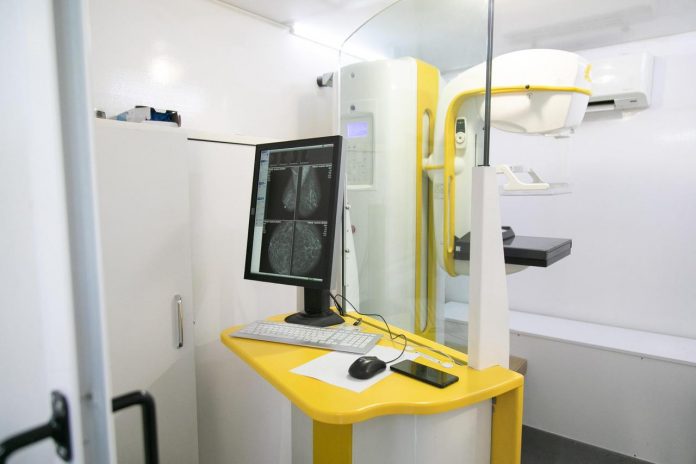
The Minister of Health and Social Welfare, Prof. Evis Sala, visited one of the mobile mammography units stationed at “Mother Teresa” Square in Tirana to see first-hand the mammogram screening process and to help raise awareness among citizens about the importance of regular check-ups. She highlighted the crucial role early detection of breast cancer plays in increasing the chances of successful treatment and reducing mortality from the disease.
Mammogram services are offered free of charge year-round at 16 out-patient clinics and hospitals across the country, as well as through 2 mobile mammography units.
Throughout the month of October, all hospitals and outpatient clinics have open access, allowing any woman to undergo a mammogram at any time without the need for a referral—only a form of identification is required.
Currently, there are 16 stationary mammography machines distributed across hospitals in Tirana, Dibër, Durrës, Elbasan, Berat, Korçë, Lezhë, Kukës, Vlorë, Gjirokastër, Fier, Lushnje, and Shkodër, along with 2 mobile units, which remain in operation not only during October but throughout the entire year.
Mobile mammography units bring breast cancer screening services closer to women living in remote urban and rural areas, as part of the National Breast Cancer Screening Program. The service is provided by the Institute of Public Health in cooperation with Local Healthcare Units and the Health Care Services Operator, delivering screening exams across the country based on a schedule that prioritizes areas without fixed mammography facilities.
A team of 66 healthcare professionals is actively engaged in this effort, on standby every day to assist with mammogram procedures and medical evaluations.
/sm/