TIRANA, Sept 18 /ATA/ CEFTA member countries (Central European Free Trade Agreement) are working to harmonize rules of origin with European Union standards. Within a regional framework, this process aims to simplify customs procedures, strengthen cooperation among the countries in the region, and prepare them for full participation in the European Single Market.
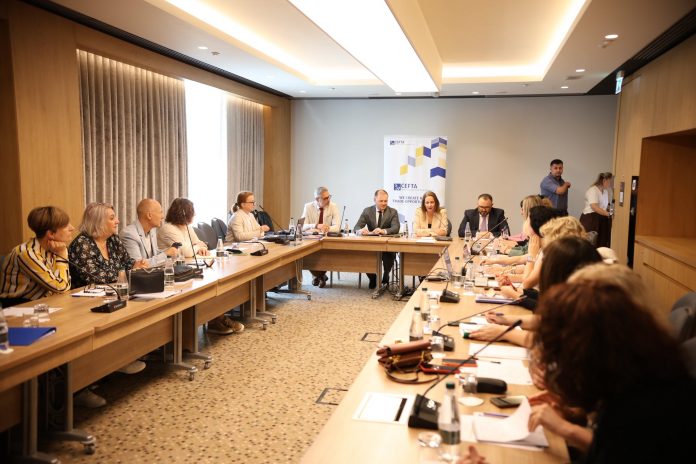
A two-day workshop on Rules of Origin began on Thursday in Tirana, organized by the CEFTA member countries as part of Albania’s chairmanship of the Customs and Rules of Origin subcommittee.
The workshop is attended by representatives from the European Commission, the Albanian Customs Authority, CEFTA, and domain experts, with the aim of strengthening regional cooperation among participating countries and supporting their harmonization with the European Union Single Market.
The Director General of the Albanian Customs Authority, Genti Gazheli, emphasized in his speech the critical importance of the rules of origin for the integration of Balkan countries into the European market. He stated that the improvement of customs administration requires continuous cooperation and the exchange of experiences among the countries of the region.
Mr. Gazheli further highlighted recent developments, notably a high-level meeting held in Brussels with Mr. Matthias Petschke, Director for Customs at the European Commission. During this engagement, the discussion focused on Albania’s advancement in the European Union integration process, with particular emphasis on Chapter 29, concerning the Customs Union.
He underscored a number of significant accomplishments under Albania’s chairmanship of the subcommittee, notably the establishment of an advisory body tasked with the classification of goods and the rules of origin, alongside the creation of a dedicated working group for Authorized Economic Operators (AEO). These operators benefit from preferential treatment in customs procedures in recognition of their demonstrated reliability.
Another key development emphasized was the newly adopted Customs Risk Management Strategy for the 2025–2028 period. As noted by Mr. Gazheli, this strategy, supported by a detailed action plan, is designed to optimize customs control mechanisms and significantly reduce the processing time for goods.
Mr. Gazheli expressed his appreciation for the support provided by the European Commission and emphasized that close cooperation with EU institutions is essential for meeting European standards. He underscored that rules of origin are not merely technical procedures but have a direct impact on facilitating trade and enhancing the benefits for Albanian companies engaged in export activities.
Pranvera Kastrati, the new Director of the CEFTA Secretariat, was also recognized as an important partner of the Albanian Customs Administration.
On the first day of the workshop, key topics included regional cooperation on rules of origin, textile sector case studies, criteria for product origin, challenges in tracing goods, and cooperation with Turkey to ease goods movement.
The workshop will continue tomorrow with further technical discussions aimed at helping regional countries harmonize their customs and trade practices in line with European standards.
The Central European Free Trade Agreement (CEFTA) is a comprehensive regional agreement that serves as a key component of the EU pre-accession agenda. Its member countries include Albania, Bosnia and Herzegovina, Croatia, North Macedonia, Kosovo, Romania, Bulgaria, Moldova, Serbia, and Montenegro.
Albania exported over 2 million tons of goods to CEFTA countries in 2024, with a total value of 68.194 billion lek.
/sm/