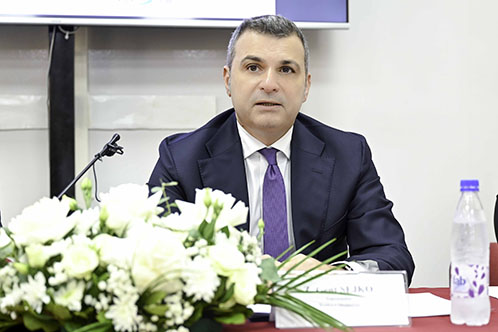
TIRANA, Dec 12 /ATA/ – Improving productivity and achieving a competition level comparable to that of European advanced countries is one of the biggest challenges facing Albanian economy, the Governor of the Bank of Albania, Gent Sejko, said on Thursday.
Speaking at an international conference organized by Luarasi University, Sejko outlined the country’s economic progress and upcoming challenges, underlining that Albanian economy continues to demonstrate stability and growth, even as global challenges persist.
However, Sejko noted that the country has still a long way to go to build an economic structure oriented toward high-value-added sectors.
Central Bank Governor said that inflation has dropped significantly to 2.2% this year, down from higher rates in 2022. Economic activity has increased by 18.3% since 2019, while unemployment has fallen to a historic low of 10.7%. Employment has grown by 3.9%, accompanied by a 15.4% rise in average wages.
He said the ageing population and the elevating shortages of the labour force is a complex challenge with consequences on the Albanian economy as well as on the European and global economies, adding that the process affects both the labour market and the long-term prospects for economic growth and the sustainability of the pension system and public debt.
Governor Sejko also highlighted climate change impact on key sectors, including agriculture and tourism, underlining that the two sectors, in addition to directly affecting the economic activity and employment, represent also a great potential for the development of the Albanian economy in the future.
Foreign direct investment has also seen consistent growth, reflecting Albania’s improved credit ratings and investor confidence. Key industries, such as tourism and agriculture, have benefited from these developments, further strengthening the economic outlook.
/r.e/u.sh/