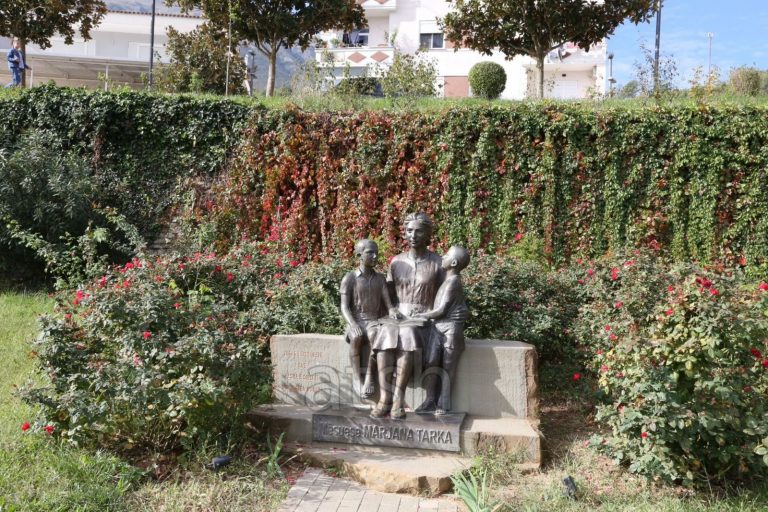
TIRANA, Oct 28 /ATA/ – As we already anticipated, Përmet did not dampen our spirits at the end of October. The city of roses and its idyllic cleanness and freshness over the weekend welcomed the many tourists with its elegant calm. Out of curiosity, we took a look at “Booking”, but it was hard to find free rooms. At least, the main hotels in the town were “sold out.”
Some visit the area just for its food. That’s why local restaurants were full and we barely stood “calm” in the face of so many gastronomic delicacies.
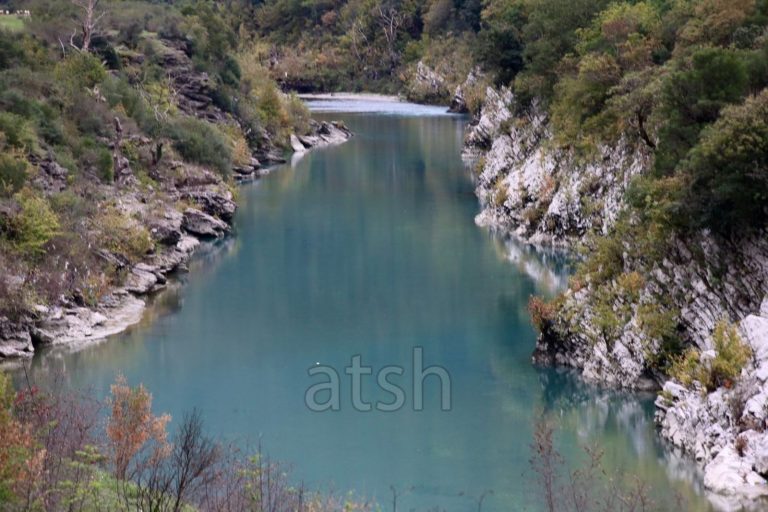
Others headed to the thermal baths, whose popularity has spread not only across Northern Europe, but across Far Asia. Kayakers love the adrenaline of sailing along Vjosa River rapids. Along its 270-km stretch, Vjosa River flows naturally freely, and it is home to scenic landscape, stunning canyons with islands and bends that create almost surreal meanderings. A river described in the Greek Antiquity books, as well as during the Illyrian era; the last wild river in Europe.
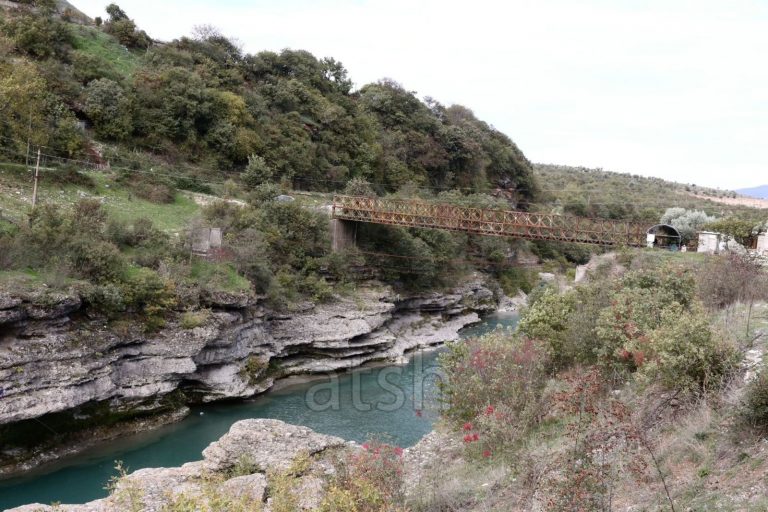
As soon as you cross the Dragot Bridge, you start thinking like a poet from this area. Autumn has started to cast its magic all around. Standing over the Vjosa River, the bridge may be one of the most beautiful in Albania.
The bridge is also a significant point of reference in the history of Albanian engineering and architecture, as a crossover connecting Permet and Southeast Albania with the rest of the country.
The suspended metal truss and arched bridge features a very peculiar structure.
Its history dates back to 1936, when it was built by the Genoese firm ANASALDO, and was funded by the Albanian government. Apart from its engineering significance, the Dragot Bridge bears cultural relevance. This is why it has been declared a Category II Cultural Monument. The bridge is a rare piece of engineering technology that has withstood the test of time remarkably.
On the way to the town, one encounters down to earth and hardworking people, with amber kindness, exactly what we lack, who come from the capital’s tumultuous and harsh life.
Përmeti simply engulfs you in its peaceful atmosphere.
The Stone of the City
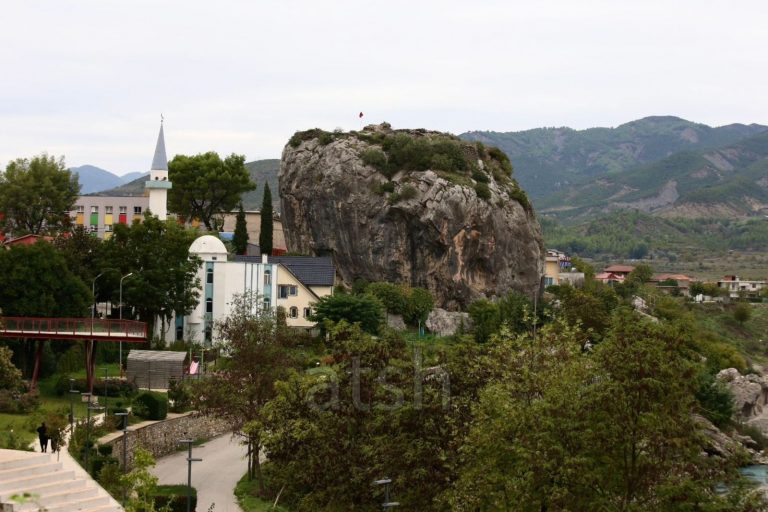
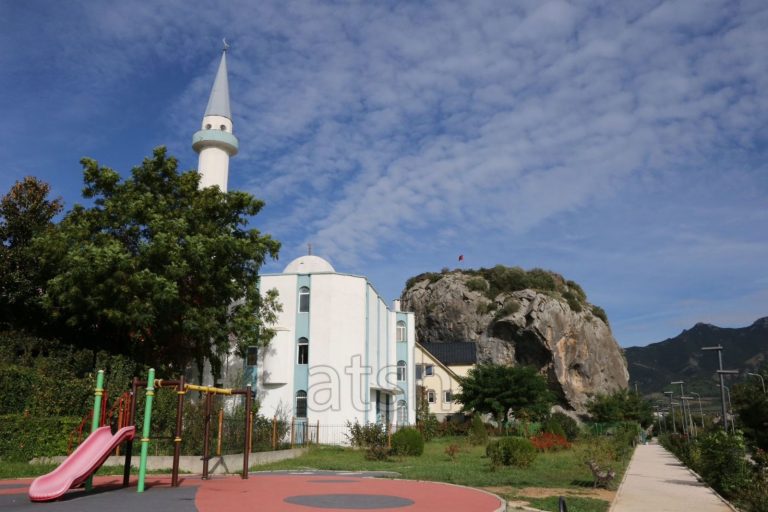
To Edith Durham, a huge boulder in the town of Permet “is the most beautiful in the world!” Geologists say that the rock was cut from Mount Dhëmbel. But legend has it differently: It is God’s stone. It descended as a gift from heaven to also give the name to the city.
“The feudal lord of the province Premti, who gave the name to the city, had built a castle on the Stone of the City. The castle has been razed down. The walls remain evidence to the legend. It was the end of the XIV century. Sultan Mehmet’s army invaded Ioannina. After Ioannina it was Përmet’s turn. Premti had died and the town’s feudal lord was his nephew, Gjergji, who had a daughter, Diestra, a young mother. One night the Turks arrived in the city. The lord was out of it. His daughter was alone in the castle. The Turks demanded the keys to the fortress and the handover of the girl. Diestra took the cradle of her infant son in her arms and jumped off the top of the cliff. At the foot of the City Stone, there is a smooth stone where Diestra land-crashed. On the stone one can see some marks: the baby’s hand or the lines of the cradle.” This is how the legend has it.
Twilight
Dusk starts to sweep down over the town and as the lights start to turn along the beautiful promenade, with grandparents being the first ones to go out for a walk. From time to time, they talk and laugh, and even scold their naughty grandchildren.
The wonderful scent of pines is the most rational companion during the entire walk. One can feel the absolutely positive vibe here.
Bënja
After a “gourmandizing” breakfast, from which not a single crumb was left out on the table, we headed to Bënjë.
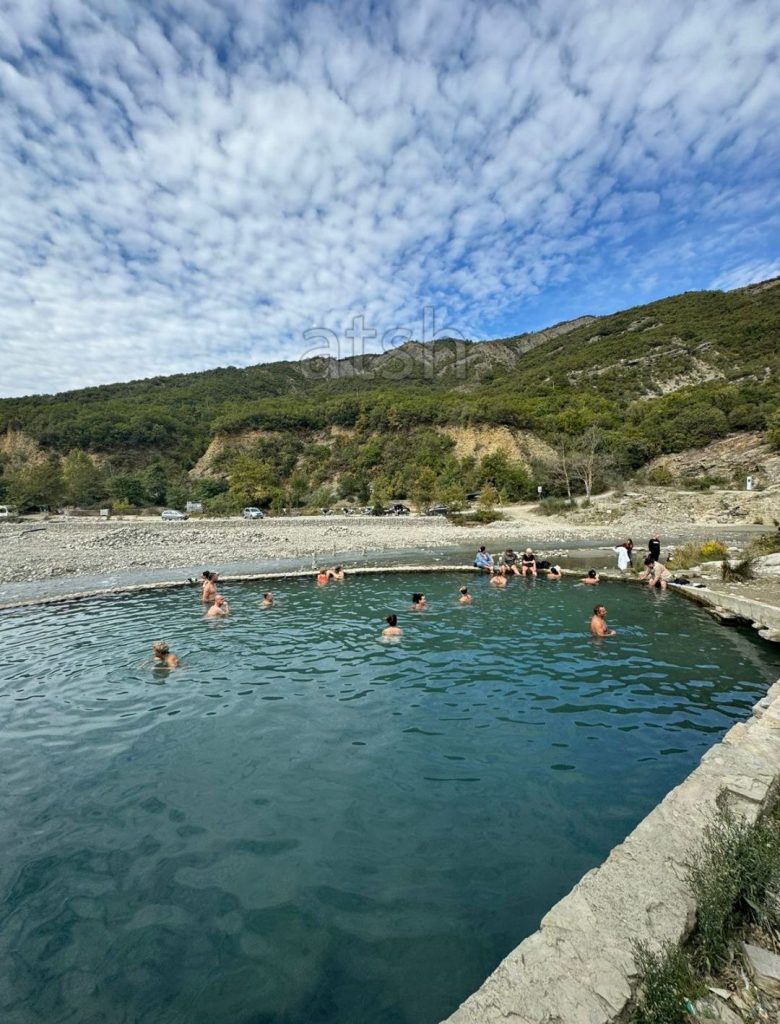
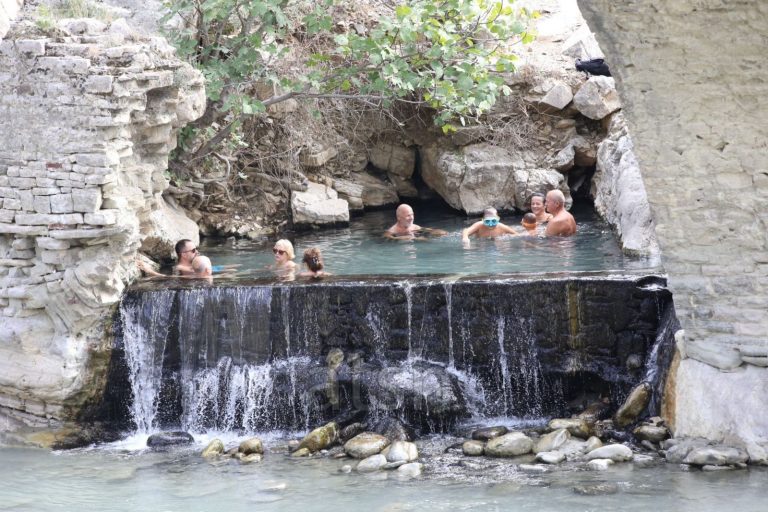
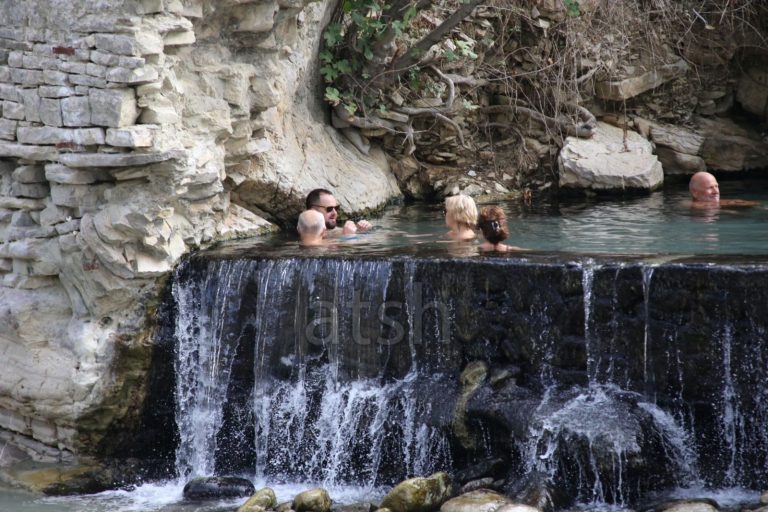
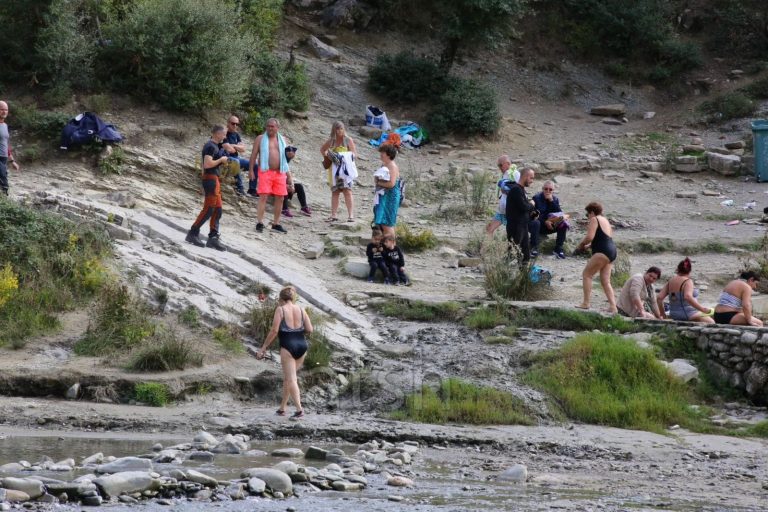
Popular since Antiquity, the Bënjë thermal baths are warm natural sulphurous springs thrusting out from deep tectonic cracks. Everyone knows the 6 famous baths here: the skin bath, the stomach bath, the heart bath, the kidney bath and the priest bath. With irregular shapes, but their miraculous effects, the baths are described by researchers as incredible for their healing properties.
This means that even at the end of October dozens of cars park in the designated parking lot. “They stay here for 12 consecutive days, a local peddler, who sells oregano, as well as sage, wild apple, mountain tea, strawberry, wild blueberries, fresh chamomile, sturgeon flowers, special brandy, honey and freshly cracked hazelnuts. If you are mad about these gems that you usually find in the Albanian mountains, just stop by.
After taking a sip of local cornel raki – with cornel being really abundant this year – you dive into the so-called skin bath, which surrounds you with the vapors of thermal mineral water. In front of you magnificently stands the imposing Nemërçka Mountain. While you are sitting under the sulfur vapors, like the kings of ancient times, you look at the Kadiu Bridge. As always, a bit grumpy since all the visitors’ attention is on the thermal baths…
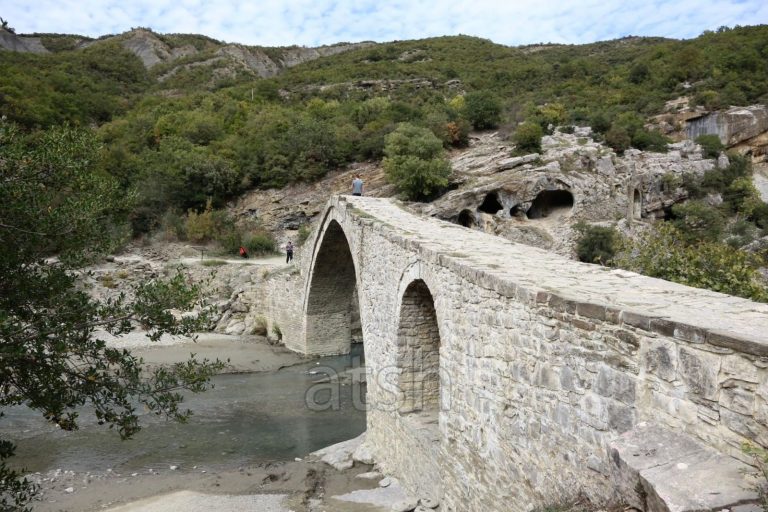
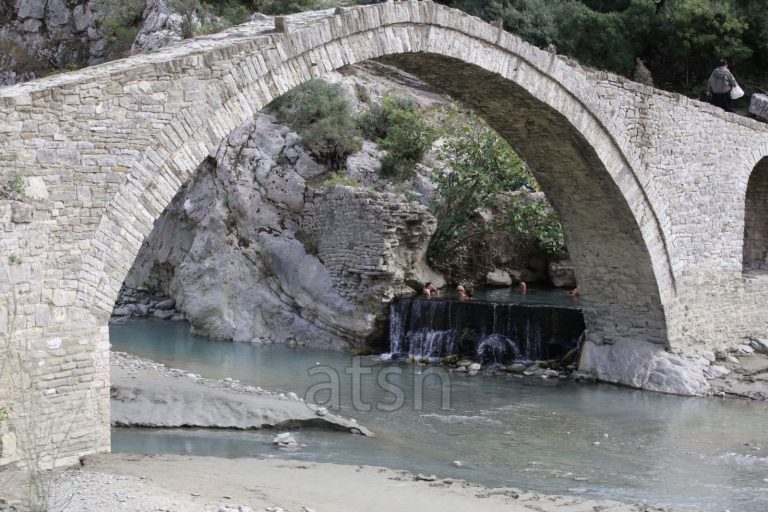
Also known as the Ottoman Bridge, the Kadiu Bridge is a Category I Cultural Monument. This bridge is a real beauty too.
Spanning the bubbling Langerica River, the bridge lies over a single elegant arc of stone with a span of 6.4 meters. The vault of the arc is 70 cm thick. The arc rests 7 cm on the lower arch in the bridge’s structure, where the stream’s narrowness and the fortress of the banks have been taken into account by building it in the narrowest part and resting on the stable rocky shores. The arch’s central part features four small columns of pumice stone.
The bridge was the only pass to connect Bënjë with the rest of the area around it.
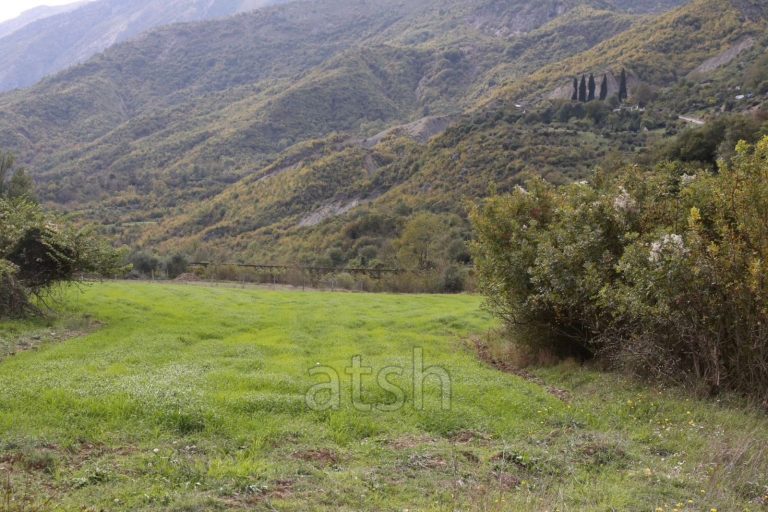
With sulfur on the skin and some unique gliko preserve with me, we turn right as we leave the city behind. We drove for about 30 minutes on a gravel road stretching along green lawns all the way. Then the white domes gradually show up…
The Tekke of Baba Ali or the Tekke of Baba Abdullah, is a Bektashi shrine built 1857 as a peace and worship house. On the entrance gate you would find this inscription: “the Tekke of Baba Ali Alipostivan – 1857.”
The shrine complex buildings are white with green lines, while the domes shine under the October sun and stand like art temples on top of Alipostivan hill. The domes are nestled amidst magical natural landscapes at the foot of the Vjosa valley and the Nemërçka mountain.
Just like always in the past, people keep coming over here to find some peace, away from the hustle and bustle of everyday life and, of course, to come closer to God.
Other much revered clerics walked in the footsteps of Baba Ali, serving as an inspiration and guide for the Bektashi community and not only.
One of them is Baba Hekuran Nikollari, who has further elevated this amazing shrine through his humble work.
Baba Hekuran Nikollari’s door is open to anyone who needs it. His advice, calmly and directly articulated, is the peace you have been desperately seeking, as you arrive in this holy shrine.
An enviable cleanliness prevails here. This is because, in addition to Baba Hekuran, the workers who take care of the maintenance and operation of Tekke continue the blessed tradition of love that Baba Ali started.
That’s why these blessed buildings are actually more than a Tekke; they are the story of hope and humbleness, which only getting closer to God can bring.







/r.e/u.sh/