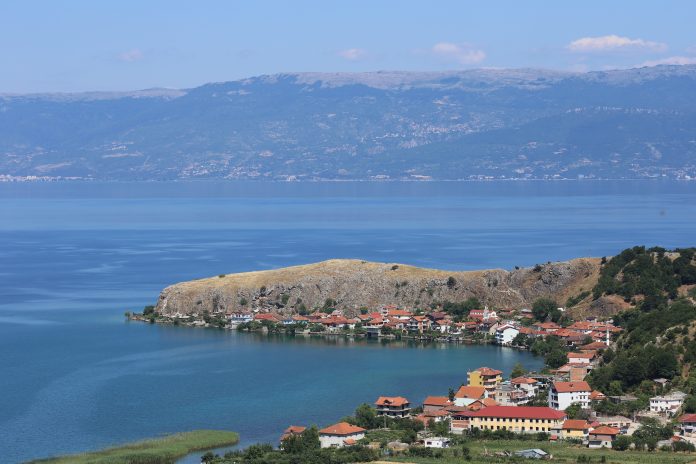
TIRANA, July 12 /ATA/ – Lin, the settlement believed to have practiced agriculture as far back as 8,000 to 9,000 years ago, continues to be a hub of natural stunning beauty. The findings following four years of excavations conducted by Albanian and Swiss archaeologists confirmed that the Lini palafit village, located on the shores of Lake Ohrid near the picturesque town of Pogradec, is over 8,500 years old, the oldest known settlement in Europe.
This groundbreaking archaeological discovery is of crucial importance. Not only for the archaeological findings and artifacts, which are expected to be displayed in the resort town of Pogradec and which will give a quality fresh impetus to development of archaeological tourism, but also for local residents. Nowadays they engage in subsistence fishing activity and agriculture, development of which – according to researchers – “is one of the earliest evidence to agricultural practices in Europe.”
***


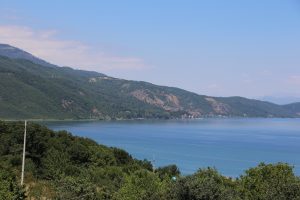
Who hasn’t been impressed by the scenic beauty of the Lin village as you catch the sight while you drive along the road winding down from Qafe-Thane to Pogradec. Houses look like lovely and colourful tiny boxes from the distance, gently sitting at the foot of the hill, the adjacent cultivated land areas and the Lake Ohrid itself, with its light-induced water colours changing in different shades, are all breathtaking views.
The locals are calm and hospitable people.
Vaide and Avram Shegan haven’t left Lin. We love so much this place – they say. “This is where our parents and forefathers rest and this is where we will die.”
After welcoming us with a glass of home-made raki, we find out that Avram has once been working as rail controller. However, he says he has contributed to the railway’s construction back in the distant year 1976. He recalls excessive hard work, but also the modest life they lead back then.
Now retired, they have both turned to farming. They grow onions, potatoes, beans and seasonal vegetables. The housewife makes pickles, jam and gliko or preserves at home, while Avram also makes some raki and wine.


Vaide is sitting on the side of the makeshift stand at the door of their house. Dean Weinberg, a tourist from North Carolina, walks by. Vaide takes him “to a tour” to her modest farm. She shows him tomatoes, peppers, green beans, vines and grapes. And finally, the lake.
Dean thanks her profusely, takes a picture with her, and hastens up to the Mosaic. “Don’t forget to send me the photo,” Dean asks us. His story is almost just like the story of every foreign tourist visiting our country: after hearing a lot of stories about Albania, he decided right away to visit this much-talked-about country. And he had found it really fascinating.
We assure Dean that we will send him the photo.
“There are many foreign visitors, my daughter. You just need to see the buses stopping here; dozens a day. Here, they come to visit the lake and then the Mosaic. Now and then they buy pickle or jam, as well as raki and wine, which are really good ones. They then head to the restaurants up on the hill to eat. There are a number of restaurants, good ones – they say. I am not a restaurant-goer since I am very busy and I don’t have strong legs to climb the hill, yet the restaurants are good ones.”

We arrive at the Mosaic of Lin. The site has been opened to the public for several years now and, since then, the hill, where the 700-year old mosaic is located, has been visited by tens of thousands of local and foreign tourists. The Paleochristian basilica of Lin was first unearthed in 1967 by an expedition composed of local museum staff in Pogradec. However, it took the excavations a year later for the mosaic to be completely unearthed in 1968. Since 1973, this important cultural heritage site has been declared a first category monument of culture.
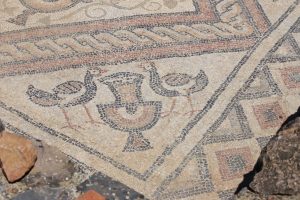
The centre of the mosaic features the shape of a baptismal font with a unique shape of a four-leafed flower, once covered with marble tiles. The pergola motif is dominant and impressive.
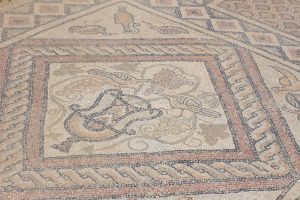
After taking some pictures, we ask the mosaic keeper abruptly about the number of visitors to the site in June. “Let me count them” – he said briefly retreating under the shade. He took out an old notebook and started counting visitors and the days when they visited the mosaic. “The notes show 1094 visitors. Not bad at all, isn’t it, considering that they have to walk all the way up here amid the scorching heat that has hit this area too. However, it is really cool in the evening. All those accommodated at the hotels on the hill have expressed their best impressions.
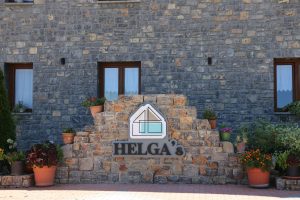

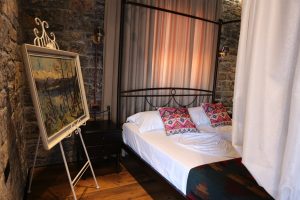
At only five minutes walking distance from the mosaic you arrive in “Guesthouse Helga”, one of the recently opened hotels in Lin, an ideal place to spend unforgettable moments.
A carefully-built stone structure, freshly mowed grass carpets everywhere, fragrant roses and idyllic landscapes. The emerald blue lake tempts you throughout your stay here.
Adventure lovers, in addition to history, can enjoy exploring the area by boat, hiking the surrounding hills and, of course, diving into the fresh lake water. All this can happen in just 10 minutes around “Guesthouse Helga” and it would take everyone just asking for help at the 24/7 hotel reception.


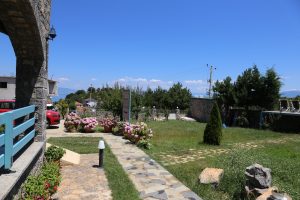

Helga, woman of the house, told us that many tourists visit Lin and the Mosaic on a day trip, yet only spending a few nights there would allow them to really enjoy the area’s peaceful and sustainable lifestyle. A group of young women, who were sipping on a fresh plum juice made by the hostess of the hotel, were ready to very elegantly answer that they had come from Tirana because of their friend who lives in France, who had booked here since January. “Booking a room at this hotel is not an easy feat and therefore we rushed to book early.” Another hotel guest, a Danish tourist, happened to be a writer. “Here I wrote some fantastic poems”, she said. “I don’t know, but there is a human feel, a detail I have to explore in my writings. Plus fantastic food”.
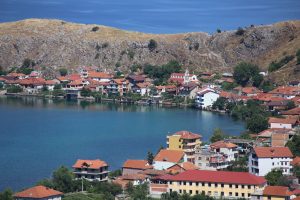

Here you can really enjoy the traditional “lakrori” pie, doughnuts, organic salads, goat cheese, fresh brown trout (Alb. Koran) and excellent local wine and raki. Lin’s taste would have been meaningless without this evidence of tradition that “Guesthouse Helga” has turned into a real art.
/u.sh/