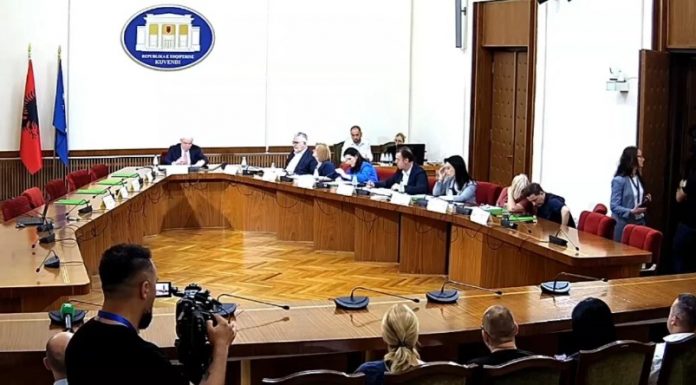
TIRANA, June 21 /ATA/ -The Special Anti-Corruption Commission held a regular meeting on Friday, while the opposition boycotted again the gathering, refusing to join the recently launched body as part of the country’s efforts to intensify the fight against corruption and advance good governance and the rule of law.
The initiative is aimed at building a stronger state and combating corruption, with the goal of securing Albania’s membership in the European Union by 2030
In his opening remarks, the Chair of the Commission, Socialist lawmaker Fatmir Xhafaj said it was deplorable that the opposition is still refusing to become part of the Commission’s normal activity.
“It is important that the opposition joins the Commission. I am looking forward to seeing opposition reflect and join us in this inclusive, transparent and professional process,” Xhafaj said.
The senior Socialist official also invited third actors to participate in the Commission.
“We call on Albanian experts wherever they are to assist us with their expertise. It is necessary that a website is launched to inform public on activity of the Anti-Corruption Commission.
The Commission, approved by parliament last month, aims at coordinating a reform deepening process in order to improve and consolidate good governance practices at all levels, deepen the fight against corruption and further strengthen the rule of law in the light of the findings and recommendations set forth by the European Union and the European Commission’s Screening Report on the first cluster of accession negotiations, and deliver on the government’s roadmaps on the rule of law and public administration reform.
The Commission comprises 11 members, with six from the majority and five from the opposition. Led by the ruling Socialist Party, it also includes an opposition member as vice-chair.
The proposed Commission is expected to operate within a 10-month timeframe, with the option of extension based on reasoned requests. To ensure transparency and inclusivity, a mix of local and international experts will collaborate, bringing insights from justice institutions, academia, civil society, and the media.
/m.m/u.sh/