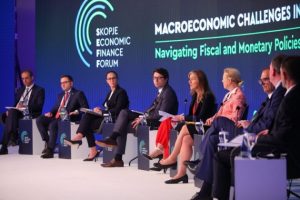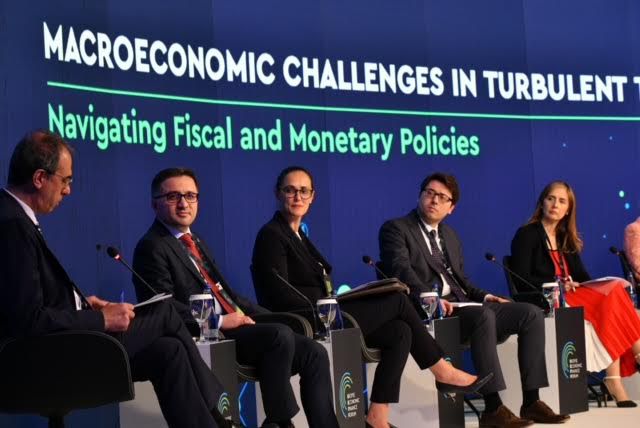
TIRANA, May 30 /ATA/ Minister of Finance and Economy Delina Ibrahimaj participated in the Skopje Economic Finance Forum on the topic: “Macroeconomic challenges in turbulent times”.
The minister was part of the panel “Navigating fiscal and monetary policies”, together with Minister of Finance of North Macedonia Fatmir Besimi, Minister of Finance and Economy of Kosovo Hekuran Murati, Minister of Finance of Montenegro Aleksandar Damjanovic and IMF Deputy Managing Director Luc Dresse.
In her speech, Minister Ibrahimaj spoke about the significance of regional cooperation in context of the “Open Balkan” initiative, to improve the efficiency and liberalization of the common market, the movement of capital, goods and services, and the movement of people.
The minister highlighted the fact that in context of the “Open Balkan” there is being discussed the fiscal policies that will be implemented in the future and there will be signed soon a Memorandum at the meeting that is expected to take place next week in Ohrid.
In her speech, the Minister of Finance and Economy also focused on the effectiveness of fiscal policies pursued by the Albanian government to cope with the effects of the COVID-19 pandemic.
Thanks to these fiscal and monetary policies, said Ibrahimaj, the country’s economy is recovering and growth in 2021 is estimated at 8.5%.
Referring to the current crisis, Ibrahimaj said that Albania is currently the country with the lowest inflation rate in the region and expressed confidence that the crisis we are currently going through is temporary and prices will begin to decline in the second half of 2022.
The Albanian government has taken the necessary steps to face the crisis, the minister continued, approving the necessary fiscal incentives, but also aiming to reduce debt and invest in sectors that will ensure economic growth.
Another challenge for our country is related to energy security and its high costs. In this regard, Ibrahimaj stressed, the government intervened by covering the increased energy costs, so as not to increase the cost of production and not to affect the level of consumption. /a.a/r.e/p.s./