TIRANA, June 15/ATA/- The experts of Institute of Cultural Monuments have been engaged in the maintenance of monuments and archaeological sites across the country, ahead of the tourist season.
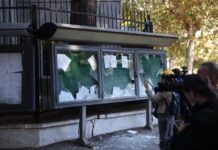
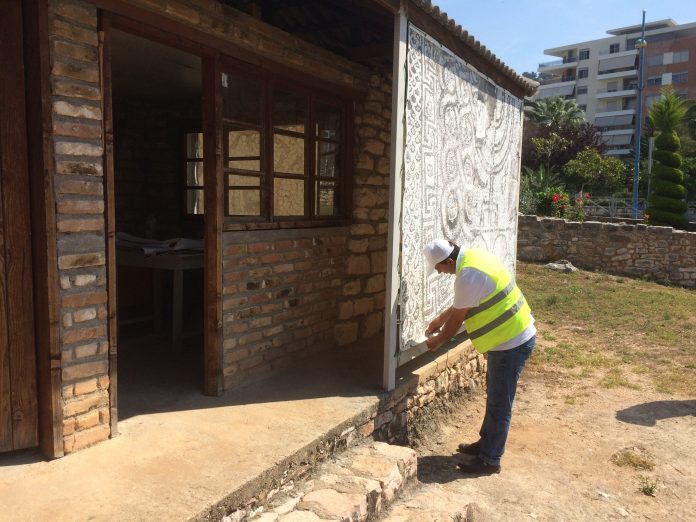
In the light of the launch of the tourist season 2019, as well as the implementation of the policies of the Albania’s Ministry of Culture to promote the values of culture, art and cultural heritage, the Regional Directorate of National Culture of Vlora has been working in the rehabilitation and maintenance of the information signboards at the Synagogue – Basilica, Archeological Remains, in Saranda , thus creating optimal conditions for the domestic and foreign visitors .
Impressive remains of a 5th or 6th century AD synagogue have been uncovered in the coastal city of Saranda, Albania, which lies just opposite the Greek island of Corfu.
Initial excavations at the site were conducted some 20 years ago when Albania was under tight Communist rule. However, the remains of this religious structure have only just seen the light during joint excavations by the Albanian Academy of Sciences and the Hebrew University Institute of Archaeology.
The archaeologists have discovered that the synagogue underwent various periods of use, including its conversion into a church at its last stage. Particularly noteworthy among the finds are two mosaic pavements. At the center of one of them is a seven-branched candelabrum, flanked by a citron (a fruit similar to a lemon) plus a ram’s horn – all symbols associated with the Jewish holidays. The other mosaic pavement includes a variety of animals, trees, and symbols alluding to Biblical lore, together with the facade of a structure resembling a temple (possibly a shrine for the Torah). The excavators have also found other mosaic pavements, which pre-date the building of the synagogue.
In coming years the archaeologists hope to continue excavations and investigate other parts of the synagogue that remain covered by modern buildings and streets.//a.i/