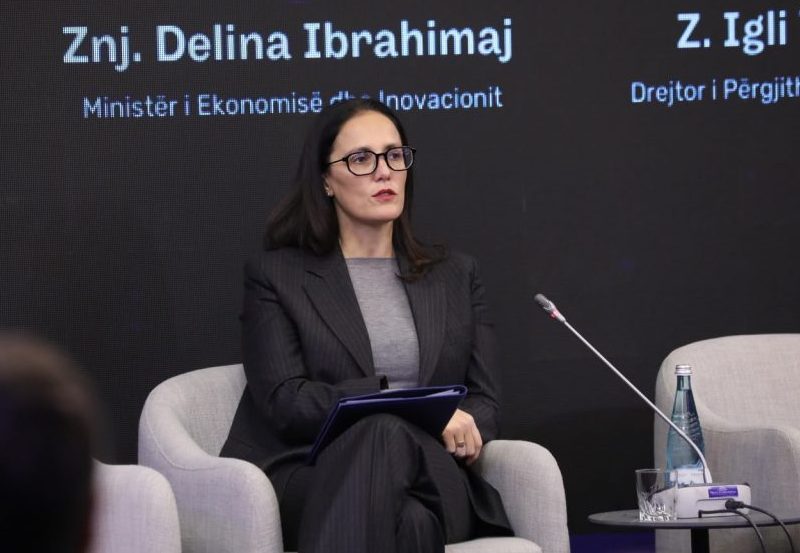
TIRANA, Nov 3 /ATA/ Minister of Economy and Innovation Delina Ibrahimaj on Tuesday attended the National Cybersecurity Conference, entitled “The Current Threat Landscape”, where she discussed the importance of cybersecurity amid the expansion of digital services, the protection of critical infrastructure and the need to strengthen national capacities in this field.
The US Ambassador to Albania, Eric Wendt, also attended the event.
Minister Ibrahimaj said the 2022 cyberattack had marked a watershed moment in the government’s approach to cybersecurity, elevating it to a national priority and driving efforts to strengthen institutional, financial and legal capacities.
“Since then, cybersecurity has become a key priority for us. The Authority has expanded its workforce and increased its funding, legislation has been adopted, a development strategy is being drafted, and sectoral CERTs have been established, with further units currently being set up,” Ibrahimaj said.
The minister stressed that cybersecurity is not solely the responsibility of public institutions but requires the involvement of all economic stakeholders, particularly businesses, which rely on digital systems on a daily basis for payments, data management and storage.
According to Ibrahimaj, investment in cybersecurity is essential to prevent attacks that could threaten business continuity and disrupt the provision of services.
“It is our responsibility to inform the private sector, which relies on digital services to make payments and store data, of the importance of investing in preventing cyberattacks that could bring their business operations to a standstill across various sectors of the economy,” the minister stressed.
In this regard, Ibrahimaj highlighted the importance of education and vocational training in developing a specialised workforce. She said that, in cooperation with the Ministry of Education, curricula had been developed to incorporate cybersecurity into the core education system, while vocational education and short-term training courses would further contribute to building these capacities.
Another key priority is supporting businesses developing cybersecurity solutions and services.
The minister announced that six startups operating in this sector had received funding to date. Meanwhile, according to data from the National Business Centre, 72 businesses in Albania specialise primarily in cybersecurity, 28 of which were registered over the past year.
“The public sector can set standards, draft legislation and monitor compliance with these standards, but it cannot provide services to meet all the needs of the market at this stage,” Ibrahimaj said, highlighting the role of the private sector in meeting the economy’s growing demand for specialised services.
Referring to Albania’s position in regional security, the minister said that the capacities developed and experience gained created opportunities for the country to contribute to strengthening cybersecurity across the region.
“I believe that Albania, with its wide range of digital services and the high level of digitalisation in the public sector, can serve as a success story for all countries in the region. We are a reliable partner and, unlike a few years ago, are no longer a weak link, but rather an important part of the regional security chain,” Minister Ibrahimaj said.
/a.f/r.e/sm/