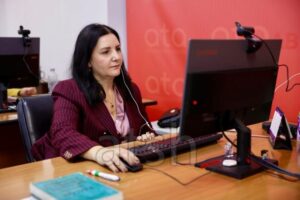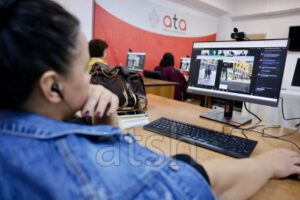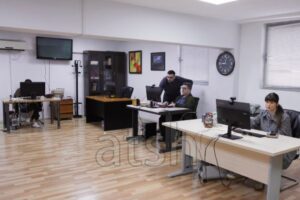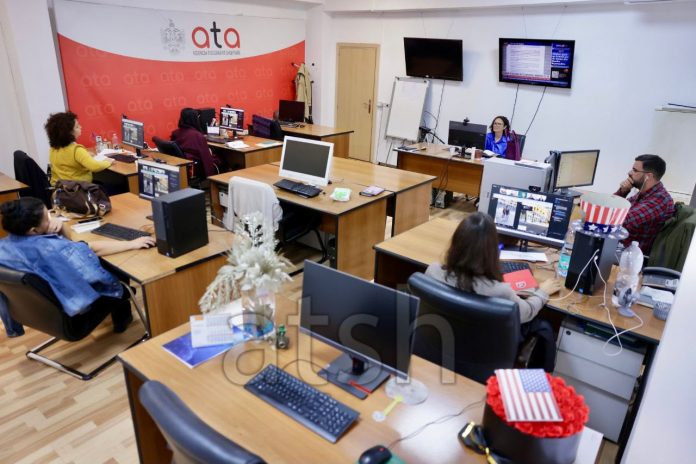
TIRANA, October 30 /ATSH/ – Journalists and translators at the Albanian Telegraphic Agency (ATA) participated in a specialized training session today led by representatives from the German news agency DPA. The workshop focused on modern fact-checking techniques, including the detection of AI-generated or manipulated images and videos, as well as verifying the authenticity of social media content.
The workshop was held in an interactive, hands-on format, allowing 11 ATA journalists to engage directly in the verification process through concrete examples, the analysis of media materials and collaborative exercises.
The session centered on practical experience and the exchange of knowledge regarding the challenges newsrooms face in a media environment increasingly shaped by technology.
During the workshop, the DPA journalist Stefan Voss demonstrated how to identify AI-generated media and distinguish authentic content from manipulations. The session also focused heavily on verifying social media posts and eyewitness accounts, both of which are critical sources in modern event reporting.
During the workshop, there were highlighted visual verification techniques, starting with reverse image search to track a photograph’s origin, publication timeline and original context. Beyond technical tools, the participants learned to prioritize manual content analysis. By leveraging close observation, critical thinking and journalistic instinct, journalists can effectively spot inconsistencies, evaluate source credibility and prevent the spread of misinformation.
Through practical exercises, ATA journalists examined diverse materials and collaborated to build a robust, step-by-step verification process. This workflow goes beyond checking published content to thoroughly vetting sources, cross-referencing information and gathering evidence to confirm or refute authenticity.
A key takeaway from the training was that, while technological tools are useful, they cannot replace a journalist’s professional judgment.
Effective verification requires, first and foremost, careful analysis and the forming of the right questions—before relying on specialized software or applications designed to detect manipulations.
The rapid evolution of artificial intelligence, paired with the seamless generation and spread of digital content, has made information verification a defining hurdle for contemporary journalism.
In this context, building the professional capacity of journalists to identify disinformation and vet sources is crucial for ensuring the accuracy and credibility of media reporting.
The workshop also served as an opportunity to exchange professional experience and knowledge; it fostered collaboration and the adoption of new editorial workflows, all in the service of responsible journalism grounded in facts and professional standards.
ATA maintains a cooperative partnership with DPA spanning more than three decades, marked by regular content and expertise exchanges. This synergy extends to the European Newsroom (ENR) platform, which unites European agencies to advance collaborative reporting, media training and high editorial standards. Established in 1949, DPA stands as Germany’s premier independent news agency, backed by a worldwide correspondent network and a core commitment to objective fact-checking and editorial freedom.
/k.s/j.p/p.s./