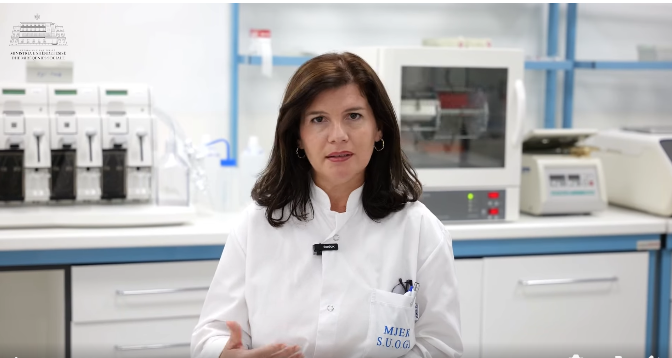
TIRANA, Oct 10 /ATA/The Genetics Laboratory at the “Mbretëresha Geraldinë” University Obstetric-Gynaecological Hospital (SUOGJ) offers advanced capabilities for diagnosing chromosomal abnormalities and genetic diseases, combining modern technology with medical expertise.
Through specialised tests, the laboratory supports prenatal genetic diagnosis, investigations into the causes of infertility and the identification of inherited diseases.
These tests help establish more accurate diagnoses and improve healthcare for patients and their families.
Another significant development in genetic diagnostics is the use of advanced technologies for chromosomal analysis, including the chromosomal microarray method, which enables the identification of specific changes in genetic material.
Expanding diagnostic capabilities marks an important step towards strengthening specialised healthcare services and increasing opportunities for earlier and more accurate diagnosis in medical genetics.
The laboratory aims to improve diagnostic services and provide higher-quality healthcare for mothers, couples and families requiring genetic assessment.
Dr Evis Binaj, an obstetrician-gynaecologist, said: “We have just completed the collection of amniotic fluid from a patient who is 16 weeks pregnant. Both parents, the mother and the father, are carriers of beta-thalassaemia minor. Through amniocentesis, we can determine whether the baby will be healthy, will carry thalassaemia minor, or, most importantly, rule out the more serious condition, thalassaemia major.”
Joana Kalcuni, an embryologist and molecular biologist, said: “We are in the Genetics Laboratory at the ‘Mbretëresha Geraldinë’ Obstetric-Gynaecological Hospital. We are now at the stage where we will extract DNA and analyse the genetic material from the amniotic fluid collected from the patient.”
Assoc. Prof. Dr Merita Xhetani said: “We are now at the stage of extracting DNA and analysing the genetic material from the amniotic fluid collected from the patient. We will, of course, assess the quality of the DNA, which is a crucial step as it ensures that the subsequent genetic testing will be successful and that we can obtain a reliable result.
“Our laboratory is equipped with advanced technology that enables gene-level diagnosis of diseases such as beta-thalassaemia, cystic fibrosis and muscular dystrophy. We also have the capacity to identify certain chromosomal abnormalities, including trisomy 21, known as Down syndrome; trisomy 13, known as Patau syndrome; trisomy 18, known as Edwards syndrome; as well as certain changes involving the sex chromosomes, including the X chromosome,” she said.
Xhetani explained that these tests are based on the analysis of genetic material.
“Through amniocentesis and the relevant tests, our prenatal genetic diagnostics laboratory can assess the genetic and chromosomal status of the foetus before birth. Who are these tests intended for? They are particularly important for couples with a family history of inherited genetic diseases, couples who have experienced recurrent pregnancy loss where genetic or chromosomal causes are suspected, and women who have an increased risk of chromosomal abnormalities in the foetus,” she emphasised.
According to Xhetani, the laboratory represents an important capacity for prenatal genetic diagnostics in Albania. Recently, with the support of the Ministry of Health and Social Welfare, the laboratory has been equipped with advanced technology for chromosomal microarray analysis (chromosomal microarray).
“This technology expands the range of genetic tests that can be performed, enabling the identification of certain chromosomal changes that are not always detected by traditional methods. Our aim is to make these expanded diagnostic capabilities available soon to everyone who needs them, including pregnant women, couples and families seeking genetic assessment before the birth of their child,” Xhetani said.
/k.s/j.p/