TIRANA, Oct 5 /ATA/ Reducing remittance costs, encouraging the use of formal transfer channels and modernising payment systems were the focus of discussions at the 10th Conference of Mediterranean Central Banks, where Albania was represented by Holta Zaçaj, First Deputy Governor of the Bank of Albania.
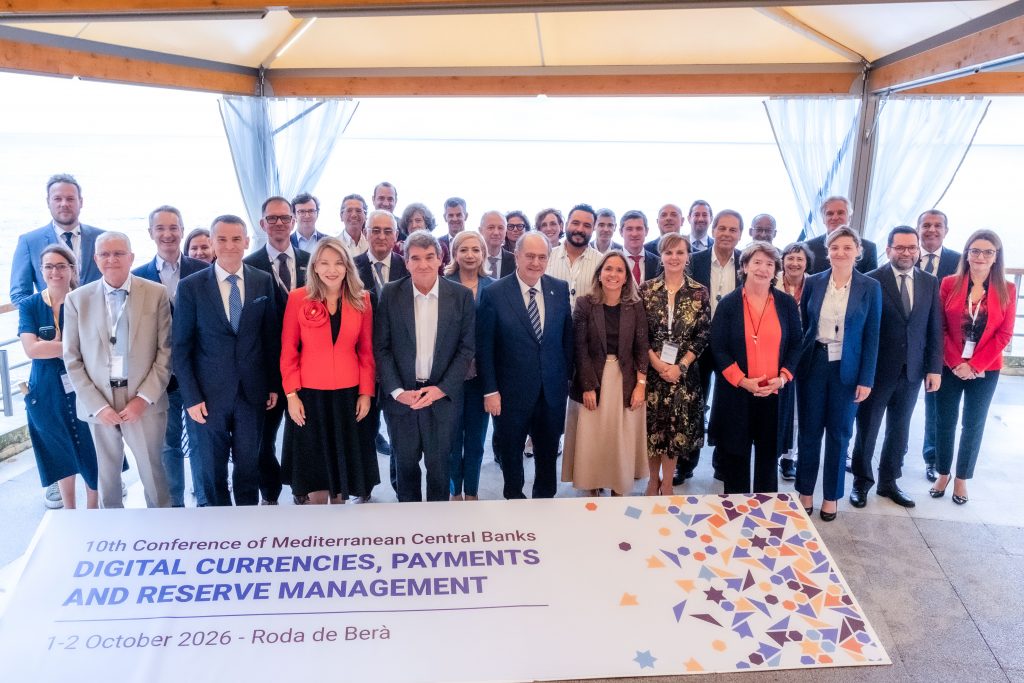
The conference, titled “Digital Currencies, Payments and Reserve Management: Implications for Mediterranean Central Banks”, was held in Tarragona, Spain, and organised by the Bank of Spain in cooperation with the OECD, the European Institute of the Mediterranean and the Union for the Mediterranean.
Zaçaj chaired the conference’s second session, titled “Payments and Remittances: Current Systems and Future Outlooks”, which focused on the importance of remittances to Mediterranean economies, their impact on the financial and banking system, as well as ways to reduce costs and increase the use of formal transfer channels.
In her remarks, Zaçaj highlighted the progress made by the Bank of Albania in modernising payment systems and aligning the regulatory framework with European Union standards.
She highlighted Albania’s membership in SEPA as an important step towards the country’s financial integration, noting its potential to reduce the cost and time of transfers, increase the use of digital and formal payment channels, and encourage migrants to use official financial channels to send remittances.
Another important development, according to Zaçaj, is the implementation of the TIPS Clone project, which aims to establish a national platform for instant, real-time payments, available 24 hours a day, seven days a week, in line with European standards.
According to a joint study by the World Bank and the Bank of Albania, cited at the conference, the use of electronic payments, supported by instant payment infrastructure, could generate annual savings of up to 38.7 billion lek, equivalent to around 1.5% of GDP.
Meanwhile, replacing half of cash bill payments with electronic payments could save consumers more than 500 million lek and businesses around 1 billion lek per year..
The conference brought together senior central bank officials from Mediterranean countries, as well as researchers, experts and representatives of international financial institutions. Discussions focused on the changes shaping the global monetary and financial system amid technological transformation and rising geopolitical tensions.
/sm/