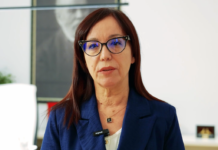
TIRANA, July 14 /ATA/ – Albania is moving forward with economic stability and stronger public finances, while the approval of the 2027-2029 Macroeconomic and Fiscal Framework confirms the country’s clear development direction, Finance Minister Petrit Malaj said on Tuesday.
In a social media post, Malaj said the new framework envisages steady economic growth, high levels of public investment and a gradual reduction in public debt.
“The Albanian economy is expected to maintain strong growth rates in the coming years, supported by investment, domestic consumption, tourism and service exports,” Malaj said.
He added that fiscal policy would continue to focus on responsibility and stability, strengthening confidence and creating greater opportunities for citizens and businesses.
Albania’s economy recorded steady growth between 2023 and 2025, with GDP growth reaching 4% in both 2023 and 2024 and 3.8% in 2025.
Growth is forecast at 4% in 2026, with average annual growth of around 3.9% expected over the medium term. Projections point to expansion of 3.9%, 4.1% and 3.9% respectively in 2027, 2028 and 2029.
According to the framework, domestic demand will remain the main driver of growth, supported by higher consumption and investment. Private consumption is expected to benefit from improvements in the labour market and stronger consumer confidence, while private investment will be supported by a better business climate, easier financing conditions and broader economic activity.
Albania’s exports are projected to grow by an average of 4.6% annually during 2027-2029, with service exports, particularly tourism, continuing to play a key role in the economy.
Inflation is expected to return to the 3% target in 2026 and remain close to that level over the medium term.
On the fiscal side, the government aims to continue consolidating public finances. The budget deficit is projected to fall from 2.3% of GDP in 2026 to 1.6% in 2027, 1.3% in 2028 and 0.9% in 2029. The primary balance is expected to remain positive, reaching 0.8% of GDP in 2027, 1% in 2028 and 1.4% in 2029.
Gross public debt is forecast to decline to around 50.2% of GDP by the end of 2029, from 52.9% in 2025, further strengthening the long-term sustainability of public finances.
The 2027-2029 Macroeconomic and Fiscal Framework represents another step towards reinforcing Albania’s economic resilience, maintaining macroeconomic stability and aligning the country more closely with EU standards as part of the strategic “Albania 2030” objective.
/k.s/r.e/u.sh/