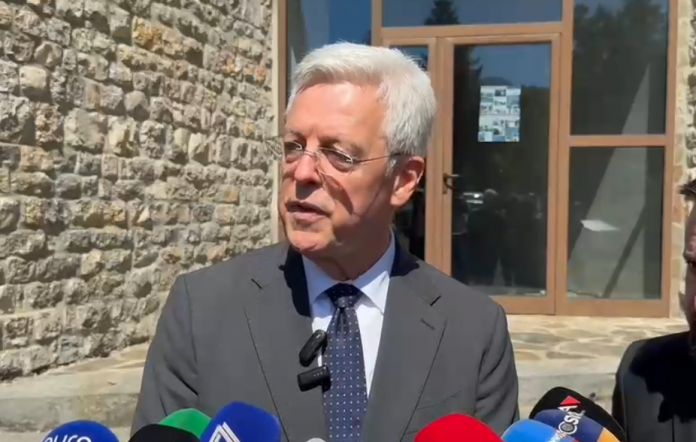
TIRANA, July 6 /ATA/ Germany’s ambassador to Albania, Karl Bergner, attended the ceremony marking the 83rd anniversary of the Borova massacre.
Germany’s ambassador to Albania, Karl Bergner, described the Borova commemoration as a somber occasion, recalling that 107 people were killed by the German army on 6 July 1943.
He said the tragedy remained deeply moving for the German embassy, noting that families were left without grandparents, uncles, aunts or brothers because of the massacre.
Germany’s ambassador to Albania, Karl Bergner, said the Borova massacre was painful to recall because it had been carried out “in the name of the German people.” He added that while it was important to honour the victims, the commemoration should also serve as a lesson for the future.
Bergner stressed that history must not be allowed to repeat itself, noting that such tragedies can be prevented by upholding values such as tolerance, human rights and the rule of law — principles he described as European values.
Germany’s ambassador to Albania, Karl Bergner, also spoke about the country’s path towards European integration, stressing that Berlin supports Albania in this process.
He said Germany welcomed the fact that the Albanian people were aligned with European principles and pledged support particularly in the technical aspects of accession. Bergner added that it was equally important to value those who uphold European standards in daily life — from defending the rule of law to protecting nature and advancing issues linked to integration.
The ambassador noted that the commemoration should serve as a moment to learn from the past, to honour the victims, share in the grief of families, and look ahead to the future.
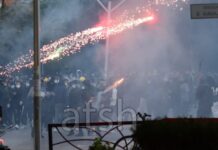
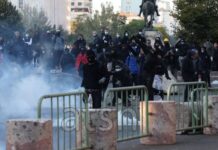
Germany’s ambassador to Albania, Karl Bergner, was also asked about the protests that have continued in Tirana for 36 days. He said that civil society activities in line with European Union principles were welcome.
Bergner noted, however, that violent demonstrations were not consistent with EU values, adding that responsibility for such incidents was still under discussion. He concluded that peaceful protests were welcome because they supported the values of the European Union.
/e.i/j.p/sm/