TIRANA, Feb 11 /ATA/ – The Museum of Fine in Chambéry, France, will host a temporary international exhibition in partnership with the National Museum of Medieval Art in the city of Korça, following a cooperation agreement between the municipalities of Korça and Chambéry.
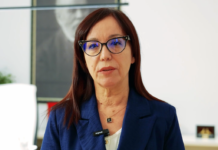
Fjoralba Prifti, director of the National Museum of Medieval Art (NMMA), told Albanian Telegraphic Agency (ATA) the project reflects a shared commitment to European openness and intercultural dialogue.
Titled “Icons of Albania: Treasures from the National Museum of Medieval Art of Korça”, the exhibition will run from June 12 to Nov. 15, 2026, at the Chambéry’s Arts Musée des Beaux Arts museum. It will feature around 45 Albanian icons selected from the NMMA’s collection.
The exhibition will offer a chronological overview of icon production in the southeastern Albanian region of Korça and beyond, from the 14th century to the early 20th century, introducing visitors to the Byzantine and post-Byzantine traditions of icon painting, their iconography and stylistic evolution.
Among the highlights are some of the earliest works discovered in the rock-cut churches of Prespa, dating to the 14th century, reflecting the Palaiologan aesthetic marked by harmonious colours and strong lines.
Icons from the 16th to 18th centuries will illustrate the diversity of post-Byzantine artistic trends in present-day Albania, combining adherence to traditional canons with formal innovation. The works originate mainly from Korça, Kolonja, Berat, Pogradec and Gjirokastër.
Prifti said particular attention will be devoted to identified master painters, foremost among them the renowned Onufri, whose most important collection is housed at the Korça museum.
The exhibition will also showcase works by notable artists including Master Konstantin of Vithkuq, Konstantin Hieromonakos, Konstantin of Shpat and pieces from the workshop of the Zografi brothers.
The show will introduce French and wider European audiences to an artistic heritage that remains little known in France and the European Union, and highlight the exceptional quality of works that survived destruction during the period of state-imposed atheism in the 20th century.
It will also explore artistic interactions between the Orthodox icon tradition and medieval and Renaissance religious art in Italy, represented in particular in the collections of the Museum of Fine Arts in Chambéry.
The influence of Byzantine art, clearly visible in early Italian pre-Renaissance works, will provide scope for comparisons and fresh perspectives on artists such as Bartolo di Fredi, Grifo di Tancredi, Domenico di Michelino and Bernardino Fungai.


/j.p/r.e/u.sh/