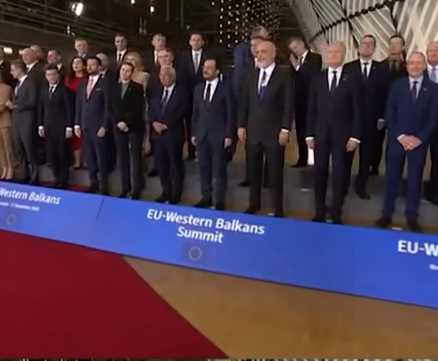
TIRANA, Dec 18 /ATA/ The EU-Western Balkans Summit in Brussels held on December 16-17 reaffirmed the strategic partnership between the European Union and the countries of the region, along with a strong and clear commitment to the future EU membership of the Western Balkans.
Prime Minister Edi Rama, who attended the summit alongside leaders of the Western Balkan countries and senior EU representatives, shared highlights from the meetings and the summit in Brussels.
During the summit, Prime Minister Rama took part in the plenary session focused on deepening cooperation and advancing the gradual integration of the Western Balkans into the EU, including initiatives such as “Roam Like at Home” and the Growth Plan for the region.
The session was chaired by the President of the European Council, António Costa, with the participation of European Commission President Ursula von der Leyen, High Representative for Foreign Affairs and Security Policy, Kaja Kallas, and President of the European Parliament, Roberta Metsola.
During his visit to Brussels, Rama held meetings with European Commission President Ursula von der Leyen, European Council President António Costa, and High Representative for Foreign Affairs and Security Policy Kaja Kallas. The talks centered on the progress of the European integration process and the current geopolitical challenges.
In the joint declaration adopted after the EU-Western Balkans Summit in Brussels, the European Union reaffirmed its full and clear commitment to the prospect of Western Balkan membership, describing enlargement as a geostrategic investment in peace, security, and stability.
The declaration emphasizes the need to accelerate merit-based reforms, strengthen the rule of law, democracy, media freedom, and the fight against corruption, as well as the importance of regional cooperation and good-neighborly relations.
The EU reaffirms its support for the gradual integration of the region into the Single Market, the implementation of the Growth Plan, and tangible benefits for citizens, such as lower roaming costs. It also stresses the importance of aligning with the EU’s foreign and security policy, backing Ukraine, and the essential need to normalize relations between Pristina and Belgrade as a crucial factor for the region’s European advancement.
/j.p/sm/