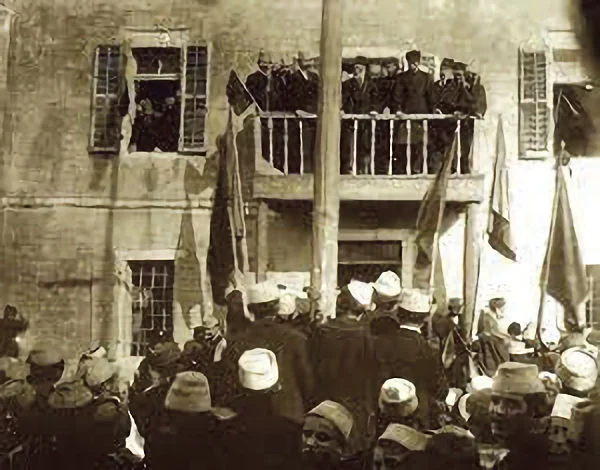
TIRANA, Nov 28 /ATA/ – Albanians at home and across the diaspora mark on Friday the 113th anniversary of the country’s declaration of independence, a milestone that ended nearly five centuries of Ottoman rule and laid the foundations of the modern Albanian state.
On 28 November 1912, the National Assembly convened in the coastal city of Vlora under the leadership of Ismail Qemali and proclaimed Albania an independent nation. Eighty-three delegates from all Albanian-speaking regions took part in the proceedings, while 40 of them signed the Act of Independence.
The date, often referred to as “the second 28 November”, coincides with another key moment in national memory: on 28 November 1443, national hero Gjergj Kastriot Skanderbeg raised the double-headed eagle over the citadel of Kruja after driving out Ottoman forces.
Historic records show that Ismail Qemali set out from Trieste on 19 November, landing in Durrës two days later aboard the Austro-Hungarian vessel Baron Bruck. Initially, independence was expected to be proclaimed in Durrës to deter further advances by foreign armies. But amid growing tensions in the city, Qemali sent urgent telegrams to delegates across the country instructing them to gather in his birthplace, Vlora.
As Serbian forces advanced rapidly through central Albania, patriotic circles in several cities – Elbasan on 25 November; Tirana and Durrës on 26 November; and Kavaja, Peqin and Lushnja on 27 November -raised the national flag even before the Vlora assembly convened.
The declaration of independence secured Albania’s long-sought right to self-determination and opened the way for political, economic and cultural development after centuries of imperial rule.
The date holds multiple layers of significance in Albania’s modern history: Radio Tirana began broadcasting on 28 November 1938, and legendary Kosovo Liberation Army commander Adem Jashari was born on 28 November 1955.
Since 2017, 28 November has also been an official holiday in Kosovo, designated by then-Prime Minister Ramush Haradinaj as the “Day of the Albanians” in honour of the shared national heritage and traditions of ethnic Albanians.
/j.p/r.e/u.sh/