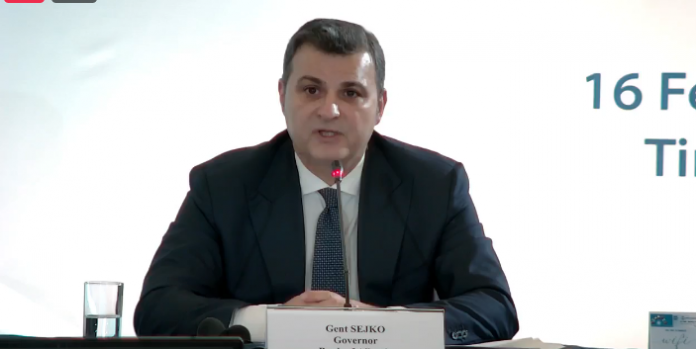
TIRANA, October 10 /ATA/ Governor of the Bank of Albania Gent Sejko participated in the International Scientific Conference on “Demographic Changes and Labor Market Dynamics – Challenges of Sustainable Economic Development in Albania, Kosovo and the Region”, organized by the Academy of Sciences of Albania and the Academy of Sciences and Arts of Kosovo.
Governor Sejko emphasized that demographic developments and the labor market are key pillars of economic sustainability, especially for small and open countries like Albania, affected by declining fertility, emigration and population aging.
He underlined that despite the positive performance of the Albanian economy with economic growth, stable inflation and low unemployment, the country faces long-term structural challenges, such as productivity growth, adaptation to technology and demographic developments, which may limit the capacity for sustainable growth.
“In light of the membership objective in the European Union by 2030, European integration will create new opportunities for trade and investment. However, this integration may accelerate the mobility of the workforce, especially young and skilled workers, towards member states with more developed economies,” said Sejko.
Governor emphasized that in Albania, as a result of favorable exchange rate conditions and appropriate monetary policy stances, inflation remains close to the central bank’s target.
In conclusion, Sejko called for an integrated approach that links education, migration, fiscal policies and labor market reform, in function of economic sustainability and integration towards the European Union.
The conference brought together academics and representatives of institutions from the region and beyond, to address current challenges and share experiences on sustainable economic development in the context of demographic changes. e.xh/j.p/p.s./