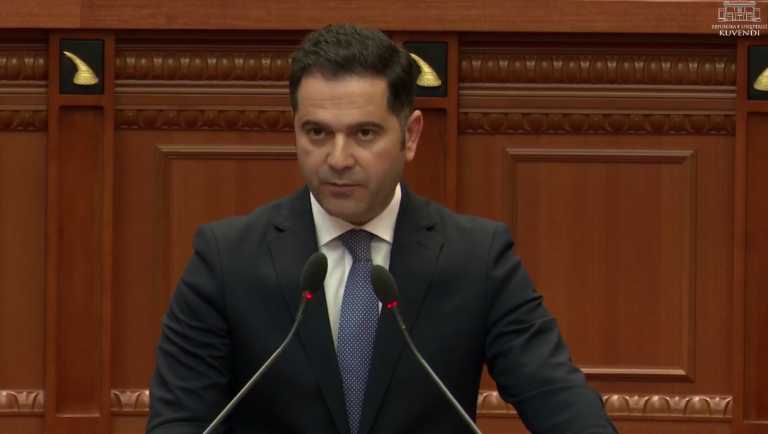
TIRANA, Nov 7 /ATA/The Minister of Finance, Petrit Malaj, stated on Thursday that the country’s economy has shown considerable resilience in the face of successive shocks, including the 2019 earthquake, the pandemic, and the global crisis.
During his presentation of the 2023 executed budget in the plenary session of the Parliament, Malaj stated that economy has continued to show positive and sustainable growth, including increase in employment and wages, despite a challenging economic environment marred by uncertainty and tighter financial conditions.
“Up until now, the country’s key economic and financial fundamentals, as well as its macroeconomic stability, have withstood relatively well, and based on the outlook the economy will continue to pursue its positive trend in the medium term,” he emphasized.
According to Malaj, economic growth for 2023 exceeded initial expectations, reaching a 3.94% on year-on-year basis.
“The main contributors to the growth from domestic demand came from both consumption and investment, which increased in real terms by 3.2% and 1.0%, respectively, compared to 2022. Meanwhile, in 2023, total exports grew by around 9.5%, and total imports increased by about 0.2%. As a result, net foreign demand made a positive contribution of around 3.4% to economic growth in 2023, reflecting a very positive tourist season.”
“The debt indicator stood at 57.5% of GDP, while the deficit indicator reached 1.3%, the minister said.
He further emphasized that the labor market has continued to improve significantly throughout 2023.
“Employment increased on average by 1.6% during the year, primarily driven by higher employment in the services sector. At the same time, the unemployment rate continued its downward trend from previous years, decreasing to 10.7% in the fourth quarter of 2023, down from 11.0% at the end of last year (for those aged 15 and above). This represents the lowest unemployment rate to date. Additionally, the average wage saw a 13.7% increase compared to the previous year, reaching 75,025 lek by the end of 2023. Evidence shows a growing general interest in joining the workforce, further boosted by the rising wage trend, highlighting positive developments in labor supply,” emphasized the minister.
“Inflation, Malaj said, reflected the recent shock to external supply throughout the past year, due to the war in Ukraine, causing macroeconomic setbacks for our economy, as it was for many other countries around the world.”
However, Malaj continued, inflation in our country has been significantly lower than in the neighboring countries, as well as the EU average, with an average rate of 4.8%, down from 6.7% in 2022.
According to him, the declining inflation trend in 2023 was driven by the weakening of external inflationary pressures, the strengthening of the local currency in the foreign exchange market, and the impact of monetary policy.
/j.p/sm/