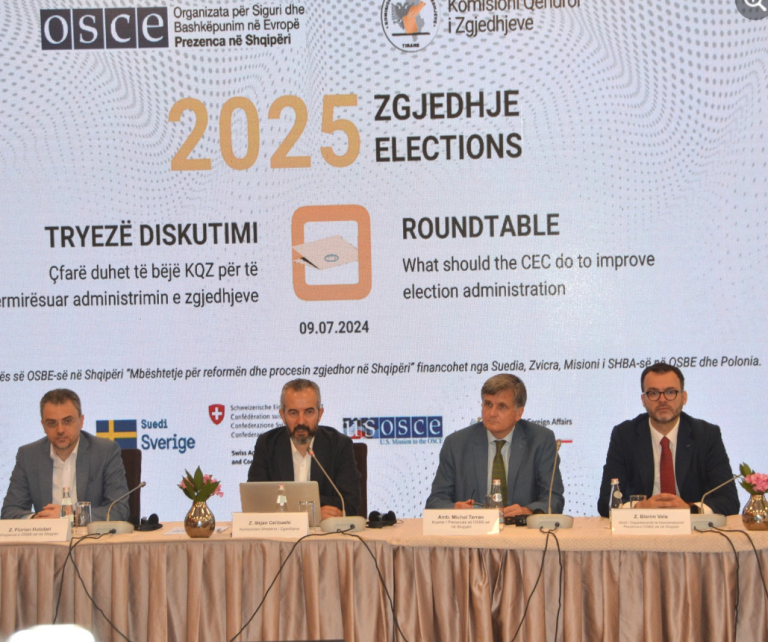
TIRANA, July 9 /ATA/ In preparation for the 2025 parliamentary elections, the Central Election Commission (CEC), with the support of the OSCE Presence in Albania, organized a round table to discuss improving the administration of the 2025 elections.
The meeting brought together representatives of political parties, state institutions, civil society organizations involved in elections, and international organizations to discuss the issues impacting the election administration, laying the foundation for possible solutions.
The main objective of the meeting was to identify and discuss issues impacting the proper administration of the 2025 electoral process, which, at the moment, seem less likely to be addressed by the ongoing electoral reform process.
In his opening remarks, State Election Commissioner Ilirjan Celibashi said: “The purpose of this meeting is to open the discussion regarding issues that the CEC can address independently of the legal changes that the Assembly of Albania will make. We have many issues that we can discuss, there are many problems that the CEC will have to address in order to improve the entire process of election preparation and administration. We are witnesses of various problems that characterize the electoral process in Albania. We will list all problematic issues and then exchange opinions on the ways and paths that the CEC will have to follow to address them. Political parties, civil society and all parties engaged in elections are welcome to encourage and help this initiative of the Central Election Commission in co-operation with the OSCE Presence in Albania”.
Head of the OSCE Presence in Albania Ambassador Michel Tarran called on political actors for an inclusive and timely electoral reform, in order to allow the election administration bodies ample time to successfully implement it.
The participants in the meeting discussed issues related to the establishment of an effective communication system between the CEC and law enforcement bodies, the administration and observation of voting processes and the counting of votes in the vote counting places, reporting of public institutions to the CEC, training of lower level commissioners, use of public resources in the campaign, etc.
Representatives of various parties and civil society organizations had the opportunity to practical measures to address the identified challenges.
/sm/