TIRANA, December 1/ATA/ While health emergencies are becoming a more and more present reality in our modern societies, dealing with them through traditional means of health care remains only half the job.
As was also learned in Albania from the situations encountered during the COVID-19 pandemic or earlier during the earthquake of November 26, 2019, as well as during the refugee crisis after the conflict in Ukraine or cyclical situations with floods, etc., the way the population is informed and educated for the behaviors to follow in emergency situations, plays an essential role.
A wrong perception, an inappropriate way of presenting the situation or even the multitude of misinformation that circulates with increased intensity during these cases, can bring consequences as catastrophic as the emergencies themselves to which they refer.
The World Health Organization is paying increasing attention to aspects such as risk communication, community involvement and information management, preparing staff, training health workers and compiling practices aimed precisely at reducing the chances of health emergencies being amplified by the inability to communicated effectively.
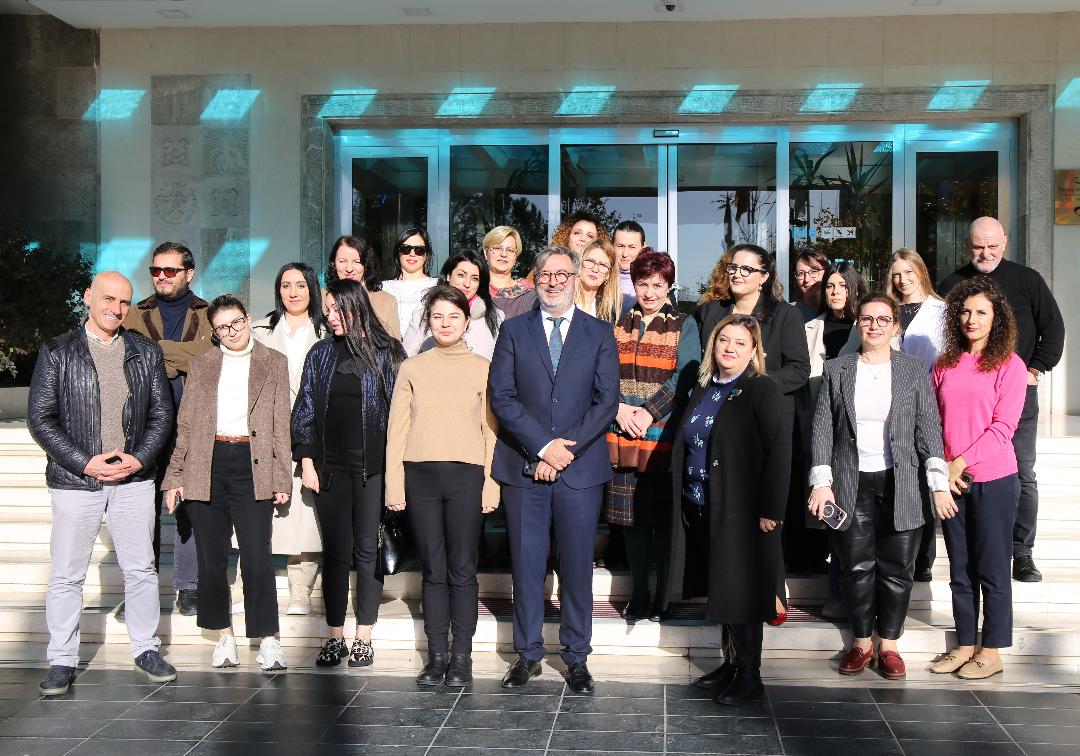
For this purpose, about 30 Health Care workers in Albania participated in a Training on Risk Communication, Community Involvement and Information Management, organized on November 30 – December 1, 2023 in Tirana by the WHO’s Balkan Center for Health Emergencies (WHE) of the WHO Regional Office for Europe.
The participating group included doctors from the Primary Health Care Service of Tirana, health care managers from the National Health Care Operator-Tirana branch and from the Local Health Care Unit of Tirana, representatives from the Red Cross, health education and promotion specialists from ISHP and from the National Emergency Medical Center.
The objective of this training was to develop the skills of the participants and provide knowledge on the challenges of responding to public health emergencies.
The participants were introduced to the concepts of Risk Communication and were trained to further spread the knowledge gained in health care work in the Albanian public health system.