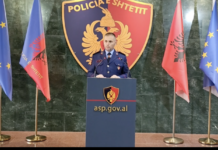
TIRANA, Sept 14 /ATA/ – Cyber security in the Western Balkans is a top priority for the European Union, Johannes Luchner, the Deputy Director-General at Directorate-General for Migration and Home Affairs, said in his remarks at a gathering of Home Affairs Ministers in the framework of the Berlin Process in Tirana on Thursday.
Commengint on the integrated border management with the Western Balkan countries, Luchner said that intense discussions have taken place last year to cope with the increased migratory pressure and significant results have been achieved through common efforts.
“Implementation of the EU action plan on the Western Balkans has reduced migratory pressures on the Balkan routes by 25% on the first seven months of 2023, with around 50,000 less illegal border crossings compared to the same period of 2022,” he said.
“The European Commission expects all Western Balkan partners to continue their efforts in terms of visa policy alignment throughout 2023,” the Deputy Director-General DG HOME said.
Luchner also announced that the Commission expects a speedy implementation of the framework agreement between Albania and FRONTEX due to be signed tomorrow.
The EC senior official praised Albania and the Interior Minister Taulant Balla for the country’s commitment to regional cooperation in the fight against organized crime.
“The fight against organized crime and corruption remain important priorities and at the core of the EU’s political agenda. The Western Balkan partners are important allies in this fight and we call for continued cooperation,” he said
Luchner noted that international cyber attacks are becoming a major concern and threat to everyone.
“We are seeing that Russia is involved in malicious cyber activities in the Western Balkans. That’s why we need to improve monitoring these actions to find out what we can do better against these cyber attacks,” he said.
“Cyber security has already become one of our key priorities in the Western Balkans as we already saw it on the new growth plan for the Western Balkans that President Von der Leyen announced in May 2023. Shortly after the cyber attacks in the region last summer, the EU accelerated its support, the technical assistance and a rapid response project, focusing on capacity building,” Luchner said.
/r.e/u.sh/