TIRANA, March 16/ATA/ When emergencies, disasters and other crises occur, the lives and well-being of the affected population must always be protected, particularly in the minutes and hours that immediately follow, since time is of the essence in saving lives.
The Western Balkans is no stranger to natural disasters such as floods and earthquakes. Moreover, the ongoing COVID-19 pandemic has clearly demonstrated the importance of the structural and operational safety of health facilities in the face of health emergencies.
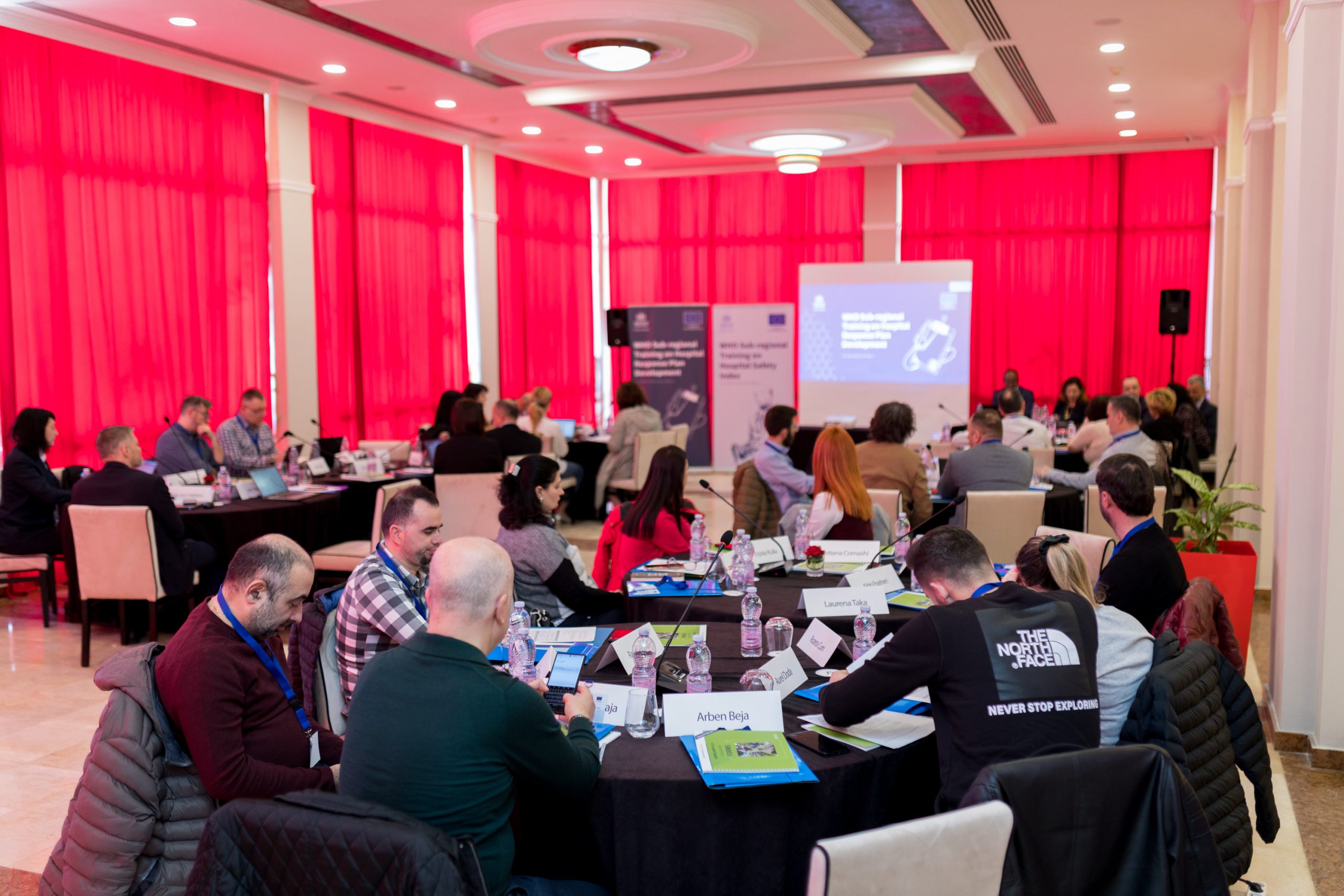
With this in mind, public health and hospital authorities from the Western Balkans sub-region, with technical support from World Health Organization (WHO) and financial assistance form the European Union (EU),conducteda trainingin Durrës, Albania, on the use of the Hospital Safety Index (HSI) tool to assess the structural, non-structural and functional components of hospitals, as well as on hospital response plan development.
“The ability of health services to be delivered by critical infrastructure such as health facilities without interruption in these situations is a matter of life and death,” says Jetri Regmi, Technical Officer on Preparedness with the WHO Regional Office for Europe.“Hospitals should be able to maintain their functionality at the maximum capacity during and immediately after major emergencies and disasters,” she adds.
The Hospital Safety Index is a tool used to determine the overall safety of hospitals and determine their likelihood of continued functionality in emergency situations. The safety index was developed by the WHO in 2009 for international use, as a way to assess hospital security, taking into consideration the surroundings and the network of health services that exist in each country.
“This is a practical tool that is used by health authorities and multidisciplinary partners to gauge the probability that a health facility will continue to be safe and operational in emergency situations, and it includes evaluation forms, a guide for evaluators and a safety index calculator,” says Dr. Kai von Harbou, Technical Officer in the Health Security preparedness division at WHO Headquarters.
It contributes toone of the targets of the Sendai Framework for Disaster Risk Reduction 2015-2030which is, to substantially reduce disaster damage to critical infrastructure and disruption of basic services, among them health and educational facilities, including through developing their resilience by 2030.
For Dr. Abebayehu Assefa Mengistu, Coordinator of the WHO Health Emergencies Balkan Hub,“In order to achieve this and keep our health facilities safe from disasters, hospitals need to institute systems, procedures and capacities through the different components of the emergency management cycle.”
He adds,“These trainingshelp us prepare to keep our hospitals safe from disasters, by reducing risks, protecting health facilities, and most importantly, saving lives. The WHO would like to thank the European Union for their generous financial support in the framework of the EU DG Near Programme,which help organize these capacity-building activities that helppreparefor, and make health facilities safer in emergencies and disasters in the Western Balkans,” Dr Mengistu added.
WHO making health facilities safe in emergencies and disasters
For a safe health facility to remain intact, accessible and functioning at maximum capacity before, during and immediately following an emergency or disaster, it relies on key factors, most importantly,having a health infrastructure in place that can resist all types of hazards. It also involves:
- medicine and medical equipment that are essential, accessible and protected from damage from all hazards (including climate change impacts);
- community infrastructure and critical services (such as water, food, electricity and medical supplies) that are available to support the delivery of health services; and
- health personnel who can provide medical assistance in safe and secure settings where and when they are most needed.
WHO’s safe health facilities’ programme supports Member States to:
- develop national policies and regulations on making health facilities safe from disasters;
- protect the lives of the occupants of a health facility;
- protect the economic investment as well as the functionality of both new and existing health facilities and those identified as priorities (e.g., hub hospital) within the health services network;
- compile, organize and monitor the implementation of policies as well as national and international regulations on safe health facilities; and,
- make health facilities safe, energy-efficient and resilient to future risks, including climate change.
For more information on the WHO Hospital Safety Index and WHO’s Safe Health Facilities’ Programme read here: https://www.who.int/activities/making-health-facilities-safe-in-emergencies-and-disasters
###