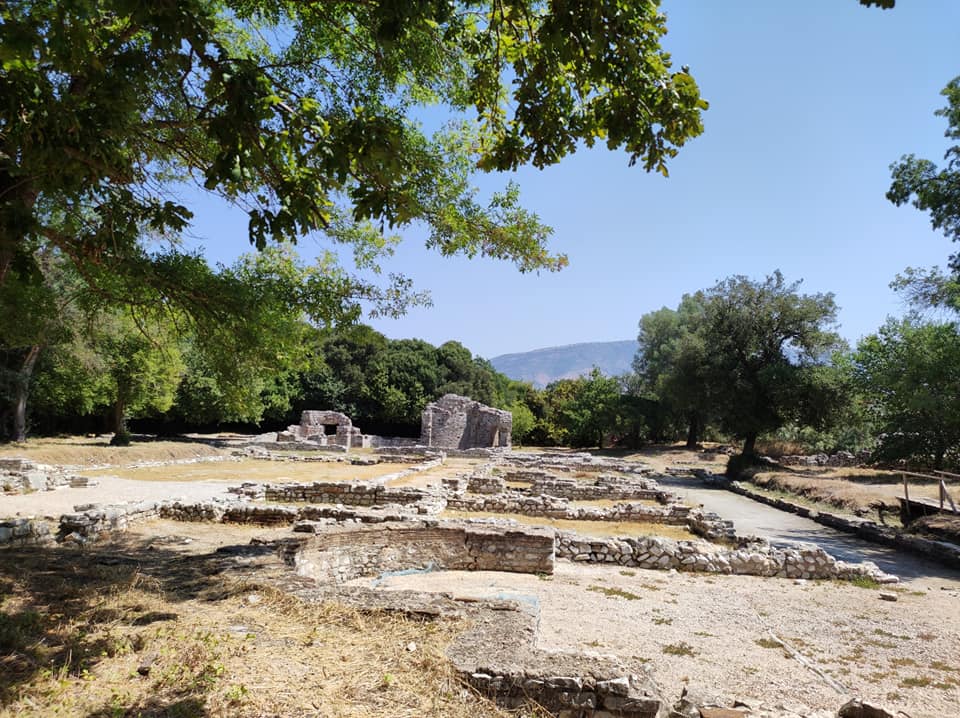
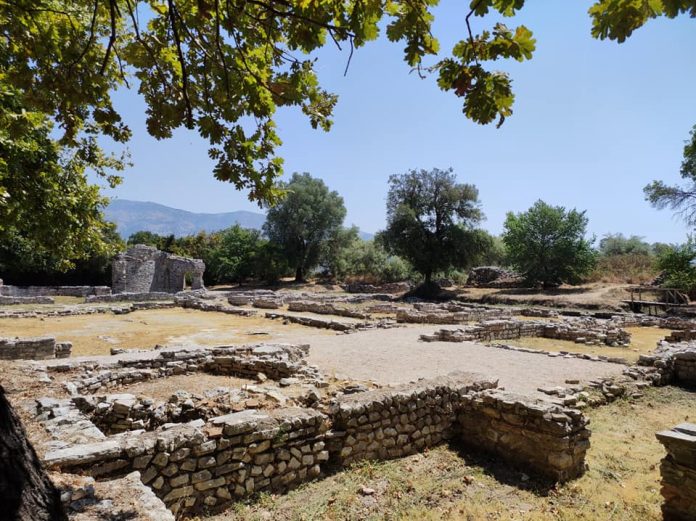
TIRANA, Aug 20 /ATA/ – The Triconch Palace, a Roman villa complex south of the ancient city of Butrint, southern Albania, is known for its rare archaeological and historical values.
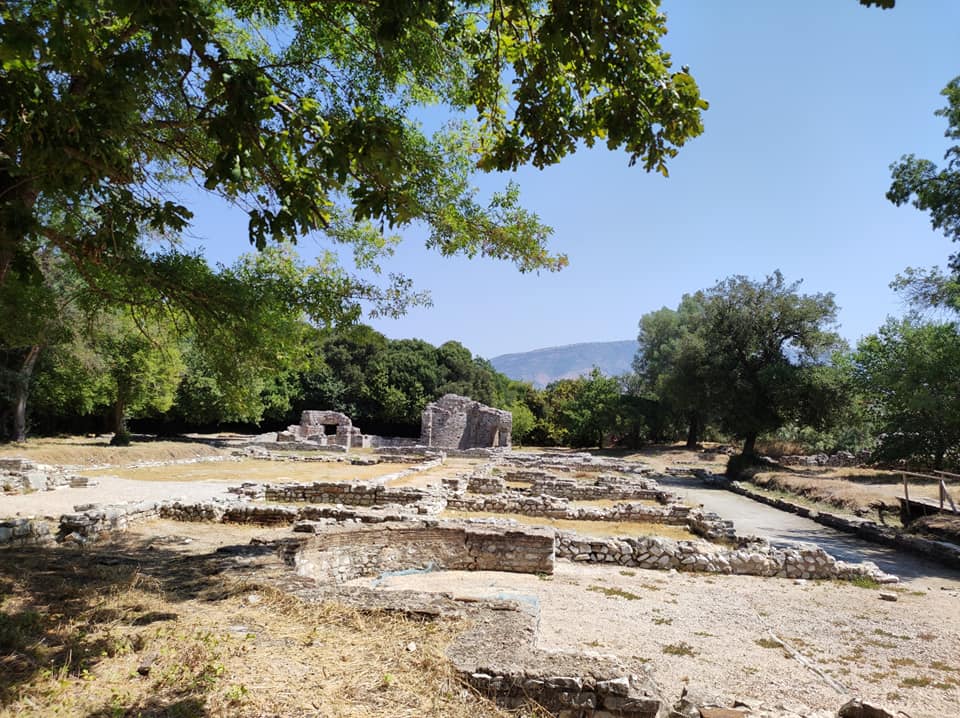
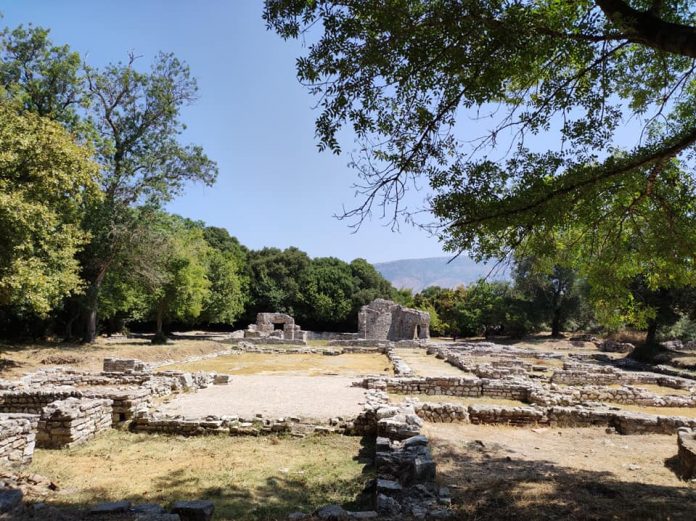
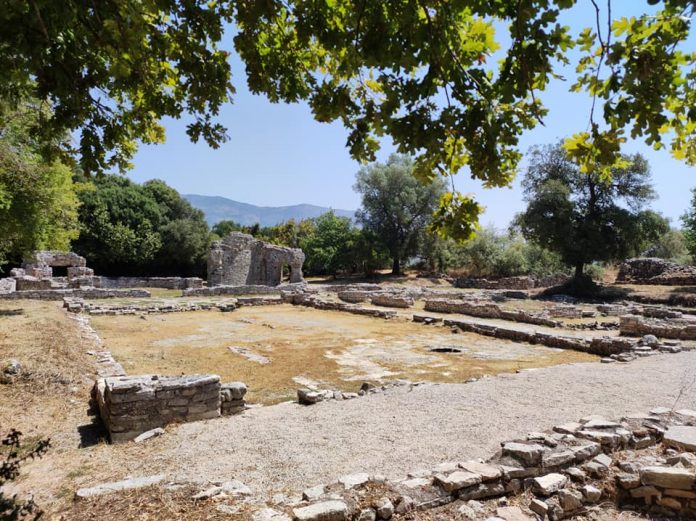
The site of the Triconch palace lies on the southern side of the ancient city adjacent to the Butrint Channel within a slight re-entrant of the city walls.
The excavations initiated by the Italian Archaeological Mission, followed by an expedition headed archaeologist Kosta Lako, in collaboration with prof. Richard Hodges of the Butrinti Foundation, in the 90s, discovered that the Triconch Palace was a complex of buildings occupying a considerable area.
The site dates back to the middle of the 1st century AD, while the beginning of the construction of the palace with a series of alcoves around a courtyard on the south side dates back to the second half of the 5th century AD.
A 25-m long corridor, decorated with mosaics, connected the entrance with a reception room, where the host welcomed friends.
The original Roman Villa had elegant rooms with mosaic floors and wall paintings arranged around a central courtyard cooled by a fountain, but after 400 AD it became a grandiose palace with larger courtyard and new east wing, and a luxurious triconch dining room attached to a riverside entrance.
/k.s/j.p/u.sh/