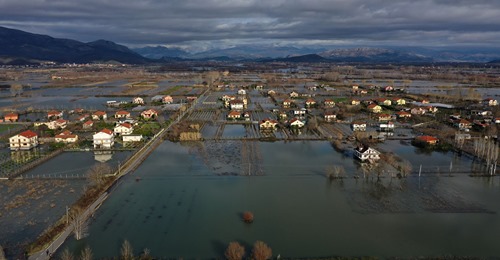
TIRANA, Jan 21 /ATA/ The World Bank informs that in cases of natural disasters, when the number of insurances is low, governments bear most of the costs.
They have to deal with the emergency response, the rehabilitation of public assets, the restoration of public services, the support for uninsured families and small enterprises, and the fiscal transfers of local government.
According to WB, “the Albanian state makes available the reserve funds, in case of need it can reallocate the budget, or borrow. “The gap between funding opportunities and needs from earthquake or flood damage can exceed an average of $ 130 million a year.”
In this context, the Albanian government together with the World Bank are working in three directions to help the country mitigate the impact of natural disasters and crises, specifically in:
Step 1. Developing a National Disaster Risk Financing Strategy.
This strategy will identify the country’s priorities and determine ways to combine different risk financing instruments to address these priorities as cost-effectively as possible.
Step 2. Drawing lessons from the financial management of the COVID-19 pandemic.
Together with the Ministry of Finance and Economy, the World Bank is preparing an analysis of the costs incurred due to COVID-19. Based on the findings of the disaster risk financing diagnostic assessment, the analysis will strengthen data on the costs and benefits of using post-disaster instruments such as budget re-allocations and assist the government in developing policies for minimizing these costs.
Step 3. Making efforts to address shortcomings in disaster protection.
/j.p/r.e/sm/