TIRANA, June 15 /ATA/- Two well-known institutions in the field of maritime archaeology, RPM Nautical Foundation and INA Naval Institute of Archeology at the University of Texas presented their findings from search in the Albanian waters during an event at the Port of Durres, in Western Albania.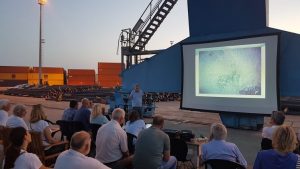
Attending the event were representatives of the diplomatic corps in Albania.
These two leading institutions in the underwater research are present in the Albanian sea for 12 years, creating underwater scientific maps.
Auron Tare gave a presentation in the quality of the UNESCO Scientific Council Chairman for world underwater assets. He gave a brief history of marine research in Albania, citing in particular the efforts of Albanian archaeologists Moikom Zeqo and Neritan Ceka in their underwater exploration and creation of the first bathyscaphe in the 1970s in an effort to explore the history of the Albanian coasts.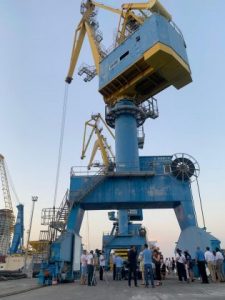
The “Hercules” ship, which with its sophisticated technology has scanned one-third of the Albanian territory by creating three-dimensional maps of the bottom of the sea, has discovered more than 41 historical relics from the 6th century BC to the British ship Volage which opened the curtain of the famous Corfu Channel Incident.
The President of the RPM Nautical Foundation James Goold spoke on these discoveries. He is also one of the key international figures in the field of international maritime law. He underlined the great significance of these discoveries not only for the maritime history of Albania but in the Mediterranean context as well.
James Goold reiterated the fact that Albania is blameless in the Corfu Channel Incident because the findings made by the US expedition show clearly that British ships have not been sailing in the declared course but have violated the sovereignty of the Albanian waters turning this incident into a military provocation and not a peaceful transition.
The “Hercules” Ship, which has stayed for several days in the Port of Durres to help Albanian authorities with the Port’s scanning, will continue its research by bringing new scientific findings from the bottom of the sea casting a light on the great significance of marine discoveries not only for the history but also for the development of cultural tourism along our shores./j.p/p.s./